“ There are indeed a great many steep banks in Greenwich Park, which tumbles up and down in the most adventurous fashion. It is a charming place, rather shabby and footworn, as befits a strictly popular resort, but with a character all its own. It is filled with magnificent foreign-looking trees, of which I know nothing but that they have a vain appearance of being chestnuts, planted in long, convergent avenues, with trunks of extraordinary girth and limbs that fling a dusky shadow far over the grass; there are plenty of benches, and there are deer as tame as sleepy children ”
Greenwich Park
Definition and stakes
Quotes about “Greenwich Park”
William Clark Russell,
The Convict Ship, Volume 1 (of 3…
“ Shall we take a turn about Greenwich Park presently? The days are still short, and you are not so far from your house at Greenwich as you would be at Kensington.’I consented, and then we stood at the window, looking at the scene of the river from the docks, talking about Will and the sea-life and such matters until dinner was ready. I longed to hear him say that he loved me. The language of his eye was not satisfying enough. I wanted him to take my hand and ask me to be his wife. I had thought my appetite good until I sat down, and then I could not eat. My heart beat fast. ”
William Hone,
The Every-day Book and Table Book…
“ Stepney, Hampstead, Westend, and Peckham fairs have been crushed by the police, that ‘stern, rugged nurse’ of national morality; and although Greenwich fair continues, it is any thing but what it used to be. Greenwich, however, will always have a charm: the fine park remains—trees, glades, turf, and the view from the observatory, one of the noblest in the world—before you the towers of these palaces built for a monarch’s residence, now ennobled into a refuge from life’s storms for the gallant defenders of their country, after their long and toilsome pilgrimage—then the noble river ”
Bayard Taylor,
Views A-foot; Or, Europe Seen with Knapsack and Staff
“ The stately Thames curves through the plain below, which loses itself afar off in the mist; Greenwich, with its massive hospital, lies just at one's feet, and in a clear day the domes of London skirt the horizon. The wood of the Park is entirely oak—the majestic, dignified, English oak—which covers, in picturesque clumps, the sides and summits of the two billowy hills. It must be a sweet place in summer, when the dark, massive foliage is heavy on every mossy arm, and the smooth and curving sward shines with thousands of field-flowers. ”
Eliza Lee Cabot Follen,
Travellers' Stories
“ One morning, our friend, Miss S., was kind enough to accompany us to Greenwich, where, you know, is the Hospital for disabled sailors of the British navy. The day was warm and lovely, like what we call the Indian summer in America. We took an omnibus to London Bridge; from thence we proceeded by railway, and in a few minutes were in Greenwich. We entered the magnificent old Park, and wandered about for a long time, to our hearts' content, among the venerable old trees, admiring the graceful deer that were enjoying themselves all around us. ”
William Howitt,
The Rural Life of England
“ How wise that such places as Richmond, Greenwich, and such old parks in the neighbourhood of the Metropolis, are kept up and kept open, that our citizens may occasionally get out of the smoke and noise of the great Babel, and breathe all their freshness, and feel all their influence! Who does not often, in the midst of brick-and-mortar regions, summon up before his imagination this old park or forest scenery? ”
E. V. Lucas,
Adventures and Enthusiasms
“ The other day there was a merry breeze under a cloudless sky, and the air was filled with the music of the Greenwich symphony, which is played by an orchestra entirely composed of foghorns and hooters.But Greenwich is amphibious. The river may not be for all tastes; there is the park too, with its avenues climbing to the heights of Blackheath. The deer have gone; but the Observatory remains, for the accurate adjustment of watches, and there is the distant prospect of London of which the great landscape painters [Pg 284] used to be so fond, from the corner of the terrace. ”
William Hone,
The Every-day Book and Table Book…
“ Greenwich fair, of itself, is nothing; the congregated throngs are every thing, and fill every place. The hill of the Observatory, and two or three other eminences in the park, are the chief resort of the less experienced and the vicious. ”
1911 Encyclopædia Britannica, Volume 12… (1911)
“ It was then devoted to the accommodation of the students of the Royal Naval College, the Infirmary being granted to the Seamen’s Hospital Society. Behind the College is the Royal Hospital School, where 1000 boys, sons of petty officers and seamen, are boarded. To the south of the hospital is Greenwich Park (185 acres) , lying high, and commanding extensive views over London, the Thames and the plain of Essex. It was enclosed by Humphrey, duke of Gloucester, and laid out by Charles II., and contains a fine avenue of Spanish chestnuts planted in his time. ”
Charles Hemstreet, Literary New York: Its Landmarks and Associations
“ In the very core of this old-time Greenwich section and at the very place where the streets are so tangled, so irregular, so crooked, so often no thoroughfare, so winding that they seem to be seeking out the old farmhouses which they led to in early days, there is a pretty little playground for children. This Hudson Park is an open spot with green lawns and marble walks and a tall iron fence surrounding it ”
Nathaniel Hawthorne,
Our Old Home: A Series of English Sketches
“ After traversing the Park, we come into the neighborhood of Greenwich Hospital, and will pass through one of its spacious gateways for the sake of glancing at an establishment which does more honor to the heart of England than anything else that I am acquainted with, of a public nature. It is very seldom that we can be sensible of anything like kindliness in the acts or relations of such an artificial thing as a National Government. ”
Thomas Miller, Picturesque Sketches of London…
“ They are the most accommodating people in the world at Greenwich. You can walk into almost every other house, order tea, and receive thanks at your departure, for only a few pence. Numbers come into the Park ready provided. They eat and drink while on the steam-boat, feel a fresh appetite as soon as they have climbed the hill, are hungry and thirsty again after a donkey-ride on Blackheath, and should any thing remain, in either basket or bottle, they finish it as they return by the steamboat. ”
N. D'Anvers, The Skirts of the Great City
“ Occupying as it does a unique position on the Thames, which is here often crowded with British and foreign shipping, owning in the group of buildings collectively known as the Hospital one of the masterpieces of eighteenth-century domestic architecture, and in its park one of the most beautiful open spaces near the capital, whilst its Observatory gives to it the distinction of a leader in astronomical research, Greenwich has long ranked as one of the most important and popular suburbs of London. ”
William Hone,
The Every-day Book and Table Book…
“ Easter Monday and Tuesday, and Greenwich fair, are renowned as “holidays” throughout most manufactories and trades conducted in the metropolis. On Monday, Greenwich fair commences. The chief attraction to this spot is the park, wherein stands the Royal Observatory on a hill, adown which it is the delight of boys and girls to pull each other till they are wearied. ”
Arthur Bartlett Maurice,
Fifth Avenue
“ The trails of Bohemia, or of pseudo-Bohemia, have never been so flaming and flagrant as they are today. From that corner of the Avenue facing the Arch cross the Square diagonally to the head of Washington Place. A hundred yards to the west lies the Lane of the Mad Eccentrics. Two or three years ago the little triangle of a park known as Sheridan Square was surrounded by structures of red brick that dated from the days when Greenwich Village preserved something of its proud individuality. ”
Barack Obama,
Proclamation 9465 — Establishment of the Stonewall National Monument…
(2016)
“ As one of the only public open spaces serving Greenwich Village west of 6th Avenue, Christopher Park has long been central to the life of the neighborhood and to its identity as an LGBT-friendly community. ”
William Hone,
The Every-day Book and Table Book…
“ Before then the more prudent visitors have retired to some of the numerous houses in the vicinage of the park, whereon is written, “Boiling water here,” or “Tea and Coffee,” and where they take such refreshment as these places and their own bundles afford, preparatory to their toil home after their pleasure.At nightfall, “Life in London,” as it is called, is found at Greenwich. Every room in every public-house is fully occupied by drinkers, smokers, singers and dancers, and the “balls” are kept up during the greater part of the night. The way to town is now an indescribable scene. ”
Edward S. Mogg, Survey of the High Roads of England and Wales…
“ Greenwich Hospital is immediately under the eye; and with the adjacent country and river, and London in the distance, presents as interesting a coup-d’œil as can well be imagined. The park itself affords much rich scenery: it was laid out by Le Nôtre, in the time of Charles the Second, and is planted chiefly with elms and Spanish chesnuts, some of which latter are very large. In one part are remains of various ancient Barrows, most of which were opened, in the year 1784, by Mr. ”
P. Austin Nuttall, The Nuttall Encyclopædia
“ Greenough, Horatio, an American sculptor, spent most of his life in Rome and Florence; executed the colossal statue of Washington in front of the Capitol in Washington City, and a group of figures entitled "The Rescue" (1803-1852) .Greenwich (78) , an important borough of Kent (officially within the county of London) , on the Thames, 5 m. SE. of London Bridge; its active industries embrace engineering, telegraph works, chemical works, &c.; the Royal Observatory, founded by Charles II. in 1675, occupies a commanding site within the Park ”
Robert Allbut, Rambles in Dickens' Land
“ The sketch is entitled “Greenwich Fair,” and gives descriptions of the doings in the park at that festival, as holden aforetime in this locality—“The principal amusement is to drag young ladies up the steep hill which leads to the Observatory, and then drag them down again at the very top of their speed, greatly to the derangement of their curls and bonnet-caps, and much to the edification of lookers-on from below.”From the Park entrance we may now proceed towards the river by Church Street, on the left hand of which, past London Street, stands the Church of St. ”
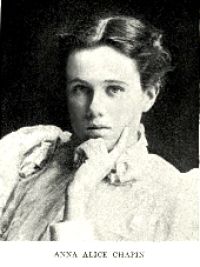
Anna Alice Chapin,
Greenwich Village
“ Gouverneur Morris, Simeon de Witt and John Rutherford were appointed by the city to take charge of this task, and, as one writer points out, they did not do it as badly as they might have done, nor as we are inclined to think they did when we try to find our way around lower New York today. The truth is that Greenwich had grown up, and always has grown up ever since, in an entirely independent and obstinate fashion all its own. ”
Anna Alice Chapin,
Greenwich Village
“ It does not welcome tourists, though it is hospitality itself to wayfarers seeking an open door. It is the Village, and it will never, never, no never be anything else—the Village of the streets that wouldn't be straight!Janvier, who has already been quoted extensively, but who has written of Greenwich so well that his quotations can't be avoided, says: "In addition to being hopelessly at odds with the surrounding city, Greenwich is handsomely at variance with itself."New York, and especially Greenwich, grew by curious and indirect means, as we have seen. ”
Anna Alice Chapin,
Greenwich Village
“ Not all the commissioners [Pg 62] in the world could change the charming, erratic plan of it; not the most powerful pressure of modern business could destroy its insistent, yet elusive personality. The Village has always persistently eluded incorporation in the rest of the city. Never forget this: Greenwich was developed as independently as Boston or Chicago. It is not New York proper: it is an entirely separate place. At points, New York overflows into it, or it straggles out into New York, but it is first and foremost itself. ”
Anna Alice Chapin,
Greenwich Village
“ And he would be a wretched ghost indeed if doomed to haunt only upper New York. But it happens that he has a sanctuary, a haven after his own heart, where he can still draw a breath of relief, among buildings small but full of age and dignity and with the look of homes about them; on restful, crooked little streets where there remain trees and grass-plots; in the old-time purlieus of Washington Square and Greenwich Village!The history of old New York reads like a romance. ”
Anna Alice Chapin,
Greenwich Village
“ You walk on through Greenwich Village and you will expect romance to meet you. Even the distant clang of a cable car out in the city will not break the spell that is on you now. And if you have a spark of fancy, you will find your romance. You cannot walk a block in Greenwich without coming on some stony wall, suggestive alley, quaint house or vista or garden plot or tree. Everything sings to you there; even the poorest sections have a quaint glamour of their own. It gleams out at you from the most forbidding surroundings. ”
Anna Alice Chapin,
Greenwich Village
“ Minetta Lane, which was close by, had a few aristocratic country residents by that time, and every one was quite outraged by the notion of having a paupers' graveyard so near. Several rich people of the countryside even offered to present the city corporation with a much larger and more valuable plot of ground somewhere else; but the officials were firm. The public notice was relentlessly made, of the purchase of ground "bounded on the road leading from the Bowerie Lane at the two-mile stone to Greenwich." ”
Anna Alice Chapin,
Greenwich Village
“ The first of these points I have already touched upon in an earlier chapter—the deathless element of romance that has always had its headquarters here. Every city, like every brain, should have a corner given over to dreams. Greenwich is the dream-corner of New York. Everyone feels it. I found an old article in the Tribune written by Vincent Pepe [Pg 175] which shows how the romance of the neighbourhood has crept into bricks and stone and even the uncompromising prose of real estate. ”
Anna Alice Chapin,
Greenwich Village
“ Sixth Avenue, indeed, has come to mean nothing more to them than a rustic bridge or a barbed-wire fence,—something to be gotten over speedily and forgotten. They even, by some alchemy of view point, seem to give it a rural air from Jefferson Market down to Fourth Street—these cool-looking, hatless young people who make their leisurely way down Washington Place or along Fourth Street. People pass them,—people in hats, coats and carrying bundles; but the Villagers do not notice them. They do not even look at them pityingly; they do not look at them at all. ”
Anna Alice Chapin,
Greenwich Village
“ Stroll around the block that is squared by the present Charles, Perry, Bleecker and Tenth streets some day, look at the brick and stone, the shops and boarding-houses,—and try to dream yourself back into the eighteenth century, when, in that very square of land, stood the Captain's lovely country seat. In those days it was something enormous, palatial, and indeed was always known as the Mansion or Manse. This is, of course, the basis for the silly theory that Greenwich got its name from the estate. ”
Nathaniel Hawthorne,
Our Old Home: A Series of English Sketches
“ But Greenwich, too, is beautiful,—a spot where the art of man has conspired with Nature, as if he and the great mother had taken counsel together how to make a pleasant scene, and the longest liver of the two had faithfully carried out their mutual design. It has, likewise, an additional charm of its own, because, to all appearance, it is the people's property and play-ground in a much more genuine way than the aristocratic resorts in closer vicinity to the metropolis. ”
Anna Alice Chapin,
Greenwich Village
“ Of course, they do make use of Sixth Avenue occasionally, on their rare trips uptown. But it is in the same spirit that a country dweller would take the railway in order to get into the city on necessary business. As a matter of fact there is [Pg 282] no corner of New York more conveniently situated for transportation than this particular section of Greenwich. I came across a picturesque real estate advertisement the other day:"If you ever decide to kill your barber and fly the country, commit the crime at the corner of Eighth Street and Sixth Avenue. ”