Imperial Family of Japan

Definition and stakes

Various Encyclopaedia Britannica, 11th Edition…

The intense pride of the Japanese in their nationality, their patriotism and loyalty, arise from their history, for what other nation can point to an Imperial family of one unbroken lineage reigning over the land for twenty-five centuries? Is it not a glorious tradition for a nation, that its emperor should be descended directly from that grandson of “the great heaven-illuminating goddess,” to whom she said, “This land (Japan) is the region over which my descendants shall be the lords.
Source: Gutenberg

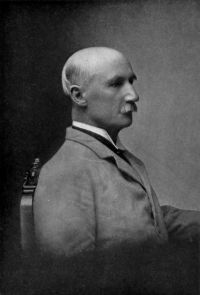
Portrait of F. Brinkley F. Brinkley A history of the Japanese people

It is only our country which from the time when the heaven and earth were first unfolded, has preserved the succession to the throne intact in one single family. Even when, as sometimes naturally happened, it descended to a lateral branch, it was held according to just principles. This shows that the oath of the gods (to preserve the succession) is ever renewed in a way which distinguishes Japan from all other countries. . . . It is the duty of every man born on the Imperial soil to yield devoted loyalty to his sovereign, even to the sacrifice of his own life.
Source: Gutenberg

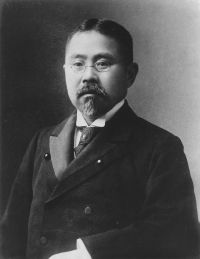
Katsuro Hara An Introduction to the History of Japan

To have Japan strongly centralised, it was necessary for her to have an individual, that is to say the Emperor, as a nucleus of centralisation.
We have seen the process by which the predominant stock of the Japanese grew in power and influence, as well by exploring new lands and installing there men of their own stock as lords, as by organising more and more new groups out of the immigrants who came over to this country, and, perhaps, also out of a certain number of autochthons. Within the predominant stock itself the imperial family was no doubt the most influential.
Source: Gutenberg

Get perspective with Kwize: daily news enlightened by great literature