Kuge

Definition and stakes

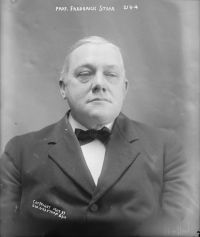
Friedrich Kluge,  An Etymological Dictionary of the German Language (1891)

“ Keule is a ‘pole with a ball-shaped end.’ Kugel and Kegel cannot possibly be related by gradation.
Kuh, feminine, ‘cow,’ from the equivalent Middle High German and Old High German kuo, feminine; compare Middle Low German kô, Dutch koe, English cow, Anglo-Saxon cû, Old Icelandic kýr, feminine (Gothic *kôs) ; Teutonic type kô-, feminine, ‘cow.’ This word, like the names of other domestic animals, is found in the non-Teutonic languages, and in the form of gō̆w (gô) it is common to the Aryan group; compare Indian gâus (accusative gâm) , feminine, Greek βούς (stem βοϝ) , Latin bos (stem bov-) .
”
Source: Wikisource

Portrait of Toyokichi Iyenaga Toyokichi Iyenaga,  The Constitutional Development of Japan… (1891)

“ And no tyrant, no despot, can obstruct the triumphal march of liberty.
Whatever may be said about the soundness of the above speculation, it is certain that in the great councils of Kuges and Daimios and in the discussions of the Samurai, which the advent of the foreigners called into being, lay the germ of the future constitutional parliament of Japan.
”
Source: Wikisource

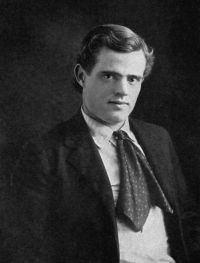
Portrait of Jack London Jack London,  White Fang (1906)

“ Not alone out of his own eyes, but out of the eyes of all his ancestors was the cub now looking upon man—out of eyes that had circled in the darkness around countless winter campfires, that had peered from safe distances and from the hearts of thickets at the strange, two-legged animal that was lord over living things. The spell of the cub's heritage was upon him, the fear and the respect born of the centuries of struggle and the accumulated experience of the generations. The heritage was too compelling for a wolf that was only a cub. ”
Source: Wikisource

Get perspective with Kwize: daily news enlightened by great literature