Jabir ibn Hayyan

Definition and stakes

Various,  Encyclopaedia Britannica, 11th Edition…

“ Ibn Zobair employed against him Abyssinians armed with Greek-fire-tubes, who, however, quitted him soon under the pressure of famine. This at length triumphed over his last adherents. Ten thousand fighting men, and even two of the sons of the pretender (it is said, on his own advice) , left the city and surrendered. Mecca being thus left without defenders, Ibn Zobair saw that ruin was inevitable. Hajjāj having promised him amnesty if he would surrender, he went to his mother Asmā, the daughter of Abu Bekr, who had reached the age of a hundred years, and asked her counsel. ”
Source: Gutenberg

Griffithes Wheeler Thatcher,  1911 Encyclopædia Britannica, Volume 15… (1911)

“ JARĪR IBN ʽATĪYYA UL-KHATFĪ (d. 728) , Arabian poet, was born in the reign of the caliph ʽAli, was a member of the tribe Kulaib, a part of the Tamīm, and lived in Irak. Of his early life little is known, but he succeeded in winning the favour of Hajjāj, the governor of Irak (see Caliphate) . Already famous for his verse, he became more widely known by his feud with Farazdaq and Akhtal. ”
Source: Wikisource

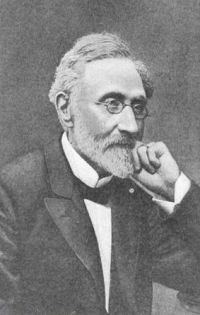
Portrait of Heinrich Graetz Heinrich Graetz,  History of the Jews, Vol. 3 (of 6…

“ The Arabians of the Kailan race (Aus and Chazraj) hated the rule of the Jews, and seized the opportunity of rebelling when the Jews could not rely on assistance from Himyara. An Arabian chief of the Ghassanid race, Harith Ibn Abu Shammir, who was closely related to the Kailan race, was invited to lead his troops towards Yathrib. This brave and adventurous prince of Arabia, who was attached to the Byzantine court, accepted the invitation. In order not to arouse the suspicions of the Jews, Ibn Abu Shammir gave out that he intended going to Himyara. ”
Source: Gutenberg

Get perspective with Kwize: daily news enlightened by great literature