Popular Science Monthly (1883)
“ James Mill was an independent and indeed a masterly thinker in the fields of psychology, of political economy, of logic and the philosophy of government, and he was a pioneer of modern English liberalism. ”
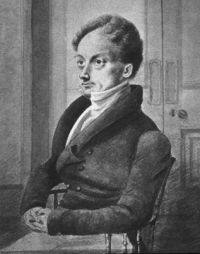
James Mill (1773–1836), a Scottish historian, economist, and philosopher, was a key figure in early 19th-century liberalism and the Ricardian school of economics. Best known for The History of British India (1817), he presented Indian history through a colonial perspective, dividing it into Hindu, Muslim, and British periods—a categorization that profoundly shaped historical discussion.
His utilitarian philosophy, influenced by Jeremy Bentham, supported his promotion of British imperialism as a civilizing mission. While contemporaries like John Stuart Mill built upon his ideas, critics such as Leslie Stephen later questioned his strict views on gender and morality. Mill’s influence persists in discussions about colonial historiography and the moral basis of political economy.
Popular Science Monthly (1883)
“ James Mill was an independent and indeed a masterly thinker in the fields of psychology, of political economy, of logic and the philosophy of government, and he was a pioneer of modern English liberalism. ”
 Mrs. Oliphant,
Historical Characters in the Reign of Queen Anne
Mrs. Oliphant,
Historical Characters in the Reign of Queen Anne
“ The hard-headed and unbending Scotch philosopher, James Mill, was just as sensitive to the looks of his kind friend and helper in the early struggles of life, Jeremy Bentham, in whose sunny countenance Mill discovered unspoken offense with an ingenuity worthy of a self-tormenting woman. It was natural indeed that Swift, a high-spirited young man, should fret and struggle as the years went on and nothing happened to enlarge his horizon beyond the trees of Moor Park. ”
Popular Science Monthly (1883)
“ But James Mill is not to be disposed of in this way. It is hardly questionable if James Mill is not, in fact, the greater and more original man of the two. If one is to be regarded as an appendage to the other, the order of time will correspond to the order of rank. No doubt the two Mills will have to be taken together as representative of one system of ideas. But the system, as such, belongs to the father much more than to the son. James Mill led in its development and John Mill followed. The son continued the father's work, expanding, extending, and elaborating it ”