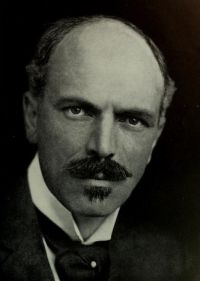
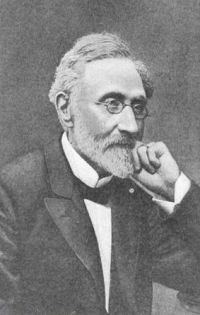
“ James Ussher (1581-1656) , born in Dublin and among the earliest students of the newly-founded Trinity College, was in intellect and scholarship one of the greatest men that Ireland has ever produced. Selden describes him as "learned to a miracle" (ad miraculum doctus) , and Canon D'Alton in his History of Ireland says of him that "he was not unworthy to rank even with Duns Scotus, and when he died he left in his own Church neither an equal nor a second." Declining the high office of provost of Trinity, Ussher was made bishop of Meath and was afterwards promoted to the primatial see. ”
James Ussher
Definition and stakes
James Ussher (1581–1656), Archbishop of Armagh and Primate of All Ireland, was a prolific theologian and scholar renowned for his chronology, which placed the Creation on 22 October 4004 BC. His research on early Irish Christianity and the authentication of Ignatius of Antioch’s letters shaped ecclesiastical historiography.
Authors like Maurice Hewlett hailed him as Ireland’s intellectual giant, while Alexander Gordon highlighted his scholarly rigor. Franz Delitzsch acknowledged his exegetical influence, and Charles Kingsford connected him to Oxford’s intellectual circles. Ussher’s legacy endures as a bridge between Calvinist theology, historical inquiry, and the scholarly traditions of the Protestant Reformation.
Quotes about “James Ussher”
Alexander Gordon, Dictionary of National Biography… (1899)
“ USSHER, JAMES (1581–1656) , archbishop of Armagh, second but elder surviving son of Arland (Arnoldus) Ussher (d. 12 Aug. 1598) , clerk of the Irish court of chancery, by his wife Margaret (d. November 1626) , daughter of James Stanyhurst [see under Stanyhurst, Richard] , was born in Nicholas Street, parish of St. Nicholas Within, Dublin, on 4 Jan. 1580–1. Ambrose Ussher [q. v.] was his younger brother. Both parents were originally protestants. His mother became a Roman catholic before her death. Two blind aunts (probably Alice and Katherine Ussher, his father's sisters) taught him to read. ”
 Franz Delitzsch,
Biblical Commentary Old Testament…
(1872)
“ Many older expositors, both Jewish and Christian (Seder olam, Raschi, Ussher, J. H. Mich., and others) , were of opinion that only Jews and Benjamites are enumerated in the separate statements, while the sum-total includes also those Israelites of the ten tribes who returned with them. In opposing this notion, it cannot, indeed, be alleged that no regard at all is had to members of the other tribes (Bertheau) ; for the several families of the men of Israel are not designated according to their tribes, but merely as those whom Nebuchadnezzar had taken away to Babylon ”