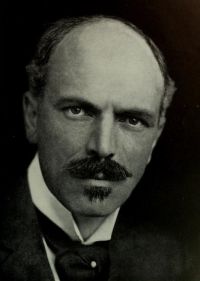
Maurice Hewlett

Maurice Hewlett

Summary

Portrait of Maurice Hewlett Maurice Hewlett Love and Lucy

He turned his disk upon her for a moment. "You like Urquhart?"
"Yes," Lucy said, "I do. I like him—because he likes Lancelot."
"Ah," said James, who thought her weak where the boy was concerned. He added, "Urquhart gets on with children. He's a child himself."
"Why do you call him that?" she asked, with a tinge of offence in her voice. James could raise the fine hairs at the back of her neck by a mere inflection.
He accepted battle. "Because he only thinks of one thing at a time. Because to get what he wants he'll sacrifice every mortal thing—very often the thing itself which he's after."
Source: Gutenberg

Portrait of Maurice Hewlett Maurice Hewlett Love and Lucy

Lucy busied herself with her letters and her coffee-cups. She wished that she did not feel so ruffled, but—a walk would do her good. She would go into the Park presently, and look at the tulips and lilacs. It was horrid to feel so stuffy on such a perfect day. How long to Whitsuntide? That was to be heavenly—if James didn't get inspired by the dark! Something would have to be prepared for that. In her eyes, sedate though they were, there lurked a gleam: the beacon-fire of a woman beleaguered. Certainly Jimmy Urquhart liked her.
Source: Gutenberg

Portrait of Maurice Hewlett Maurice Hewlett Love and Lucy

Is a man, then, never to give, and be happy? Has he ever tried? Is a woman not to get? Has she ever had a chance of it?" He puzzled over these things in his prosaic, methodical way. One thing was clear to everybody there but Urquhart in his present fatuity: Lucy was thriving. She had colour, light in her eyes, a bloom upon her, a dewiness, an auroral air. She sunned herself like a bird in the dust; she bathed her body, and tired herself with long mountain and woodland walks. When she was alone with her husband she grew as sentimental as a housemaid and as little heedful of the absurd.
Source: Gutenberg

Get perspective with Kwize: daily news enlightened by great literature