John Brooke

Definition and stakes

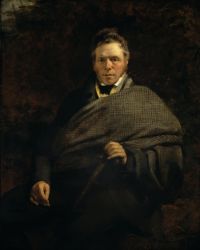
Portrait of Louisa May Alcott Louisa May Alcott,  Little Men — Chapter XIX. John Brooke (1871)

“ It could not die, and John is more my own than ever," whispered Meg; and in her eyes the tender trust was so beautiful and bright, that Jo believed her, and thanked God for the immortality of love like hers.
They were all there—father and mother, Uncle Teddy, and Aunt Amy, old Mr. Laurence, white-haired and feeble now, Mr. and Mrs. Bhaer, with their flock, and many friends, come to do honor to the dead. One would have said that modest John Brooke, in his busy, quiet, humble life, had had little time to make friends
”
Source: Wikisource

Thompson Cooper,  Dictionary of National Biography… (1886)

“ Brooke made voluminous manuscript collections, chiefly relating to Yorkshire. His father had inherited the manuscripts of his great-uncle, the Rev. John Brooke, rector of High Hoyland in Yorkshire, which had been formed as a foundation for the topography of that county. These came into the hands of John Charles Brooke, who greatly enlarged them by means of his own researches, and by copying the manuscripts of Jenyngs and Tilleyson. ”
Source: Wikisource

William Hunt,  Dictionary of National Biography… (1886)

“ BROOKE, JOHN (d. 1582) , translator, son of John Brooke, was a native of Ashnext-Sandwich and owner of Brooke House in that village. Though appointed scholar of Trinity College, Cambridge, by the foundation charter of 1546, he did not proceed B.A. until 1553-4. He married Magdalen Stoddard of Mottingham. He died in 1582, leaving no children, and was buried in Ash church. His works are:
'The Staffe of Christian Faith. ... Translated out of French into English by John Brooke, of Ashe-next-Sandwiche,' 1577.
”
Source: Wikisource

Get perspective with Kwize: daily news enlightened by great literature