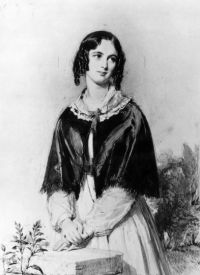
John Comyn

Definition and stakes

1911 Encyclopædia Britannica (1911)

“ After supporting Baliol in his rising against Edward I., Comyn submitted to the English king in 1296; he was sent to reside in England, but returned to Scotland shortly before his death.
Comyn’s son, John Comyn (d. 1306) , called the “red Comyn,” is more famous. Like his father he assisted Baliol in his rising against Edward I., and he was for some time a hostage in England. Having been made guardian of Scotland after the battle of Falkirk in 1298 he led the resistance to the English king for about five years, and then early in 1304 made an honourable surrender.
”
Source: Wikisource

James Grant,  Legends of the Black Watch; or…

“ All these were beautiful girls, and, save the last, were proud, haughty, and reserved; for their manners and bearing were all modelled exactly after those of Lady Comyn. Yolande de Gifford, whose father, though a lord, had, strange to say, been true to Scotland, was an orphan, and had been taken into the Castle of Kirkintulloch at the request of Bernard, Abbot of Arbroath, the Lord Chancellor, and almost in pity, as all her father's lands in the shire of Haddington had been seized by John Baliol. ”
Source: Gutenberg

James Grant,  Legends of the Black Watch; or…

“ Her husband's kinsman and her own dear friend, old Sir Alexander Baliol of Cavers, Great Chamberlain of Scotland, to whom she often hinted her complaints against Comyn and her suspicions of his infidelity, endeavoured to laugh away her fears.
"Madam," said he, on one occasion, "jealousy is the soul of a love which will brook no rival even for a moment. I mean not to hint that you love Red Comyn too much, but without this jealousy your love for him perhaps would die."
"You are too subtle a casuist for a woman, Sir Alexander of Cavers," replied the lady, cresting up her beautiful head
”
Source: Gutenberg

Get perspective with Kwize: daily news enlightened by great literature