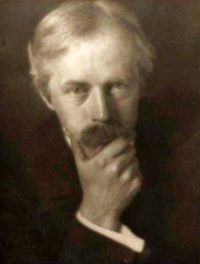
“ Still, the fact remains that—so far as extant evidence goes—John Lackland seems to have been the first English statesman who proposed to give some place, however subordinate, in the great council of the realm to laymen who were neither barons nor knights, but simple freemen. ”
John Lackland
Definition and stakes
The theme of “John Lackland” has been addressed by authors such as Kate Norgate, Florence Wilford, Jack London, Arthur Symons and Fergus Hume. It is often associated with terms like Rackham, Andrew, Arthur, England and lady.
Quotes about “John Lackland”
“ Then the wise and the foolish alike began to see that John had prevented a literal fulfilment of the prophecy by lending himself to a figurative one. He had “ceased to be king” by laying his crown at the feet of Pandulf, to take it back again on conditions which unquestionably helped to fix it, for the time at least, more securely than ever on his brow. The scapegoat of all parties was the unlucky prophet himself. Next day he and his son, who had been imprisoned with him, were tied each to a horse’s tail, dragged thus from Corfe to Wareham, and there hanged. ”
“ Triumphant everywhere on the continent, Innocent resolved to make an end of matters with John. In the winter of 1212 Stephen Langton and the bishops of Ely and London carried to Rome in person their complaints against their sovereign, and their entreaties that such a state of things should be suffered to continue no longer. In January 1213 they returned to the French court accompanied by Pandulf, and bringing with them a letter from the Pope to the French king. ”
“ Joyfully John of Alençon carried the tidings to his namesake of Mortain: “Come forward boldly! You are in luck’s way. The king is simple and pitiful, and kinder to you than you would have been to him. Your masters have advised you ill; it is meet they should be punished according to their deserts. Come! the king awaits you.” In spite of these assurances, it was “with much fear” that Count John approached his brother and threw himself at his52 feet. Richard raised him with a brotherly kiss, saying: “Think no more of it, John! You are but a child, and were left to ill guardians. ”
“ Langton and the Marshal carried it back to the king, who was now in Wiltshire. [995] One by one the articles were read out to him by the primate. John listened228 with a scornful smile: “Why do these barons not ask for my kingdom at once?” he said. “Their demands are idle dreams, without a shadow of reason.” Then he burst into a fury, and swore that he would never grant to them liberties which would make himself a slave. In vain the archbishop and the Marshal endeavoured to persuade him to yield; he only bade them go back to the barons and repeat every word that he had said. ”
“ The king’s sureties were the archbishop of Canterbury, the bishop of Ely, and William the Marshal. The choice of the archbishop as one of them was good policy on John’s part; and Langton’s acceptance of the office implies no wavering or double-dealing on his side. In so far as it was his inspiration that gave a new force to the enterprise of the barons, by raising it from a struggle for their own privileges into a struggle for the liberties of the English nation, he was in truth, as Roger of Wendover says, their “chief ally” ”
“ For them the important question was not which of Richard’s two possible heirs had the best legal right to his heritage, but which of the two was likely to make the least unsatisfactory sovereign. The outlook was in any case a gloomy58 one; the only choice was a choice of evils. Of the two evils, it was natural that Walter should regard John as the worst, if he thought of personal character alone. Every one knew by this time what John was; the most impartial of contemporary historians had already summed up his character in two words—“Nature’s enemy,” a monster. ”
“ The instinct, however, was a true one: it was Stephen Langton who was to give the first impulse to the work which was destined—though not till long after he had passed away—to make the rule of such a king as John impossible in England for evermore.The archbishop was determined to be satisfied with nothing short of a literal fulfilment of the promise on which he had insisted as a condition of the king’s absolution, the promise that to “all men” their rights should be restored. He saw that this end could be gained only by the instrumentality 219of the barons ”
“ Meanwhile, seventy transport vessels which had been built by Richard to serve either for sea or river traffic, and as many more boats as could be collected, were to be laden with provisions for the distressed garrison of the island fort, and convoyed up the stream by a flotilla of small warships manned by “pirates” under a chief named Alan and carrying, besides their own daring and reckless crews, a force of three thousand Flemings. Two hundred strokes of the oar, John reckoned, would bring these ships to the French pontoon; they must break it if they could ”
“ Maj. Matthew puts it after the reconciliation with Rome, representing it as despatched by John in his disappointment at finding that transaction profit him less than he had expected. The story of the interview between the envoys and the emir, as Matthew tells it, has therefore a very strong appearance of having been invented by that writer, as a kind of satire on John’s submission to the Pope; though the mere fact of some overture on John’s part for an alliance with the emir is neither impossible nor unlikely. ”
“ Gathering courage from the extremity of the peril, the French king hastily collected what forces he could—counts, barons, knights, men-at-arms, horse and foot, with the communes of the towns and villages—bade the bishops and clergy, monks and nuns, offer up masses, prayers and alms for the safety of the realm, and marched boldly against the invaders. ”
“ Philip answered at once: “The realm of England never was S. Peter’s patrimony; it is not so now, and never shall be. John was convicted long ago of treason against his brother Richard, and condemned by the judgement of Richard’s court; therefore John was never rightfully king, and had no power to surrender the kingdom. Moreover, if he ever was rightfully king, he afterwards forfeited his right to the crown by the murder of Arthur, for which he was condemned in our court. And in any case no king or prince can give away his realm without the consent of his barons, who are bound to defend it.” ”
“ No sooner had civil war broken out in England in the autumn of 1215 than the young Scottish king, Alexander, who owed his throne and almost his life to the timely help which John had given to his father four years before, marched into Northumberland and laid siege, on October 19, to Norham castle. ”
“ Through long years of diplomacy he had knit together a league which included all the powers on the northern and eastern borders of France, and, now that it was at last ready for united action, threatened the very existence of the French monarchy. While John was scouring the country between the Loire and the Dordogne, a formidable host was gathering in Flanders. Earl William of Salisbury was there with a picked band of Englishmen; the Flemish troops under Hugh de Boves who had been serving John as mercenaries in England had been recalled to swell the muster in their native land ”
“ John, who in his prosperous days made almost a parade of disbelief in William’s loyalty, and delighted in straining it to the uttermost by saying and doing everything he could think of to insult and provoke William, nevertheless knew well that in moments of peril William was the one counsellor to whose disinterestedness he could safely trust, the one follower on whom he could count unreservedly, the one friend whom he could not do without. ”
“ If the men of the king of England can prove in the court of the king of France that the same John has sworn, and given a written promise, to furnish money for the English king’s ransom, he, John, shall be held bound to pay it; and he shall hold all his lands, on both sides of the sea, as freely as he held them before his brother the king of England set out on his journey over sea; only he shall be free from the oath which he then swore of not setting foot in England ”
“ They had, however, purchased his expulsion at a ruinous cost to themselves; its real price was of course not the few hundreds of which they had robbed the exchequer for John’s benefit, but their own independence. John had outwitted them completely, and they had practically confessed themselves to be at his mercy. Before the council broke up, every member of it, including the queen-mother, took another oath of fealty “against all men” to the king “and to his heir”—in other words, to John himself. ”
“ France was caught between two fires. The most imminent danger was from the allies who were ready to pour into the realm from the north and east; but Philip, though conscious that the troops which he had at hand were insufficient to cope with this danger, dared not recall Louis while John was still threatening attack from the south. ”
“ This Peter was “a simple countryman,” who lived on bread and water, and was counted among the people for a prophet. He foretold that on the next Ascension Day John should cease to be king. Whether John was to die, or to be driven from the land, or to abdicate, Peter could not say; he only knew that it had been revealed to him in a vision that after the king had reigned prosperously for fourteen years, neither he nor his heirs should rule any more, “but one who is pleasing to God.” ”
“ William quietly repeated his former answer, that he had only acted upon the king’s own orders. “I deny it,” again said John. “You will gain nothing in the end; but I will bide my time; and meanwhile I will have you come with me to Poitou and fight for the recovery of my heritage against the king of France, to whom you have done homage.” The Marshal remonstrated; he could not fight against a man to whom he had done homage. On this John declared his treason to be manifest, and appealed to the judgement of the barons present. ”
“ From the moment when the northern barons first asked the king to confirm his great-grandfather’s charter, if not before, John must have known that the hand of the primate was with them in the matter. But he was quite as much alive as they were to the value of such a helper; moreover, he seems to have had the somewhat rare gift of being able to recognize in another man qualities which were conspicuously absent from his own character. Much as he hated Langton, he evidently trusted to his honour and loyalty as implicitly as he trusted to that of William the Marshal. ”
“ Over Wales, indeed, John’s triumph was won without the trouble even of a military demonstration on his part. The anarchy of Wales had been growing worse and worse ever since the death of Henry II. Its danger for England lay mainly in the opportunities which it afforded to any of the English barons of the border who might be treasonably inclined, for making alliances with one or other of the warring Welsh princes, and thus securing for themselves a support which might enable them to set at defiance the authority of the English crown. ”
“ The fortress which nature and art had combined to make impregnable was well stocked with supplies of every kind; moreover, it was one of the few places in Normandy which Philip had no hope of winning, and John no fear of losing, through treason on the part of its commandant. Roger de Lacy, to whom John had given it in charge, was an English baron who had no stake in Normandy, and whose personal interest was therefore bound up with that of the English king ”
“ Trade, and intercourse of every kind, between the dominions of John and Philip was to be free, save that no man, unless he were either a priest or a “known merchant,” might go to the court of either without special licence, if he were a subject of the other. Thirteen sureties swore to the truce on behalf of John, and thirteen on behalf of Philip, who further undertook that it should be kept by four other barons whose oaths John had wished to have on his side, but had apparently been unable to obtain. ”
“ It is hard to see what they feared, unless it were John’s possible vengeance, at some future time, for their universal readiness to welcome his rival. Not one town manned its walls, not one baron mustered his tenants and garrisoned his castles, to withstand the invader. Some, as soon as John was out of the country, openly made a truce with Philip for a year, on the understanding that if not succoured by John within that time, they would receive the French king as their lord ”
“ Landing at Barfleur, he went to Caen and thence turned southward to relieve Verneuil, which Philip was besieging. On the way he halted at Lisieux, where he took up his quarters with the archdeacon, John of Alençon, who had been his vice-chancellor. [215] He soon noticed that his host was uneasy and agitated, and at once guessed the cause. “Why do you look so troubled? You have seen my brother John; deny it not! Let him fear nought, but come to me straightway. He is my brother, and should have no fears of me; if he has played the fool, I will never reproach him with his folly. ”
“ That is, they were professional champions—men who made a business of hiring themselves out to fight the battles of any one who either could not or would not fight in his own person, but who could afford to pay for an efficient substitute. ”
“ By an ingenious piece of intentional confusion the Crown arrogated to itself the right of wardship in cases where it had no such right. If a man held land of the Crown by a non-feudal tenure, and also held other land under another lord by knight-service, the distinction between his holding in chief and his holding in chivalry was ignored for the king’s benefit, and the custody of all the man’s lands was appropriated to the Crown. ”
“ On the one hand, it is certain that at some time between Richard’s death and the middle of May 1200 Eleanor and John made an agreement in legal form, whereby John granted his mother to have and to hold all the days of her life, or during her pleasure, the whole of Poitou with all its appurtenances, she having first ceded and surrendered it to him “as her right heir,” received his homage for it, and made over to him the rights of government throughout the county and the fealty and services of its vassals. ”
“ John’s one remaining chance of holding Philip and the Bretons in check was to keep them in uncertainty whether Arthur were alive or dead, in order to prevent the Bretons from adopting any decided policy, and hamper the French king in his dealings with them and with the Angevin and Poitevin rebels by compelling him to base his alliance with them on conditions avowedly liable to be annulled at any moment by Arthur’s reappearance on the political scene. ”
“ One chronicler asserts that as long ago as the year 1210 some of the barons had contemplated driving John from his throne and setting up as king in his stead a man who, though born on foreign soil and engaged throughout his whole life in the service of foreign powers, had yet a claim to rank as one of themselves, and certainly not as the least distinguished among them—Simon, count of Montfort and titular earl of Leicester. ”
“ For any other man of six-and-twenty, to be thus forgiven—even though it were by a brother who was ten years older, and a king—expressly on the ground that he was a child, not responsible for his actions, would surely have been a humiliation almost more bitter than any punishment. Nor did John escape altogether unpunished. Richard’s forgiveness was strictly personal; the decree of the council of Nottingham was carried into effect with regard to all John’s English and Norman lands ”