John Ray

Definition and stakes

P. Martin Duncan,  Heroes of science (1882)

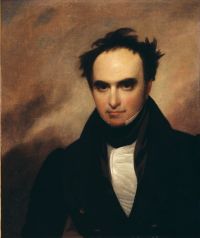
“ The name of this distinguished man was John Ray, and he was the son of Roger Ray and Elizabeth his wife, being born in 1628. His father was a blacksmith, of Black Notley, near Braintree, in Essex, and the boy was sent to school at the Grammar School at Braintree. There he found the kindness of Mr. Love, the master, in teaching him, a set-off against the general want of education in the establishment; and he had reason to be thankful, for before he was sixteen years of age he was sent, from the school, to Cambridge. ”
Source: Gutenberg

Various,  Notes and Queries, Vol. IV, Number 96…

“ Cambridge, July 29. 1851.
On the Letter "v" (Vol. iv., p. 55.) .
—I have read with pleasure the paragraphs in your "NOTES AND QUERIES" on "the letter v," and beg space for a further notice, with an especial reference to the patronymic of Ray or Wray. One family uses the motto, "Juste et Vrai," whose name is Wray; and another the same motto, whose name is Ray. And it will be remembered that John Ray, the naturalist, changed the orthography of his name from Wray to Ray, as he concluded it had been formerly written
”
Source: Gutenberg

George Simonds Boulger,  Dictionary of National Biography… (1891)

“ He was educated at Kendal grammar school, and apprenticed to a London apothecary. He obtained the prize for botany given by the Apothecaries' Company, a copy of Ray's ‘Synopsis,’ which is now in the British Museum; but he also paid attention to mollusca and insects. In Pennant's ‘British Zoology’ he is mentioned as the discoverer of Trochus terrestris. From 1757 to 1758 Hudson was resident sub-librarian of the British Museum, and his studies in the Sloane herbarium enabled him to adapt the Linnæan nomenclature to the plants described by Ray far more accurately than did Sir John Hill [q.v.] ”
Source: Wikisource

Get perspective with Kwize: daily news enlightened by great literature