“ CHAPTER IV POLTERGEISTS Poltergeist is the term assigned to those apparently meaningless noises and movements of objects of which we from time to time hear accounts. The word is, of course, German, and may be translated "boisterous ghost." A poltergeist is seldom or never seen, but contents itself by moving furniture and other objects about in an extraordinary manner, often contrary to the laws of gravitation ”
Poltergeist
Definition and stakes
A poltergeist, derived from the German poltern ("to rumble") and Geist ("ghost"), refers to a spirit or phenomenon associated with physical disturbances such as moving objects, loud noises, or unexplained occurrences. Authors such as Carolyn Wells dismissed poltergeists as mere superstition, while Malcolm Magoun Ferguson examined methods to counter their supposed influence, and H.
Addington Bruce linked many instances to deception or psychological explanations. Although skeptics frequently connect poltergeists to trickery or youthful pranks, certain cases remain unresolved, creating ambiguity between the paranormal and the ordinary.
Quotes about “poltergeist”
Malcolm Magoun Ferguson, Mr Hyde—and Seek (1950)
“ June 12, 1949—This morning I visited Chadwick, telling him what appears here. His advice to me was: "Your best bet is to find some action which will fit all the various theories about poltergeists, since you are concerned with sure counteraction rather than theorizing. You must apply this action when the poltergeist is dominant, and in such a way that Eliza is done neither bodily nor mental harm. You must surprise the poltergeist, confronting him as strongly as possible at the moment of his greatest aggression. And you must do so with something as opposite in all respects as possible." ”
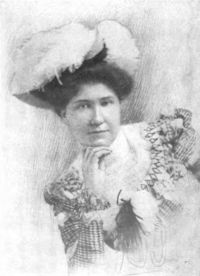 Carolyn Wells,
In Her Happiest Hour
(1919)
Carolyn Wells,
In Her Happiest Hour
(1919)
“ Five theories, I said. “Accident, suicide, murder, Poltergist, and hypnotism. The first we all agree is impossible. The second, none of us believes after reading her letters and diary. Poltergeist is rubbish—isn't it?” ”
Carolyn Wells,
In Her Happiest Hour
(1919)
“ Who, then?” “Poltergeist!” Cissy's voice was a hissing whisper, and her eyes were wild and weird in their expression. “Hush!” She held up her hand as the coroner began to speak. “Of course you don't know what that means! I didn't suppose you would. But it is an evil spirit who attacks people and harms them and kills them. The Poltergeist has power of materialization or disappearance, at will. And it can steal and maim and kill. Hush! I tell you, till I have finished. This Poltergeist attacked and killed Mrs. Moss' mother some years ago. But I never dreamed it would attack Marybelle. ”
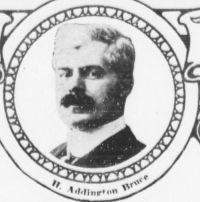 H. Addington Bruce,
Adventurings in the Psychical
H. Addington Bruce,
Adventurings in the Psychical
“ A single rat, scampering at midnight over the loose planks of an old attic, has often been quite sufficient to produce a counterfeit “poltergeist,” or troublesome ghost, of a highly impressive character. So, too, a pillow-slip swaying from a clothesline is apt to seem most ghostly to a gentleman returning home from a late supper. Ghosts, like much else in this amazing world of ours, have to be pretty sharply scrutinized. ”
H. Addington Bruce,
Adventurings in the Psychical
“ Nevertheless, it may confidently be affirmed that, instead of strengthening the case for the physical phenomena of spiritism, the doings of the poltergeists—as these tricky ghosts are called by psychical researchers—considerably weaken it. For during recent years a number of poltergeist hauntings have been looked into by members of the Society for Psychical Research, and whenever the conditions have been such as to permit a thorough investigation, it has been found that, so far from being spiritual entities, poltergeists are invariably compounded of deceit, credulity, and delusion. ”
Catherine Crowe, The Night-Side of Nature; Or, Ghosts and Ghost-Seers
“ It is certainly very difficult to conceive, but at the same time it is not impossible, that such strange phenomena as that of the Stockwell ghost, and many similar ones, may be the manifestations of some extraordinary electrical influence; but there are other cases of poltergeist which it is impossible to attribute to the same cause, since they are accompanied by evident manifestations of will and intelligence. ”
J. D. Beresford, The Psychical Researcher's Tale - The Sceptical Poltergeist
“ The poltergeists, with that lack of imagination which always characterises them, started to play the old trick of pulling off the Slippertons' bed-clothes in the middle of the night—one of the most annoying of the spirits' antics. ”
Carolyn Wells,
In Her Happiest Hour
(1919)
“ The doctor says she—it happened early this morning, the turning on of the gas jet, I mean—about four o'clock, maybe. How could an accident happen then? Marybelle was asleep. She was always a sound sleeper, except when her asthma bothered her. And the room was locked—bolted, and the windows fastened. Nobody could get in. And the Poltergeist, the wicked evil ghost, came and turned on the jet and left it turned on.” Cissy's voice nearly failed her, she shook like a leaf, and her eyes burned in her white, quivering face, but she went on: “And don't you know what the Poltergeist was? ”
Stephen Marlowe, It's Raining Frogs!
“ It couldn't very well rain anything inside the house."It's just like the poltergeists," Myra was saying, but George hardly heard her. "There are so many cases of poltergeist phenomena on record, of the little mischievous ghosts who throw dishes or stones or who cause pointless little accidents. And in each case, there's a catalyst. Usually it's a little child, and more often than not, a girl, but that isn't always the case. The important thing is, there has to be a catalyst." ”
 Frank Podmore,
The Naturalisation of the Supernatural…
(1908)
Frank Podmore,
The Naturalisation of the Supernatural…
(1908)
“ The Poltergeist is, so to speak, the fera nature of Spiritualism. Recently Mr. Andrew Lang has obtained, through the kindness of the Marquis d' Eguilles, copies of the official records of a trial in which a Poltergeist case formed the subject of enquiry. The case is a fairly typical one, and will serve to illustrate the nature of the phenomena usually exhibited. In January, 1851, Thorel, a shepherd, summoned M. Tinel, Curé of Cideville, for libel. The Curé had, according to the plaintiff, accused him of sorcery, and had procured his dismissal from his employment. ”
Elliott O'Donnell, Byways of Ghost-Land
“ Yet where did these articles go, and of what use would they be to a poltergeist? On one occasion, only, I caught a glimpse of the miscreant. It was about eight o'clock on a warm evening in June, and I was sitting reading in my study. The room is slightly below the level of the road, and in summer, the trees outside, whilst acting as an effective screen against the sun's rays, cast their shadows somewhat too thickly on the floor and walls, burying the angles in heavy gloom. In the daytime one rather welcomes this darkness ”
M. Y. Halidom, Tales of the Wonder Club, Volume II
“ Oh, by the way, Fritz, talking of old times, do you remember the night you spent at the house of old Franz Wenzel the Scharfrichter?""If I remember? Shall I ever forget it? ask, rather," answered my ancestor. "It seems to me only yesterday that I witnessed that execution; and then that Poltergeist—it seems as if I had witnessed his pranks only last night. I can [91] remember the minutest incident that happened on that unhallowed evening." ”
 Andrew Lang,
1911 Encyclopædia Britannica
(1911)
Andrew Lang,
1911 Encyclopædia Britannica
(1911)
“ The last is at least a vera causa: imposture has often been detected; but it is not so certain that this theory accounts for all the circumstances. To the student of human nature the most interesting point in the character of poltergeist phenomena is their appearance in the earliest known stages of culture, their wide diffusion, and their astonishing uniformity. Almost all the beliefs usually styled “superstitious” are of early occurrence and of wide diffusion: the lowest savages believe in ghosts of the dead and in wraiths of the living. ”
 Sabine Baring-Gould,
Devonshire Characters and Strange Events
(1908)
Sabine Baring-Gould,
Devonshire Characters and Strange Events
(1908)
“ One had seen a white hand come out from under the bed, another had seen a livid arm hanging down from the ceiling. There can, I think, be little doubt that it was not Mr. Chave, but the servant-maids who managed the whole series of phenomena. These knockings could easily be transmitted through boards, and the curtains tossed about, and books and candlesticks flung across the room, by having horsehair attached to them. That is the true secret of the Poltergeist manifestations in England, France, and Germany. ”
Andrew Lang,
Cock Lane and Common-Sense
“ What we need, to prove a ghost, and disprove an exclusively telepathic theory, is a ghost who is not only seen, heard, or even touched, but a ghost who produces some change in physical objects. Most provokingly, there are agencies at every successful séance, and in every affair of the Poltergeist, who do lift tables, chairs, beds, bookcases, candles, and so forth, while others play accordions. But then nobody or not everybody sees these agencies at work, while the spontaneous phantasms which are seen do not so much as lift a loo-table, generally speaking. ”
Malcolm Magoun Ferguson, Mr Hyde—and Seek (1950)
“ Now can we start from the beginning, with some idea what the term 'poltergeist' means to you?" "Yes. Sometimes strange supernormal happenings occur in the vicinity of an adolescent which come to be attributed to the operation of an alien power, directing agent, elemental force, or what you will, upon his victim's personality. The picture is that of a hermit crab in the shell of a periwinkle—only here the same skull quarters are shared simultaneously by an alternately dominant and dormant power and victim. ”
Frank Podmore,
The Naturalisation of the Supernatural…
(1908)
“ In all cases the bedstead in the neighbourhood of which the noises occurred was occupied by a child, or children, to whom other circumstances point as the centre of the disturbance. These "Poltergeist" disturbances, as they have been named, are of some historical importance, as it is to an outbreak of this kind in America that the beginning of the movement of modern Spiritualism may be traced. A farmer named John Fox occupied a frame house in Hydesville, a small hamlet in New York State. ”
Frank Podmore,
The Naturalisation of the Supernatural…
(1908)
“ It is only by a fortunate accident that we are able, here and there, to analyse the evidence for the spontaneous phenomena of the Poltergeist, and demonstrate its untrustworthiness. But in the next chapter we shall see how little to be trusted are the statements of competent witnesses as to phenomena occurring in their presence under conditions which are certainly more favourable for observation than those obtaining in the Poltergeist disturbances. ”
Andrew Lang,
1911 Encyclopedia Britannica
(1911)
“ A distinct species of hauntings are those in which unexplained sounds and movements of objects, apparently untouched, occur. The German term Poltergeist (q.v.) has been given to the supposed cause of these occurrences where the cause is not ascertained to be sportive imposture. ”
“ It was definitely established that the explosion occurred at the precise moment that a train on which Pauli was traveling stopped for a short time at the Göttingen railway station."The senator said: "The poltergeist phenomenon.""Not exactly," MacHeath said, "although there is a similarity. The poltergeist phenomenon is usually spectacular and is nearly always associated with teen-age neurotics. Then there's the pyrotic; fires always start in his vicinity.""But there's always a reason for psionic phenomena to react violently under subconscious control," Senator Gonzales pointed out. ”
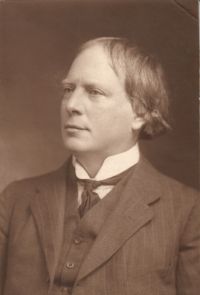 Arthur Machen,
The Great Return
Arthur Machen,
The Great Return
“ Indeed, I am sure that this particular paragraph deserves to stand alone, for even if the poltergeist be a real poltergeist, it merely reveals the psychic whimsicality of some region that is not our region. There were better things and more relevant things behind the few lines dealing with Llantrisant, the little town by the sea in Arfonshire. ”
 Charles Fort,
The Book of the Damned — Chapter 13
Charles Fort,
The Book of the Damned — Chapter 13
“ Poltergeists do not assimilate with our own present quasi-system, which is an attempt to correlate denied or disregarded data as phenomena of extra-telluric forces, expressed in physical terms. Therefore I regard poltergeists as evil or false or discordant or absurd—names that we give to various degrees or aspects of the unassimilable, or that which resists attempts to organize, harmonize, systematize, or, in short, to positivize—names that we give to our recognitions of the negative state. ”
J. D. Beresford, The Psychical Researcher's Tale - The Sceptical Poltergeist
“ I was connected with the thing because Edgar Slipperton and his wife were friends of mine; quiet, old-fashioned people who believed that when you were dead you were dead, and that that was the end of it. The phenomena that drove them out of their house at last were of the ordinary poltergeist type that date back to the days of John Wesley. The Slippertons had a fat and very stupid cook, whom I suspected of being an unconscious medium ”
Frank Podmore,
The Naturalisation of the Supernatural…
(1908)
“ To attain, therefore, a clear understanding of the physical phenomena presented to us by Spiritualist mediums, some of which are dealt with in the next chapter, it is essential to study the Poltergeist manifestations which are their lineal progenitors. ”
“ This bed was so heavy, it took both the woman and the girl to pull it out from the wall without anybody in it, and there were only three castors on it." The poltergeist must have been an insistent fellow, for when the unfortunate men took refuge in the other bed, they had not been long in it before it began to rise, but could not get out of the recess it was in unless it was taken to pieces."It kept very bad," we read, "for the next few nights. So Mr. Murphy, from the Guardian office, and another man named Devereux, came and stopped in the room one night." ”
Andrew Lang,
1911 Encyclopædia Britannica
(1911)
“ The explanations are not ideally satisfactory, but they are the result, in Mr Podmore's mind, of examination of several later cases of poltergeist. [1] In one a girl, carefully observed, was detected throwing things, and evidence that the phenomena occurred, in her absence, at another place and time, is discounted. In several other cases, exaggerations of memory, malobservation and trickery combined, are the explanations, and the conclusion is that there is “strong ground” for believing in trickery as the true explanation of all these, eleven cases, including the Worksop affair. ”
Charles Fort,
The Book of the Damned — Chapter 13
“ I don't care to deny poltergeists, because I suspect that later, when we're more enlightened, or when we widen the range of our credulities, or take on more of that increase of ignorance that is called knowledge, poltergeists may become assimilable. Then they'll be as reasonable as trees. By reasonableness I mean that which assimilates with a dominant force, or system, or a major body of thought—which is, itself, of course, hypnosis and delusion—developing, however, in our acceptance, to higher and higher approximations to realness. ”
H. Addington Bruce,
Adventurings in the Psychical
“ For three days, the poltergeist continued to plague her. Then it suddenly took its departure, under the following circumstances, narrated by Mr. Hughes in his official report:“On Tuesday morning Miss Turner was in an upper room at the back of the house, and the servant of the establishment and Emma Davies were outside, Emma having her back to the house, and unaware that she was observed. Miss Turner noticed that she had a piece of brick in her hand, held behind her back. ”
H. Addington Bruce,
Historic Ghosts and Ghost Hunters
“ The mere suggestion that Satan or a discarnate spirit is at the bottom of the mischief will then act as a powerful stimulus to the elaboration of even more sensational performances, and the result, if detection does not soon occur, will be a full-fledged "poltergeist," as the crockery-breaking, furniture-throwing ghost is technically called.The singular affair of Hetty Wesley, which we shall take up next, is a case in point. So, [Pg 34] too, is the history of the Fox sisters, who were extremely juvenile when they discovered the possibilities latent in the properly manipulated rap and knock. ”
Andrew Lang,
1911 Encyclopædia Britannica
(1911)
“ The usual reply is that some unknown but intelligent force is disengaged from the personality of the apparent medium. This apparent medium need not be present; he or she may be far away. The Highlanders attribute many poltergeist phenomena, inexplicable noises, sounds of viewless feet that pass, and so forth, to tàradh, an influence exerted unconsciously by unduly strong wishes on the part of a person at a distance. ”
Arthur Machen,
The Great Return
(1915)
“ Now and again, at intervals of a few years, there appear in the newspapers strange stories of the strange doings of what are technically called poltergeists. Some house, often a lonely farm, is suddenly subjected to an infernal bombardment. ”
Andrew Lang,
1911 Encyclopædia Britannica, Volume 13…
(1911)
“ The belief in hauntings was naturally persistent through the middle ages, and example and theory abound in the Loca infesta (Cologne, 1598) of Petrus Thyraeus, S.J.; Wierius (c. 1560) , in De praestigiis daemonum, is in the same tale. According to Thyraeus, hauntings appeal to the senses of sight, hearing and touch. The auditory phenomena are mainly thumping noises, sounds of footsteps, laughing and moaning. Rackets in general are caused by lares domestici (“brownies”) or the Poltergeist. In the tactile way ghosts push the living ”
