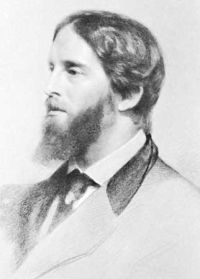
John Willoughby

Definition and stakes

by John Marshall Royal Naval Biography — Willoughby… (1823)

Captain Willoughby’s name was introduced by that gentleman in the following terms:– “The House will excuse my intruding myself on its attention, as I naturally feel a strong interest in the prosperity of a colony whose affairs I so long administered. In 1810, I proceeded with the expedition to the capture of the Isle of Bourbon, accompanied by that meritorious officer. Captain Willoughby, who has shed his blood so often in the service of the country, and who distributed the proclamations holding out, &c., &c., &c.”
Source: Wikisource

by John Marshall Royal Naval Biography — Willoughby… (1823)

Captain Willoughby being now a prisoner, a council was held by General De Caen, to determine whether or not he should be punished for having intrigued with the leading people of the island, and distributed proclamations, having a tendency to subvert the allegiance of the inhabitants in general. It was decided, notwithstanding his previous liability, that, as he had been taken in honorable fight, he should be treated as a prisoner of war. On this occasion, the French governor is reported to have said, “Let the foutre live; he has lost his eye and his ship, after defending her most gallantly.”
Source: Wikisource

by John Marshall Royal Naval Biography — Willoughby… (1823)

The restoration of the above-mentioned men, many of whose fellow prisoners had been seduced into the French service, was an immediate good result of the enterprise at Jacotel. The benefits of a more permanent nature, arising from the gallant exploit of Captain Willoughby, were an instance of the practicability, hitherto doubted, of making a descent upon the Isle of France, and a proof that the principal part of the troops in that colony consisted of militia, previously considered equal to soldiers of the line, but whose military character was now at once ruined.
Source: Wikisource

Get perspective with Kwize: daily news enlightened by great literature