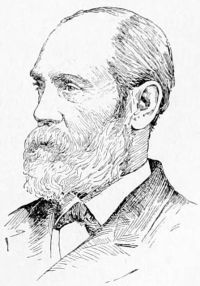
“ Samuel Adams, Dr. Thomas Young and Josiah Quincy, Jr., [17] an ardent young patriot devotedly attached to the liberties of his country, were the principal speakers. Only a fragment of the speech of Quincy remains. Counselling moderation, and in a spirit of prophecy, he said:"It is not, Mr. ”
Quotes about “Josiah Quincy Jr.”
Faye Huntington, Stories of Great Men
“ Quincy went to England doing much to promote the good of his country.He died upon the homeward voyage in 1775, in sight of American shores. His son Josiah, three years old at the time of his father's death, was educated at Harvard University, became a lawyer, a member of Congress, and having filled acceptably various other offices, was at length elected President of Harvard, which position he held for fifteen years. He had a son Josiah, also a graduate of Harvard, and again the fifth Josiah in the line is a graduate of the same institution. ”
Agnes Rothery, The Old Coast Road
“ Of the Quincy family, whose sedate jest it was that the estate descended from 'Siah to 'Siah, so frequent was the name "Josiah," the best known is perhaps the Josiah Quincy who was Mayor of Boston for six years and president of Harvard for sixteen. The portrait of his long, thin face is part of every New England history, and his busy, serene life, "compacted of Roman and Puritan virtues," is still upheld to all American children as a model of high citizenship. ”
 Waldo David Frank,
The unwelcome man
(1917)
Waldo David Frank,
The unwelcome man
(1917)
“ PART III I Beauty is a rose that needs tears to keep it fresh. Sensing the purport of this, Quincy resolved that there be no more crying.He was in an office—a huge, dinning, polished office of which the remote head was an acquaintance of his father, a man avid, according to Josiah’s warning, for youths who were alert, and relentless against youths with any but “serious” ideas. He was a capitalist. And since, by circumstance and lack of soul, all of his life had been expended in leash to a grindstone, he was convinced that just this fact, and it alone, contained the essence of good and right. ”
Various, The Atlantic Monthly, Volume 20…
“ Let us hope that the scramble of democracy will give us something as good; anything of so classic dignity we shall not look to see again.Josiah Quincy was no seeker of office; from first to last he and it were drawn together by the mutual attraction of need and fitness, and it clung to him as most men cling to it. The people often make blunders in their choice; they are apt to mistake presence of speech for presence of mind; they love so to help a man rise from the ranks, that they will spoil a good demagogue to make a bad general ”
Various, The Atlantic Monthly, Volume 20…
“ It fits Josiah Quincy exactly. Active in civic and academic duties till beyond the ordinary period of man, at fourscore and ten his pen, voice, and venerable presence were still efficient in public affairs. A score of years after the energies of even vigorous men are declining or spent, his mind and character made themselves felt as in their prime. ”
Waldo David Frank,
The unwelcome man
(1917)
“ He was the sentimental sort of business man, the type known by America as “hard-headed and conservative.” No sex-bound woman could have been more moved by a romance than he, by a failure. Indeed, to his feeling, dabbling in stocks was as gross a sin as, to the feeling of the priest, adultery. His name was Amos Cugeller. And Josiah Burt was rather surprised at himself for having done Quincy so good a turn. But Quincy was convinced{308} that his “serious” days were come, his worthless period over. He believed himself now capable of putting Marsden and his father to blush with his materialism. ”
Josiah Quincy, Memoir of the Life of John Quincy Adams
“ I am determined to get my own living, and to be dependent upon no one. With a tolerable share of common sense, I hope, in America, to be independent and free. Rather than live otherwise, I would wish to die before my time." In this spirit the tempting prospects in Europe were abandoned, and he returned to the United States, to submit to the rules, and to join, with a submissive temper, the comparatively uninteresting associations, of college life. After reviewing his studies under an instructor, he entered, in March, 1786, the junior class of Harvard University. ”
Various, The Atlantic Monthly, Volume 20…
“ In Josiah Quincy we have an example of character trained and shaped, under the nearest approach to a pure democracy the world has ever seen, to a firmness, unity, and self-centred poise that recall the finer types of antiquity, in whom the public and private man was so wholly of a piece that they were truly everywhere at home, for the same sincerity of nature that dignified the hearth carried also a charm of homeliness into the forum. ”
Waldo David Frank,
The unwelcome man
(1917)
“ The office-manager who prized him said to him:“Quincy—you’re not well. Business is slack. Why not take two weeks off?”But the boy demurred. What should he do with “two weeks off”? Was not the hard régime of business his salvation, his redemption from the barrenness that parched him, bit into him, when his mind turned toward it? He grew worse. But he persevered. And the office-manager, meeting Josiah Burt one day by chance, mentioned his boy’s condition. Josiah spoke to Sarah. Quincy’s mother took a six o’clock train the following morning to New York. At seven-thirty she was in Quincy’s room. ”
Claude G. Bowers, The party battles of the Jackson period (1922)
“ About her, too, she gathered a coterie of cultured women, and Mrs. John Quincy Adams and Mrs. Andrew Stevenson came and went in the house on the Square with as little ceremony as members of{23} the household. The charm of the house was enhanced by the exquisite Cora, the daughter, who reigned as the belle and toast of the town until her marriage, captivating, among others, the impressionable young Josiah Quincy, who thought her “undoubtedly the greatest belle in the U.S.,” and, if not “transcendently handsome,” possessed of a “fine figure, a pretty face.” ”
Waldo David Frank,
The unwelcome man
(1917)
“ His hair was streaked with grey. But still, his face had retained freshness and vitality despite its bulk and the ponderous chin that sagged over the low collar. Josiah was fifty-eight. He winced slightly at his daughter’s just remark. And then, he espied Quincy, still ensconced in his big chair. In the boy, was an outlet for his irritation caused by the episode of the hat. To display it toward Rhoda was unthought of.“Here,” he pointed with his hand toward Quincy, “bring my hat downstairs.” And then, having thrown out his remark, as to a lackey, he turned toward Marsden. ”
Josiah Quincy, Memoir of the Life of John Quincy Adams
“ Adams responded to a like intimation: "You will be disappointed. To me both alternatives are distressing in prospect. The most formidable is that of success. All the danger is on the pinnacle. The humiliation of failure will be so much more than compensated by the safety in which it will leave me, that I ought to regard it as a consummation devoutly to be wished." At this period an apprehension being expressed to him that if he was elected Federalists would be excluded from office, he said, he should exclude no person for political opinion, or on account of personal opposition to him ”
Wiliam Cabell Bruce, Benjamin Franklin, Self-Revealed…
“ For Quincy's highly promising son, Josiah, who died at sea at the early age of thirty-five, Franklin formed a warm regard when Josiah came over to London during the second mission of Franklin to England. To the father he wrote of the son in terms that were doubtless deeply [Pg 353] gratifying to him, and, in a letter to James Bowdoin, he said: "I am much pleased with Mr. Quincy. It is a thousand pities his strength of body is not equal to his strength of mind. ”
 Henry Adams,
History of the United States of America…
(1889)
Henry Adams,
History of the United States of America…
(1889)
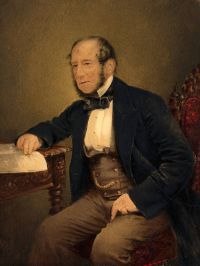
“ That this strong, self-asserting Boston gentleman, gifted, ambitious, the embodiment of Massachusetts traditions and British prejudices, should feel deep contempt for the moral courage and the understanding of men whose motives were beyond the range of his sympathies and experience, was natural; for Josiah Quincy belonged to a class of Americans who cared so intensely for their own convictions that they could not care for a nation which did not represent them ”
 Charles Felton Pidgin,
Further Adventures of Quincy Adams Sawyer and Mason Corner Folks
Charles Felton Pidgin,
Further Adventures of Quincy Adams Sawyer and Mason Corner Folks
“ Quincy replied. “Mrs. Putnam died in this house, and Alice has such a vivid recollection of her last day on earth—” “I understand,” said Huldah, “but you must come and see us every day.” “Where's Ezekiel?” asked Alice. “Getting in his last load of hay—about sixty tons this year. We only had thirty a year ago.” “Where's my namesake—Quincy Adams Pettingill?” “He goes every day to see his grandpa and grandma. Abner will be here with him soon.” When they reached the piazza, Quincy took a good view of the farm. ”
Josiah Quincy, Memoir of the Life of John Quincy Adams
“ Junius was essentially a sophist. His religion was infidelity, his abstract ethics depraved, his temper bitterly malignant, and his nervous system timid and cowardly. The concealment of his name at the time when he wrote was the effect of dishonest fear. The perpetuation of it could only proceed from the consciousness that the disclosure of his person would be discreditable to his fame. The object of Junius, when he began to write, was merely to overthrow the administration then in power. He attacked them in a mass and individually ”
 James Henry Stark,
The Loyalists of Massachusetts and the Other Side of the American Revolution
James Henry Stark,
The Loyalists of Massachusetts and the Other Side of the American Revolution
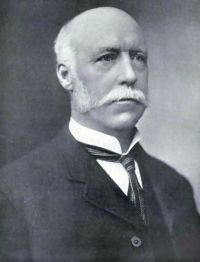
“ Samuel Quincy, the subject of this memoir, was the second son of Colonel Josiah Quincy, and the brother of Josiah, Junior, and Edmund. He was born in that part of Braintree now Quincy, April 23, 1735. He graduated at Harvard College in 1754, and studied law with Benjamin Pratt.Endowed with fine talents, Mr. Quincy became eminent in the profession of the law, and succeeded Jonathan Sewall as Solicitor-General of Massachusetts. He was the intimate friend of many of the most distinguished [368] men of that period, among whom was John Adams. ”
Jr. John T. Morse, John Quincy Adams
“ Henry A. Wise From a photograph by Brady, in the Library of the State Department at Washington. Autograph from the Chamberlain collection, Boston Public Library. JOHN QUINCY ADAMS (p. 001) CHAPTER I YOUTH AND DIPLOMACYOn July 11, 1767, in the North Parish of Braintree, since set off as the town of Quincy, in Massachusetts, was born John Quincy Adams. Two streams of as good blood as flowed in the colony mingled in the veins of the infant. If heredity counts for anything he began life with an excellent chance of becoming famous—non sine dîs animosus infans. ”
Jr. John T. Morse, John Quincy Adams
“ The memorial tablet inside the church bears upon it the words "Alteri Sæculo,"—surely never more justly or appropriately applied to any man than to John Quincy Adams, hardly abused and cruelly misappreciated in his own day but whom subsequent generations already begin to honor as one of the greatest of American statesmen, not only preëminent in ability and acquirements, but even more to be honored for profound, immutable honesty of purpose and broad, noble humanity of aims. ”
Charles Felton Pidgin,
Further Adventures of Quincy Adams Sawyer and Mason Corner Folks
“ One hand grasped Quincy's while the other encircled his dainty wife's waist, and he drew her towards him. “You have a fine farm,” said Quincy. “About as good as they make them,” 'Zeke replied. “I've a good market for all I can raise. Strout and Maxwell buy a great deal of garden truck, and I sell considerable to Mrs. Hawkins direct. What I have left we eat or give away.” Alice had taken young Quincy on her lap. He became communicative. “I've got a grandpa and grandma and Uncle Abner.” “Abner isn't your uncle,” said Alice. “I'm your Aunt Alice, and that is your Uncle Quincy.” ”
James Henry Stark,
The Loyalists of Massachusetts and the Other Side of the American Revolution
“ His health had failed seriously during the latter months of his residence in England, and his physicians strongly advised against his taking a winter voyage.His sense of public duty, however, overbore all personal considerations, and he set sail on the 16th of March, 1775, and died off Gloucester, Massachusetts, on the 26th of April.The citizens of Gloucester buried him with all honor in their graveyard; after the siege of Boston, he was removed and placed in a vault in the burying ground in Braintree. Josiah Quincy was barely thirty-one years of age when he thus died. ”
 Oliver Wendell Holmes Sr.,
Dorothy Q
(1874)
Oliver Wendell Holmes Sr.,
Dorothy Q
(1874)
“ And live untroubled by woes and fears Through a second youth of a hundred years Author’s “Preface” (partial, as applicable) to this poem, as it was published in the 1893 anthology Dorothy Q, Together with a Ballad of the Boston Tea Party & Grandmother's Story of Bunker Hill Battle. Dorothy Quincy, the subject of the first poem in this volume, was aunt of the first Josiah Quincy, Junior, “that fervid orator who expended his life for the cause of this country, dying on ship-board in sight of home, as he returned from England after hostilities had begun only seven days.” ”
Various, The Atlantic Monthly, Volume 12…
“ These associations, it should be stated, have been managed by persons of much consideration in their respective communities, of unostentatious philanthropy, but of energetic and practical benevolence, hardly one of whom has ever filled or been a candidate for a political office.There was a pleasant interview at this time which may fitly be mentioned. The venerable Josiah Quincy, just entered on his ninety-first year, hearing of the enterprise, desired to see one who had charge of it. ”
Jr. John T. Morse, John Quincy Adams
“ Such were the qualities which made him a great statesman; but unfortunately we must behold a hardly less striking reverse to the picture, in the faults and shortcomings which made him so unpopular in his lifetime that posterity is only just beginning to forget the prejudices of his contemporaries and to render concerning him the judgment which he deserves. Never did a man of pure life and just purposes have fewer friends or more enemies than John Quincy Adams. ”
Jr. John T. Morse, John Quincy Adams
“ Excusably Anglican in the bygone days of Genet's mission, they now remained still Anglican, when to be Anglican was to be emphatically un-American. As one reads the history of 1807 and 1808 it is impossible not to feel almost a sense of personal gratitude to John Quincy Adams that he dared to step out from his meek-spirited party and do all that circumstances rendered possible to promote resistance to insults and wrongs intolerable. In truth, he was always a man of high temper, and eminently a patriotic citizen of the United States. ”
Josiah Quincy, Memoir of the Life of John Quincy Adams
“ He foresaw that the popularity of Jackson would throw Calhoun out of the field, whether he was a candidate at the next ensuing election for the Presidency or Vice-Presidency. The time had now come to put an end to the hopes of Calhoun for the attainment of either of those high stations, by making public the animosity of Jackson; but this could not be done without a struggle. Branch, Ingham, and Berrien, all members of Jackson's cabinet, were known friends to Calhoun, and far from being well disposed to Van Buren. ”
Charles Felton Pidgin,
Further Adventures of Quincy Adams Sawyer and Mason Corner Folks
“ CHAPTER XIX. — BOYHOOD TO MANHOOD Until he was fourteen years of age, young Quincy attended the public schools in Fernborough and Cottonton. While in England he had had a governess and later a tutor, so that when he reached America he was much farther advanced than Fernborough boys of his own age. Methods in the New England town were different, however, and his Uncle Ezekiel was satisfied to have him keep pace with the others, and not arouse antagonism by asking for any special promotion. ”
Jr. John T. Morse, John Quincy Adams
“ To go with his father to England would be to enjoy a life precisely fitted to his natural and acquired tastes, to mingle with the men who were making history, to be cognizant of the weightiest of public affairs, to profit by all that the grandest city in the world had to show. ”
Oliver Wendell Holmes, The Poetical Works of Oliver Wendell Holmes…
“ The son of the latter, Josiah Quincy, the first mayor of Boston bearing that name, lived to a great age, one of the most useful and honored citizens of his time. The canvas of the painting was so much decayed that it had to be replaced by a new one, in doing which the rapier thrust was of course filled up.GRANDMOTHER'S mother: her age, I guess, Thirteen summers, or something less; Girlish bust, but womanly air; Smooth, square forehead with uprolled hair; Lips that lover has never kissed ”
