“ The people will risk life and fortune in this affair,—the very being of America depends on it. I am sorry the Company are led into such a scrape by the ministry, to try the American's bravery, at the expence of their property. The artifice of the ministry is to dispose of your tea, and preserve the vile Tea Act; but they'll miss their aim,—the Americans will not swallow cheap tea, which has a poison in the heart of it. They see the hook thro' the bait. I am a well wisher to the Company, and also to America; but death to an American is more desirable than slavery. ”
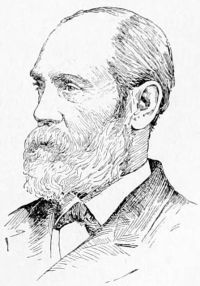
Francis S. Drake
Biographical details

Francis Samuel Drake (1828–1885), an American historian and biographer, is renowned for his Dictionary of American Biography (1872), a foundational work later expanded posthumously into Appletons' Cyclopædia of American Biography.
His writings, including Tea Leaves, examine key moments in American history, particularly the opposition to British taxation and the Boston Tea Party’s significance in the Revolution. Drake’s thorough recording of individuals and events highlights his dedication to preserving national identity and historical accuracy, shaping lasting narratives of American heritage.
Quotes by Francis S. Drake
“ What consistency is there in making a clamour about this small branch of the revenue, whilst we silently pass over the articles of sugar, molasses and rum, from which more than three-fourths of the American revenue has and always will arise, and when the Act of Parliament imposing duties on these articles stands on the same footing as that respecting tea, and the moneys collected from them are applied to the same purposes? Many of us complain of the Tea Act, not only as it affects our liberties, but as it affects our purses, by draining us annually of a large sum of money. ”
“ Parliament, on the one hand, has been taxing the Colonies, and they, on the other hand, have been petitioning and remonstrating against it, apprehending they have constitutionally an exclusive right of taxing themselves, and that without such a right, their condition would be but little better than slavery.Possessed of these sentiments, every new measure of Parliament tending to establish and confirm a tax on them renews and increases their distress, and it is particularly encreased by the Act lately made, empowering the East India Company to ship their tea to America. ”