“ Judy never did anything by halves, and after her introduction to books that she liked, she outread Anne. And as time went on it was her books that soothed her in her restless moods, and because there were in her father's library the writings of the greatest men and the best men who have given their thoughts to the world, Judy was gradually molded into finer girlhood, finer womanhood, than could have come to her by any other association. ”
Judy
Definition and stakes
The literary concept of "Judy" emerges as a multifaceted archetype, often embodying resilience, introspection, and the pursuit of self-definition. Authors such as Temple Bailey, Emma Dorothy Eliza Nevitte Southworth, and Algernon Blackwood explore Judy through diverse perspectives: as a passionate reader shaped by literature, a spirited individual navigating emotional challenges, or a figure confronting societal pressures.
Whether through Judy’s bold declaration of becoming an artist or her reflective moments by the sea, these portrayals highlight her evolution as a symbol of individuality. The theme captures the interaction between personal agency and external forces, illustrating how the literary Judy transcends mere character to represent universal struggles of identity.
Quotes about “Judy”
“ Judy lay on the sand watching the waves roll in, and thinking long thoughts. She thought of her father, living, perhaps, on some such lonely beach as this, but farther away from the haunts of men—alone, looking at the same stars, searching a vaster expanse for the ship that never came. ”
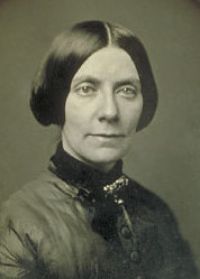 Emma Dorothy Eliza Nevitte Southworth,
For whose sake?
(1884)
Emma Dorothy Eliza Nevitte Southworth,
For whose sake?
(1884)
“ Judy! Judy! What is all this? Are you crying because you are doubtful of what is to become of you?” tenderly inquired the lady, laying her hand on the girl’s curly, dark hair.“It’s the parting with yeez a’, ma’am! And the thought what will I do at all, at all, when ye lave this! Oh, sure it is a silfish wretch that I am to be graiving for meself, instid of rejoicing with yeez!” wept the girl, backsliding hopelessly into her dialect.“Judy, dear, do you think we would leave you behind? No, dear, not one of us would think of such a cruel thing. We must take you with us, Judy, my poor child!” ”
Related terms
Authors who wrote about “Judy”
Mrs. Alfred Gatty Temple BaileyMargaret SuttonSophie RuskayNell SpeedSusan ErtzAlfred Pretor
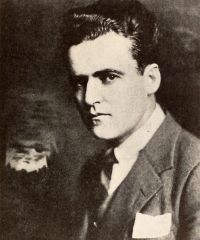 Marshall Neilan
 Algernon BlackwoodNancy Huston Banks
 Ethel TurnerJohn Williamson PalmerAnnie Hamilton DonnellJohn Talbot SmithEthel Hume Bennett
 F. Tennyson JesseEmma Dorothy Eliza Nevitte Southworth
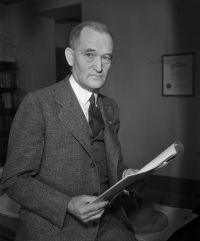 Harold Bell Wright
 L. T. Meade
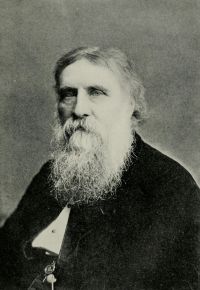 George MacDonald
Temple BaileyMargaret SuttonSophie RuskayNell SpeedSusan ErtzAlfred PretorMarshall NeilanAlgernon BlackwoodNancy Huston BanksEthel TurnerJohn Williamson PalmerAnnie Hamilton DonnellJohn Talbot SmithEthel Hume BennettF. Tennyson JesseEmma Dorothy Eliza Nevitte SouthworthHarold Bell WrightL. T. MeadeGeorge MacDonald