Kepler's laws of planetary motion

Definition and stakes

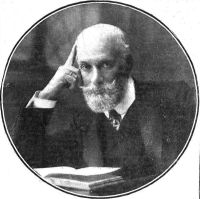
Arthur Berry A Short History of Astronomy

Kepler’s laws of planetary motion were in fact shewn to lead necessarily to the conclusions that the sun exerts on a planet an attraction inversely proportional to the square of the distance of the planet from the sun, and that such an attraction affords a sufficient explanation of the motion of the planet.
Source: Gutenberg

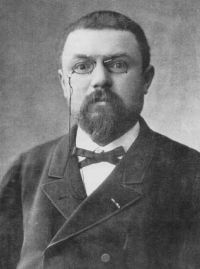
Portrait of Silvanus P. Thompson Silvanus P. Thompson Michael Faraday, His Life and Work

It had taken centuries to throw off the strange unmechanical ideas of force which had dominated the older astronomy. The epicyclic motions of the planets postulated by the Ptolemaic system were in no way to be accounted for upon mechanical principles. Kepler’s laws of planetary motion were merely empirical, embodying the results of observation, until Newton’s discovery of the laws of circular motion and of the principle of universal gravitation placed the planetary theory on a rational basis.
Source: Gutenberg

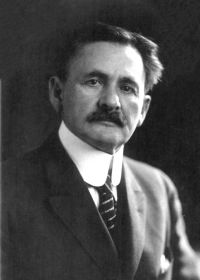
Various Popular Science Monthly (1904)

It is to Kepler's enthusiasm over the new truths that we owe the discovery of the true shape of the planetary orbits, and the laws of their motion. The idea of the motion of the earth was unfruitful among the ancients because it was never entertained with seriousness. Its adoption by Copernicus is the beginning of modern astronomy.
Source: Wikisource

Get perspective with Kwize: daily news enlightened by great literature