“ The beautiful bluffs bordering the Mississippi; the charm and grace of the sweeping lines of Lake Pepin; the tumbling, rushing waters of the Wisconsin, with their thickly-wooded hills and their green slopes of prairie and their October sunsets, seen through crimson oak and maple leaves; or the numerous falls of the upper Fox,—all have stirred the hearts of the fortunate people privileged to live within their influence. Hence, at Stevens Point, La Crosse, Appleton, and a few other cities in the state with similar surroundings, we have a literature with charming local flavor. ”
La Crosse, Wisconsin
Definition and stakes
Quotes about “La Crosse, Wisconsin”
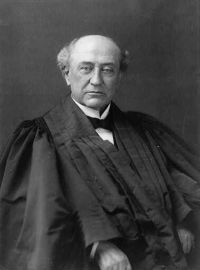
David Josiah Brewer,
Wisconsin Central Company v. Forsythe…
“ It had in 1856 granted to the state of Wisconsin six sections per mile to aid it in the construction of a road from Madison or Columbus, by way of Portage City, to the St. Croix river or lake, and thence to the west end of Lake Superior, and to Bayfield, with a proviso that if the road was not completed within 10 years the unsold lands should revert to the United States. Wisconsin ahd accepted this grant, and thus impliedly undertaken to construct the road. It made the La Crosse & Milwaukee Railroad Company the beneficiary of this grant. ”
Appletons' Cyclopædia of American Biography (1892)
“ When the diocese of La Crosse, on the Mississippi, was founded, he was named for the new see, and was consecrated bishop, 6 Sept., 1868. The diocese of Bishop Heiss extended over that part of Wisconsin north and west of Wisconsin river as far as the Mississippi. Under his administration several Roman Catholic churches were erected, the new cathedral was built, the Sisters of St. Francis were established in La Crosse, and an episcopal residence was built at his own expense. Twenty-five parochial schools and two asylums were opened. ”
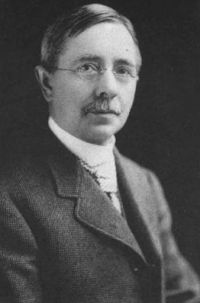
Samuel Freeman Miller,
Minnesota Company v. St. Paul Company…
“ THE La Crosse and Milwaukie Railroad Company was chartered by the legislature of Wisconsin to build a road across that State from Milwaukie to La Crosse, and began to build at Milwaukie, proceeding westward. The legislature also gave the company the right to mortgage, for the purpose of raising money, any particular division of their road separately. Under this provision of the statute, and for the purpose apparently of mortgaging them separately, the company divided the main road into two divisions, nearly equal in length, called the Eastern Division and the Western Division ”
“ Mr. Peck was born in New York in 1840, but he has lived in Wisconsin since 1843. He has been connected with newspapers at Whitewater, Jefferson, La Crosse, and Milwaukee. He founded the "Sun" at La Crosse in 1874, and later removed it to Milwaukee, where he called it "Peck's Sun." At one time he was unquestionably the best-known writer in Wisconsin, and the best-known Wisconsin writer throughout the country, which fame came to him through his "Peck's Bad Boy" sketches. ”
William H. C. Folsom, Fifty Years In The Northwest
“ At its organization in 1860, embraced its own territory and that of Baldwin, set off in 1872. It now includes township 29, range 15. It was originally covered with pine and hardwood timber. Within the last few years it has been improved and much of the timber land is used for farming. It is drained by the headwaters and tributaries of Rush and Menomonie rivers. The West Wisconsin railroad passes through the southern tier of sections, and a branch road, leading southward into a pine district, has a junction at Hersey. Most of the early settlers were Union soldiers. ”
Charles A. Beard,
History of the United States — XII
(1921)
“ Had it not been for the gold fever of 1849 that drew the wielders of pick and shovel to the Far West, Wisconsin would early have taken high rank among the mining regions of the country.From a favorable point of vantage on Lake Michigan, the village of Milwaukee, a center for lumber and grain transport and a place of entry for Eastern goods, grew into a thriving city. It claimed twenty thousand inhabitants, when in 1848 Congress admitted Wisconsin to the union. Already the Germans, Irish, and Scandinavians had found their way into the territory. ”
William H. C. Folsom, Fifty Years In The Northwest
“ Croix lake, via Marine, to St. Croix Falls and from St. Croix Falls, via Sunrise and Rush lakes, to Russell's farm, on Pokegama lake. He supervised the cultivation of the first crops raised in Polk county, at Jerusalem. He [Pg 104] settled in Stillwater in 1846, where he became an active worker in behalf of education, and did much to establish the present excellent system of schools. In 1846 he was a member of the first constitutional convention of Wisconsin Territory, representing this valley and all the country north of Crawford county. ”
Fredrika Bremer,
The Homes of the New World
(1853)
“ There are now no longer Indians in Wisconsin: its white population is rapidly on the increase. Wisconsin has no hills, but on all sides uncultivated, and for the most part fertile land, abounding in lakes and rivers. It is a state for agriculture and the rearing of cattle; the land in many parts, however, and in particular around Madison, where it is appropriated by the Federal government to the supplying an income to the State's university, is already very dear. ”
Historic Towns of the Western States
“ About 1882, however, a variety of causes led to the commencement of a stronger growth—chiefly the rapid development of the State University, the expansion of the State's administrative affairs, the bettering of railroad facilities, and an enlargement of local manufacturing interests. During the [245] past eighteen years there has been a steady gain, with every indication of permanency; the census of 1900 revealed the presence at the Wisconsin capital of 20,000 residents, while an additional 5000 dwell in closely abutting suburbs. ”
1911 Encyclopædia Britannica, Volume 28… (1911)
“ In 1834 two land offices were opened, and by 1836, 878,014 acres of land had been sold to settlers and speculators. A special census showed a population of more than 11,000 in 1836. The new growth started a movement for a separate Territorial organization for that part of Michigan lying west of Lake Michigan, but this was not finally accomplished until 1836, when Michigan entered the Union. The new Territory of Wisconsin comprised not only the area included in the present state, but the present Iowa and Minnesota and a considerable portion of North and South Dakota. ”
“ He came to America in 1852, and after three years' residence in Philadelphia, he settled in Watertown, in our own state. Though he was later a resident of Michigan, Missouri, and New York, and indeed represented the second-named state in the Senate of the United States, yet throughout his Reminiscences he frequently speaks of Wisconsin in a manner that shows he thought of it as his home.His life as an American citizen was full of honor and responsibility. He was made Minister to Spain by President Lincoln, but soon resigned to come back home and serve in the Civil War. ”
George T. Flom, A History of Norwegian Immigration to the United States
“ It was the intention of the emigrants to settle in La Salle County, Illinois; but in Milwaukee they were induced to remain in Wisconsin, and a site for a settlement was selected near Lake Muskego in the southeastern part of Waukesha County, about twenty miles southwest from Milwaukee.A story is told how it came about that they did not go to Illinois as originally intended. A good-natured fat man is said to have been pointed out to them as the product of Wisconsin. ”
1911 Encyclopædia Britannica, Volume 28… (1911)
“ The greater part of the western boundary separating the state from Minnesota and Iowa consists of the Mississippi and St Croix rivers flowing S. and the Saint Louis river flowing into Lake Superior. The Menominee and Montreal rivers form a considerable part of the boundary line on the N. and E., separating it from the Upper Peninsula of Michigan. The state's lake shore boundary is more than 550 m. long. Included in Wisconsin are the Apostle Islands in Lake Superior, and Washington Island and a group of smaller islands at the entrance to Green Bay on the Lake Michigan side. ”
Reuben Gold Thwaites,
Stories of the Badger State
“ As far back in time as human records go, we ever find old men bewailing prevalent degeneracy, and sighing in vain for "the good old times" when they were young. It is a blessing given to the old that the disagreeable incidents of their youth should be forgotten, and only the pleasant events remembered. As a matter of fact, we of to-day may well rejoice that, while Wisconsin enjoyed a lusty youth, she has now, in the fullness of time, grown into a great and ambitious commonwealth, lacking nothing that her sisters own, in all that makes for the prosperity and happiness of her people. ”
Charles McCarthy, The Wisconsin Idea — The Soil (1912)
“ Whatever may be the limitations which trammel inquiry elsewhere, we believe the great state of Wisconsin should ever encourage that continual and fearless sifting and winnowing by which alone the truth can be found. ”
1911 Encyclopædia Britannica, Volume 28… (1911)
“ In 1810 the product of lead had been about 400,000 ℔, largely mined and smelted by Indians, but the output was now increased enormously by the American miners who introduced new machinery and new methods, and by 1820 there were several thousand miners in the region, including negro slaves who had been brought north by Southern prospectors from Kentucky and Missouri. In 1818 Illinois was admitted to the Union and Wisconsin was incorporated in Michigan Territory, and at that time American civil government in the Wisconsin region was first established on an orderly and permanent basis. ”
Reuben Gold Thwaites,
Stories of the Badger State
“ Wisconsin was then a part of Indiana Territory, of which William Henry Harrison was governor. It was for the most part a wilderness; dense woods and tenantless prairies extended all the way from the narrow clearing at Green Bay to the little settlement at Prairie du Chien. There were small clearings at Portage, Milwaukee, and one or two other fur trading posts. There was no civil government here, and the few white people in all this vast stretch of country practically made their own laws, each man being judge and jury for himself, so long as he did not interfere with other people's rights. ”
“ Appleton's stores, hotels, newspapers, and working life in general became her laboratory in which to study the characteristics, defects, and aspirations of human life as she finds it. As she has achieved greater success in her writing she has widened her sphere of acquaintanceship and of helpfulness. Her present home is Chicago.The selection from her writings which we are permitted to give here is chosen because it illustrates her style and at the same time gives a vivid picture of one phase of the life of Wisconsin's metropolis. ”
1911 Encyclopædia Britannica, Volume 28… (1911)
“ State Public School for Dependent and Neglected Children (1886) at Sparta, with a farm of 234 acres; Wisconsin Home for Feeble Minded (1896) at Chippewa Falls; Wisconsin State Reformatory (1898) , near Green Bay; and Wisconsin State Tuberculosis Sanatorium (1907) at Wales, Waukesha county. In addition the board has partial control over the Wisconsin Workshop for the Blind (1903) at Milwaukee, where there is a willow ware factory, and the Wisconsin Industrial School for Girls (1875) also at Milwaukee. ”
Historic Towns of the Western States
“ The schools, the university, the unusual library facilities and the beauty and healthfulness of the town bring to it an ever-increasing accession of cultured people with moderate fixed incomes. Summer visitors from St. Louis, New Orleans, and other southern cities of the Mississippi Valley [264] are encouraged to come to the Four Lakes. The comfort of the inhabitants is greatly enhanced by a system of macadamized streets which is relatively the best in Wisconsin ”
“ The United States began to come to light by the gradual uplifting of this land to the north and the appearance of the tops of the Alleghanies, which were the next in order. Later, the Rockies started up. The United States grew southward from Wisconsin and westward from Blue Ridge. An early view of the country would have shown a large island which is now northern Wisconsin, and a long, thin tongue of this primitive rock sticking down from Canada into Minnesota, and these two growing states looking out over the waters at the mere beginnings of mountain-ranges east and west. ”
Reuben Gold Thwaites,
Stories of the Badger State
“ There are, all things considered, no abler, more forceful men in the Wisconsin of to-day than were some of those, now practically all passed away, who shaped her destinies in the fourth and fifth decades of the nineteenth century.The sessions of the legislature were the principal events of the year. Prominent men from all over Wisconsin were each winter attracted to Madison, as legislators, lobbyists, or visitors, crowding the primitive little hotels and indulging in rather boisterous gayety; for humor in those pioneer days was often uncouth. ”
Izola L. Forrester, Kit of Greenacre Farm
“ We were passing through on our way east from California, and mother stayed for about a week at Delphi. It's a little college town on Lake Nadonis, about twelve miles inland from Lake Michigan, and perhaps sixty miles north of Chicago on the big bluffs that line the shore nearly all the way to Milwaukee. Uncle Cassius was a first settler there, I believe. You don't have to be very old to have been a first settler in Wisconsin. I think about the first thing he helped establish there was Hope College. I don't remember so very much about it, girls, it was so long ago. ”
1911 Encyclopædia Britannica, Volume 28… (1911)
“ The region comprised in the present state of Wisconsin, when first explored by Europeans, was a favourite hunting-ground for the Indians who constantly crossed this region between the Great Lakes and the upper Mississippi. The Indian population of Wisconsin in the first half of the 17th century was probably larger than that of any region of similar size east of the Mississippi. Among the many different tribes were the Sioux, Chippewa, Kickapoo, Menominee, Mascoutin, Potawatomi, Winnebago, and Sauk and Foxes. ”
Wisconsin v. Michigan (297 U.S. 547…
“ Provided, that the section of the boundary in the Brule and Menominee rivers shall follow the main channel thereof, except that where islands occur in the Brule river or in the Menominee river, down to and inclusive of the Quinnesec Falls, extending to the line between sections 5 and 6, township 38 north, of range 20 east, of the Wisconsin Public Survey, extended across said river, the line shall pass through the channel nearest the Wisconsin bank, so as to throw all such islands into Michigan ”
Reuben Gold Thwaites,
Stories of the Badger State
“ These people had been described to them as an uneasy, selfish, land grabbing folk, who knew not how to enjoy themselves, and were for turning the world upside down with their Yankee notions. Naturally, the easy-going, comfort loving Wisconsin French looked upon their coming with great alarm.The principal event of the war in Wisconsin was the capture of Prairie du Chien by the British, in 1814. Wisconsin was then a part of Illinois Territory, and west of the Mississippi River lay the enormous Missouri Territory. ”
Charles McCarthy, The Wisconsin Idea — The Soil (1912)
“ In a new country, capital is a goddess to be propitiated. It is somewhat surprising, therefore, that the doctrine of the power of the state should spring up in Wisconsin, which in 1900 produced more lumber than any other state in the country. One would scarcely expect that legislation of a type which would lead one to think that its makers believed with Professor Schmoller that the state is "the grandest existing ethical institution" would gain a stronghold in such a community. ”
Oregon Historical Quarterly (1921)
“ I am satisfied that there is not in the northern part of these states, an inland town equal, in any respect to Janesville or Watertown. No man can open his eyes, and keep them open, during opportunities for observation, without being satisfied that Wisconsin is very far superior for all purposes of civilization, to the region lying south of it—and that it is destined to the support of a far more powerful community. ”