
“ The now huge town of Lambeth presents few points of interest either to the visitor or to the historian. There are no buildings of any antiquity except the Palace and the Church. There are no modern buildings at all worth notice. There have been two or three memorable houses{110} which we shall do well to touch upon: but they are not so memorable as to deserve long description. The Bishops of Rochester had a house in the Marsh—the site is in Carlisle Place, Westminster Road, at the back of St. Thomas's Hospital, close to Lambeth Palace. ”
Lambeth Palace
Definition and stakes
Lambeth Palace, the official London residence of the Archbishop of Canterbury, stands on the south bank of the River Thames, near Westminster. This historic site, acquired by the archbishopric around 1200, has functioned as a symbol of ecclesiastical authority and a storehouse of English heritage. Authors such as Walter Besant noted its architectural and historical importance, while Harriet Beecher Stowe described its stately, antique buildings amid landscaped grounds.
Anne Gilchrist highlighted its suburban character, and George Jacob Holyoake emphasized the gardens’ role in episcopal life. Lucia True Ames Mead linked it to centuries of English history, underscoring its unique connections to power and faith. These perspectives collectively reveal Lambeth Palace as a hub of religious, cultural, and architectural legacy.
Quotes about “Lambeth Palace”
 Harriet Beecher Stowe,
Sunny Memories of Foreign Lands…
Harriet Beecher Stowe,
Sunny Memories of Foreign Lands…
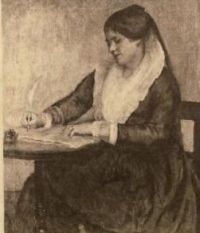
“ Lady Russell inquired with a good deal of interest after Prescott, our historian, and expressed the pleasure which she and Lord John had derived from his writings.We left early, after a most agreeable evening. The next day at eleven o'clock we went to an engagement at Lambeth Palace, where we had been invited by a kind note from its venerable master, the Archbishop of Canterbury. Lambeth is a stately pile of quaint, antique buildings, rising most magnificently on the banks of the Thames. It is surrounded by beautiful grounds, laid out with choice gardening. ”
 Anne Gilchrist,
Life of William Blake
(1880)
Anne Gilchrist,
Life of William Blake
(1880)
“ Hercules Buildings, stretching diagonally between the Kennington Road and Lambeth Palace, was then a street of modest irregular sized houses, from one to three stories high, with fore-courts or little gardens in front, in the suburban style; a street indeed only for half its length, the remainder being a single row, or terrace. No. 13, Blake's, was among the humbler, one-storied houses, on the right hand side as you go from the Bridge to the Palace. ”


Related terms
Authors who wrote about “Lambeth Palace”
Beatrice HomeFreiherr von Karl Ludwig PöllnitzErnest LawJohn Richard GreeneW. J. Loftie Romesh Chunder Dutt
 L. Frank Baum
 Ida Pfeiffer
 Nathaniel Hawthorne
 Albert Frederick CalvertN. D'Anvers
 Horace Newton AllenWalter HigginsF. Marion Crawford
 Walter JerroldWilliam Edward FryeRichard Boyle Bernard
 William Eleroy CurtisW. H. Davenport AdamsVarious
Romesh Chunder DuttL. Frank BaumIda PfeifferNathaniel HawthorneAlbert Frederick CalvertN. D'AnversHorace Newton AllenWalter HigginsF. Marion CrawfordWalter JerroldWilliam Edward FryeRichard Boyle BernardWilliam Eleroy CurtisW. H. Davenport AdamsVarious