Latin Fathers

Definition and stakes

W. Warde Fowler,  The Religious Experience of the Roman People

“ One of the characteristics of these Latin fathers is their fondness for using the famous words of the old Roman religion, but in new senses. They inherit that Roman love for a strong technical word of pregnant meaning which has left us so many imperishable legacies in terminology. Municipium, colonia, imperium, collegium, rise in one's mind the moment the subject is mentioned; and a few minutes' thought will reveal another score of words which in various forms pervade all our modern European terminology. So, too, with the language of religion. ”
Source: Gutenberg

W. Warde Fowler,  The Religious Experience of the Roman People

“ The subtle transcendentalism of the Greek fathers was foreign to Latin Christianity; the characteristics of Roman life as reflected in Roman worship are plainly visible in the Latin fathers. From Minucius Felix onwards, the Christians who wrote in Latin, so far from being imaginative and dreamy, are one and all matter-of-fact; historical, abounding in illustration of life and conduct; ethical rather than speculative; legal in their cast of thought rather than philosophical ”
Source: Gutenberg

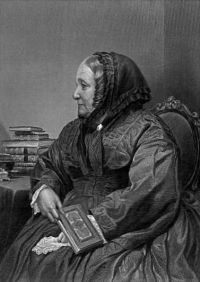
Portrait of Mrs. Jameson Mrs. Jameson,  Sacred and legendary art, volume 1… (1870)

“ We distinguish them as the Latin and the Greek Fathers. In Western Art, we find the Latin Fathers perpetually grouped together, or in a series: the Greek Fathers seldom occur except in their individual character, as saints rather than as teachers.
The four Latin Doctors are St. Jerome, St. Ambrose, St. Augustine, and St. Gregory. When represented together, they are generally distinguished from each other, and from the sacred personages who may be grouped in the same picture, by their conventional attributes.
”
Source: Gutenberg

Get perspective with Kwize: daily news enlightened by great literature