Leda

Definition and stakes

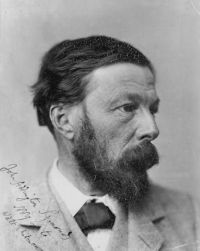
Portrait of John Addington Symonds John Addington Symonds,  The Life of Michelangelo Buonarroti

“ The loves of Leda and the Swan, of Ixion and Juno, are spasms of voluptuous pain; the sleep of the Night is troubled with fantastic dreams, and the Dawn starts into consciousness with a shudder of prophetic anguish. There is not a hand, a torso, a simple nude, sketched by this extraordinary master, which does not vibrate with nervous tension, as though the fingers that grasped the pen were clenched and the eyes that viewed the model glowed beneath knit brows. ”
Source: Gutenberg

1911 Encyclopædia Britannica, Volume 16… (1911)

“ LEDA, in Greek mythology, daughter of Thestius, king of Aetolia, and Eurythemis (her parentage is variously given) . She was the wife of Tyndareus and mother of Castor and Pollux, Clytaemnestra and Helen (see Castor and Pollux) . In another account Nemesis was the mother of Helen (q.v.) whom Leda adopted as her daughter. This led to the identification of Leda and Nemesis. In the usual later form of the story, Leda herself, having been visited by Zeus in the form of a swan, produced two eggs, from one of which came Helen, from the other Castor and Pollux. ”
Source: Wikisource

Portrait of Andrew Lang Andrew Lang,  Helen of Troy

“ Many Australian natives of to-day claim descent, like the royal house of Sparta, from the Swan. The Greek myths hesitated as to whether Nemesis or Leda was the bride of the Swan. Homer only mentions Leda among “the wives and daughters of mighty men,” whose ghosts Odysseus beheld in Hades: “And I saw Leda, the famous bedfellow of Tyndareus, who bare to Tyndareus two sons, hardy of heart, Castor, tamer of steeds, and the boxer Polydeuces.” These heroes Helen, in the Iliad (iii. 238) , describes as her mother’s sons. ”
Source: Gutenberg

Get perspective with Kwize: daily news enlightened by great literature