Lower Saxony

Definition and stakes

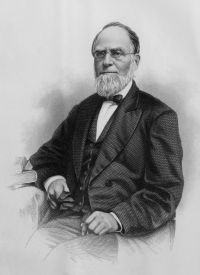
Wolfgang Menzel,  Germany from the Earliest Period…

“ Lower Saxony, as far as the Baltic, the principalities of Oldenburg, Salm, and Aremberg, the Hanse towns, Hamburg, Bremen, and Lubeck, were, together with a portion of the kingdom of Westphalia, at the same time also incorporated by Napoleon with France, under pretext of putting a stop to the contraband trade carried on on those coasts, more particularly from the island of Heligoland. He openly aimed at converting the Germans, and they certainly discovered little disinclination to the metamorphosis, into French. ”
Source: Gutenberg

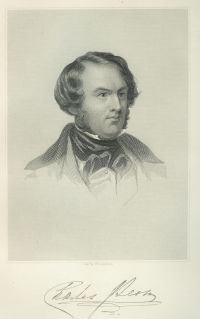
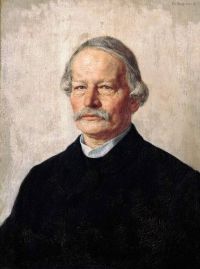
Portrait of Gustav Freytag Gustav Freytag,  Pictures of German Life in the XVIIIth and XIXth Centuries…

“ Even the resident free peasant of Lower Saxony was cast down from the place of honour, which he once maintained above the knightly serving man. The consciousness of a higher civilisation and more refined manners caused the citizen also to despise the countryman,--his love of eating, his rough simplicity, and his crafty shrewdness were treated with endless derision.
And yet the countryman in the fifteenth century still retained much of his good old habits and somewhat of his old energy.
”
Source: Gutenberg

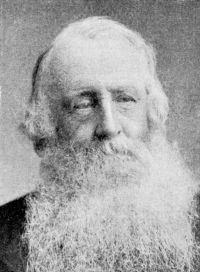
Portrait of John S. C. Abbott John S. C. Abbott,  The Empire of Austria; Its Rise and Present Power

“ The emperor declined the honor, jocularly remarking—
"There is no method more pleasant to kill an old man, than to marry him to a young bride."
The German empire was then divided into ten districts, or circles, as they were then called, each of which was responsible for the maintenance of peace among its own members. {102} These districts were, Austria, Burgundy, the Upper Rhine, the Lower Rhine, Franconia, Bavaria, Suabia, Westphalia, Upper Saxony and Lower Saxony. The affairs of each district were to be regulated by a court of a few nobles, called a diet.
”
Source: Gutenberg

Get perspective with Kwize: daily news enlightened by great literature