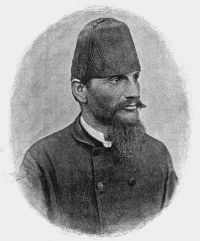
Mahmud II of the Ottoman Empire

Definition and stakes

Nevill Forbes The Balkans: A History of Bulgaria…

That Mahmud and his advisers could carry through such reforms at all in so old a body politic is remarkable: that they carried them through amid the events of his reign is almost miraculous. One affront after another was put on the Sultan, one blow after another was struck at his empire. Inspired by echoes of the French Revolution and by Napoleon’s recognition of the rights of nationalities, first the Serbs and then the Greeks seized moments of Ottoman disorder to rise in revolt against their local lords.
Source: Gutenberg

Various Encyclopaedia Britannica, 11th Edition…

He would rather die, he exclaimed, or become the slave of Russia, than not destroy his rebellious vassal. On his sole initiative, without consulting his ministers or the council of the empire, he sent instructions to Hafiz Pasha, commanding the Ottoman troops concentrated at Bir on the Euphrates, to advance into Syria. The fatal outcome of the campaign that followed he did not live to hear. When the news of Ibrahim’s overwhelming victory at Nessib (June 24, 1839) reached Constantinople, Mahmud lay dying and unconscious.
Source: Gutenberg

Nevill Forbes The Balkans: A History of Bulgaria…

When, having got rid of the old army, Mahmud imposed service on all his Moslem subjects, in theory, but in effect only on the Osmanlis (not the Arabs, Kurds, or other half assimilated nomads and hillmen) , it meant more than a similar measure would have meant in a Christian empire. For, the life of Islam being war, military service binds Moslems together and to their chiefs as it binds men under no other dispensation; therefore Mahmud, so far as he was able to enforce his decree, created not merely a national army but a nation.
Source: Gutenberg

Get perspective with Kwize: daily news enlightened by great literature