Tilsit

Definition and stakes

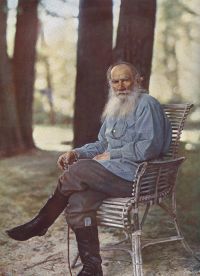
Portrait of Leo Tolstoy Leo Tolstoy,  War and Peace (1952)

“ HAVING RETURNED to the regiment and told the commander the state of Denisóv's affairs, Rostóv rode to Tilsit with the letter to the Emperor.
On the thirteenth of June the French and Russian Emperors arrived in Tilsit. Boris Drubetskóy had asked the important personage on whom he was in attendance, to include him in the suite appointed for the stay at Tilsit. "I should like to see the great man," he said, alluding to Napoleon, whom hitherto he, like everyone else, had always called Buonaparte.
”
Source: Wikisource

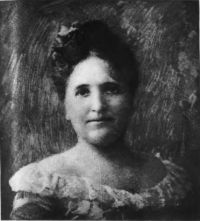
Portrait of Helen Leah Reed Helen Leah Reed,  Napoleon's Young Neighbor (1907)

“ Brilliant though the panorama of Napoleon's life is after Tilsit, we view with wonder rather than approval the striking pictures as they present themselves one by one. We observe the wild enthusiasm of the French people for their Emperor after Ulm and Austerlitz and Hohenlinden. Even the battle of Trafalgar—a victory for England—does not dampen their ardor. But Napoleon himself grows careful, and tries to keep from the army the news of his loss on the sea.
Prussia is humbled, Austria wishes to make terms, Napoleon has some successes in Spain, and he hopes to injure England.
”
Source: Wikisource

William Milligan Sloane,  The Life of Napoleon Bonaparte…

“ But the peace of Schönbrunn marked the initiation of a policy which dissolved the peace of Tilsit. There could now no longer be any serious question of marriage between members of the two courts. Compelled by circumstances to choose between a dual alliance with a first-rate power which must share on equal terms in the dominion of the world, and one with a second-rate power whose armies were surpassed by none, Napoleon had deliberately chosen the latter, as the shortest way to absolute and complete supremacy, to the assertion of a sovereign will over a conquered universe. ”
Source: Gutenberg

Get perspective with Kwize: daily news enlightened by great literature