Miranda v. Arizona

Definition and stakes

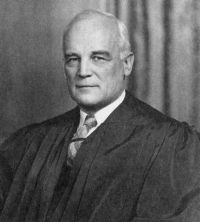
William Hubbs Rehnquist,  Dickerson v. United States — Opinion of the Court (2000)

“ In Miranda v. Arizona, 384 U.S. 436 (1966) , we held that certain warnings must be given before a suspect's statement made during custodial interrogation could be admitted in evidence. In the wake of that decision, Congress enacted 18 U.S.C. §3501, which in essence laid down a rule that the admissibility of such statements should turn only on whether or not they were voluntarily made. We hold that Miranda, being a constitutional decision of this Court, may not be in effect overruled by an Act of Congress, and we decline to overrule Miranda ourselves. ”
Source: Wikisource

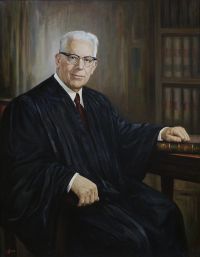
Thurgood Marshall,  Duckworth v. Eagan — Dissenting Opinion

“ The majority holds today that a police warning advising a suspect that he is entitled to an appointed lawyer only "if and when he goes to court" satisfies the requirements of Miranda v. Arizona, 384 U.S. 436, 86 S.Ct. 1602, 16 L.Ed.2d 694 (1966) . The majority reaches this result by seriously mischaracterizing that decision. Under Miranda, a police warning must "clearly infor [m] " a suspect taken into custody "that if he cannot afford an attorney one will be appointed for him prior to any questioning if he so desires." ”
Source: Wikisource

Get perspective with Kwize: daily news enlightened by great literature