Summary

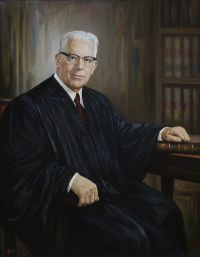
Portrait of Earl Warren Earl Warren Miranda v. Arizona — Opinion of the Court

Prior to any questioning, the person must be warned that he has a right to remain silent, that any statement he does make may be used as evidence against him, and that he has a right to the presence of an attorney, either retained or appointed. The defendant may waive effectuation of these rights, provided the waiver is made voluntarily, knowingly and intelligently. If, however, he indicates in any manner and at any stage of the process that he wishes to consult with an attorney before speaking, there can be no questioning.
Source: Wikisource

Portrait of Earl Warren Earl Warren Miranda v. Arizona — Opinion of the Court

III Today, then, there can be no doubt that the Fifth Amendment privilege is available outside of criminal court proceedings, and serves to protect persons in all settings in which their freedom of action is curtailed in any significant way from being compelled to incriminate themselves. We have concluded that, without proper safeguards, the process of in-custody interrogation of persons suspected or accused of crime contains inherently compelling pressures which work to undermine the individual's will to resist and to compel him to speak where he would not otherwise do so freely.
Source: Wikisource

Portrait of Earl Warren Earl Warren Miranda v. Arizona — Opinion of the Court

To turn back the criminal, yet, by so doing, destroy the dignity of the individual, would be a hollow victory. * * * We can have the Constitution, the best laws in the land, and the most honest reviews by courts — but unless the law enforcement profession is steeped in the democratic tradition, maintains the highest in ethics, and makes its work a career of honor, civil liberties will continually — and without end — be violated.
Source: Wikisource

Get perspective with Kwize: daily news enlightened by great literature