Summary

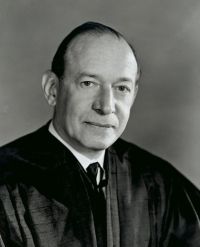
Portrait of Abe Fortas Abe Fortas In re Gault — Opinion of the Court

The privilege against self-incrimination is, of course, related to the question of the safeguards necessary to assure that admissions or confessions are reasonably trustworthy, that they are not the mere fruits of fear or coercion, but are reliable expressions of the truth. The roots of the privilege are, however, far deeper. They tap the basic stream of religious and political principle, because the privilege reflects the limits of the individual's attornment to the state and — in a philosophical sense — insists upon the equality of the individual and the state.
Source: Wikisource

Portrait of Abe Fortas Abe Fortas In re Gault — Opinion of the Court

II The Supreme Court of Arizona held that due process of law is requisite to the constitutional validity of proceedings in which a court reaches the conclusion that a juvenile has been at fault, has engaged in conduct prohibited by law, or has otherwise misbehaved, with the consequence that he is committed to an institution in which his freedom is curtailed.
Source: Wikisource

Portrait of Abe Fortas Abe Fortas In re Gault — Opinion of the Court

Against the application to juveniles of the right to silence, it is argued that juvenile proceedings are "civil," and not "criminal," and therefore the privilege should not apply. It is true that the statement of the privilege in the Fifth Amendment, which is applicable to the States by reason of the Fourteenth Amendment, is that no person "shall be compelled in any criminal case to be a witness against himself."
Source: Wikisource

Get perspective with Kwize: daily news enlightened by great literature