Summary

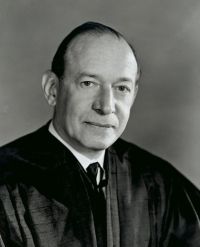
Portrait of Abe Fortas Abe Fortas In re Gault (387 U.S. 1) — Opinion of the Court

He would be entitled to clear advice that he could be represented by counsel, and, at least if a felony were involved, the State would be required to provide counsel if his parents were unable to afford it. If the court acted on the basis of his confession, careful procedures would be required to assure its voluntariness. If the case went to trial, confrontation and opportunity for cross-examination would be guaranteed. So wide a gulf between the State's treatment of the adult and of the child requires a bridge sturdier than mere verbiage, and reasons more persuasive than cliche can provide.
Source: Wikisource

Portrait of Abe Fortas Abe Fortas In re Gault (387 U.S. 1) — Opinion of the Court

It is incarceration against one's will, whether it is called 'criminal' or 'civil.' And our Constitution guarantees that no person shall be 'compelled' to be a witness against himself when he is threatened with deprivation of his liberty-a command which this Court has broadly applied and generously implemented in accordance with the teaching of the history of the privilege and its great office in mankind's battle for freedom.
Source: Wikisource

Portrait of Abe Fortas Abe Fortas In re Gault (387 U.S. 1) — Opinion of the Court

Beyond this, it is frequently said that juveniles are protected by the process from disclosure of their deviational behavior. As the Supreme Court of Arizona phrased it in the present case, the summary procedures of Juvenile Courts are sometimes defended by a statement that it is the law's policy 'to hide youthful errors from the full gaze of the public and bury them in the graveyard of the forgotten past.' This claim of secrecy, however, is more rhetoric than reality. Disclosure of court records is discretionary with the judge in most jurisdictions.
Source: Wikisource

Get perspective with Kwize: daily news enlightened by great literature