New College, Oxford

Definition and stakes

Various,  The Cornhill Magazine (vol. XLI, no… (1860)

“ The Working Men’s College was largely, perhaps mainly, the product of Oxford and Cambridge, in the sense that most of its founders and first teachers had belonged to one or other of the two Universities, and their object was to impart to others the College spirit as they had felt and known it and realised its value; to give to poor men, to manual workers, something, if it were ever so little, of the atmosphere which had brightened and broadened and sweetened their own lives. The College, accordingly, has always taken Oxford and Cambridge for its models. ”
Source: Gutenberg

J. Wells,  The Charm of Oxford

“ The names of New College men famous for learning or for political success, during the last half-century, are too recent to mention, but it is fitting to put on record that to New College belongs the sad distinction of having the longest Roll of Honour in the late War. It has lost about 250 of its sons, including four of the most distinguished young tutors in Oxford; History and Philosophy, Scholarship and Natural Science are all of them the poorer for the premature loss of Cheesman and Heath, Hunter and Geoffrey Smith ”
Source: Gutenberg

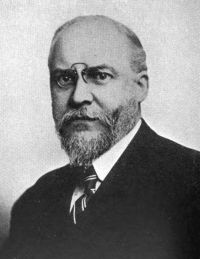
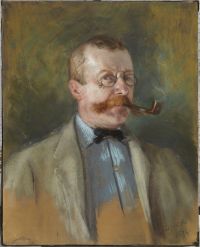
Portrait of Laurence Hutton Laurence Hutton,  Literary Landmarks of Oxford (1903)

“ Merton was a marked step forward in the modern University system, as it exists in Oxford to-day; but its Founder left the system in a state of transition, which the New College, with its wealth and grandeur of architecture, and its mode of imparting knowledge, brought to a state of what was considered culmination at the end of the Fourteenth Century. And, as it was the first to force its members to go to Mass daily, it was the parent of what now is called Compulsory, or Required, Chapel.
New College was good to the poor and to the needy.
”
Source: Wikisource

Get perspective with Kwize: daily news enlightened by great literature