“ All the sages were unable to give an interpretation, except a dervish who made his salutation and said: 'He is still looking amazed how his kingdom belongs to others.'Many famous men have been buried under ground Of whose existence on earth not a trace has remained And that old corpse which had been surrendered to the earth Was so consumed by the soil that not a bone remains. The glorious name of Nushirvan survives in good repute Although much time elapsed since he passed away. Do good, O man, and consider life as a good fortune, The more so, as when a shout is raised, a man exists no more. ”
Nushirvan
Definition and stakes
The theme of “Nushirvan” has been addressed by authors such as Edward Gibbon, Muhsin Fani, Freiherr von Joseph Hammer-Purgstall, Various and Sa'di. It is often associated with terms like sultan, king, Noureddin, khan and vizier.
Quotes about “Nushirvan”
Various, Blackwood's Edinburgh Magazine - Volume 54…
“ On the dignified bearing and self-possession of our youthful sovereign, the Khan enlarges in the strain of eulogy which might be expected from one to whom the sight of the ensigns of sovereignty borne by a female hand was in itself an almost inconceivable novelty, declaring, that "the justice and virtues of her Majesty have obliterated the name of Nushirvan from the face of the earth!" ”
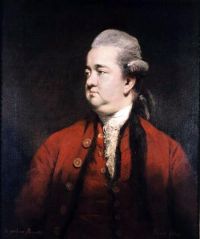 Edward Gibbon,
History of the Decline and Fall of the Roman Empire…
“ Nushirvan, or Chosroes, deserved the appellation of just. His government was firm, rigorous, and impartial. It was the first labor of his reign to abolish the dangerous theory of common or equal possessions: the lands and women which the sectaries of Mazdak has usurped were restored to their lawful owners; and the temperate chastisement of the fanatics or impostors confirmed the domestic rights of society. Instead of listening with blind confidence to a favorite minister, he established four viziers over the four great provinces of his empire, Assyria, Media, Persia, and Bactriana. ”
Edward Gibbon,
The History of the Decline and Fall of the Roman Empire
(1897)
“ The virtue of Chosroes was that of a conqueror, who, in the measures of peace and war, is excited by ambition and restrained by prudence; who confounds the greatness with the happiness of a nation, and calmly devotes the lives of thousands to the fame, or even the amusement, of a single man. In his domestic administration, the just Nushirvan would merit, in our feelings, the appellation of a tyrant. ”
The historians' history of the world in twenty-five volumes…
“ On the return of spring, Justinian descended into the fertile plains of Assyria, the flames of war approached the residence of Nushirvan, the indignant monarch sank into the grave, and his last edict restrained his successors from exposing their person in a battle against the Romans. Yet the memory of this transient affront was lost in the glories of a long reign; and his formidable enemies, after indulging their dream of conquest, again solicited a short respite from the calamities of war. ”
Edward Gibbon,
History of the Decline and Fall of the Roman Empire…
“ The arms of Nushirvan, and his fiercer grandson, were assisted with advice, and money, and troops, by the desperate sectaries who still lurked in their native cities of the East: their zeal was rewarded with the gift of the Catholic churches; but when those cities and churches were recovered by Heraclius, their open profession of treason and heresy compelled them to seek a refuge in the realm of their foreign ally. ”
Edward Gibbon,
History of the Decline and Fall of the Roman Empire…
“ According to the Orientals, the empire of Nushirvan extended from Ferganah, in Transoxiana, to Yemen or Arabia Fælix. He subdued the rebels of Hyrcania, reduced the provinces of Cabul and Zablestan on the banks of the Indus, broke the power of the Euthalites, terminated by an honorable treaty the Turkish war, and admitted the daughter of the great khan into the number of his lawful wives. Victorious and respected among the princes of Asia, he gave audience, in his palace of Madain, or Ctesiphon, to the ambassadors of the world. ”
Muhsin Fani, The Dabistán, or School of manners…
“ But Nushirvan, under the guidance of the contemporary Azar Sasán, although conforming to the Dasátir and Mah Zand, was during the whole of his life innocent of the crime of slaying harmless animals; his successors however followed the precepts of the Kah Zend, until the fifth Sasán, [518] having uttered imprecations against the people of Iran, they became the victims of privation and wretchedness.The professors of the Abadíán faith say that Ahriman was produced by Time: they also say that the angels and the heavens have existed, exist, and will continue to exist. ”
Muhsin Fani, The Dabistán, or School of manners…
“ Farzanah Kharrád, of the family of Mahbud, who had been the khan salar (royal table-decker or taster) to the equitable monarch Nushirvan, [325] and put to Pg 104 death through the sorcery of a Jew and the calumnies of a chamberlain, as recorded in the Shah Namah of the king of poets, Ferdúsi, and in other histories: Kharrad joined himself to Kaivan in the bazar of Shiraz, and practised religious austerities for many years. ”
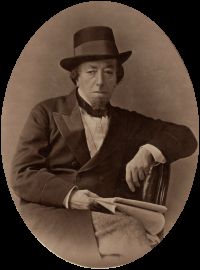 Benjamin Disraeli,
Tancred — Chapter XXXVIII. Tancred's Recovery
(1847)
“ Tancred, shrouded in his Bedouin cloak, and accompanied by Baroni, visited the circle of black tents, which they found almost empty, the whole band, with the exception of the scouts, who are always on duty in an Arab encampment, being assembled in the ruins of the amphitheatre, in whose arena, opposite to the pavilion of the great Sheikh, a celebrated poet was reciting the visit of Antar to the temple of the fire-worshippers, and the adventures of that greatest of Arabian heroes among the effeminate and astonished courtiers of the generous and magnificent Nushirvan. ”
Freiherr von Joseph Hammer-Purgstall, The History of the Assassins, Derived from Oriental Sources
“ Besides the descendants of Nushirvan’s brother, and of the liberator, Feridun, and the families of Bawend and Kawpara, whose origin mounts to the highest Persian antiquity, that of Keyumers,237 which reigned from the fall of the Kawpara, to the foundation of the empire of the Sefi, trace their descent from the king of the same name, who appears so darkly through the remote clouds of historical traditions, that many writers actually confound the first Persian king with the first man. ”
Edward Gibbon,
History of the Decline and Fall of the Roman Empire…
“ At the siege of Dara, the valor of Bahram was signalized under the eyes of Nushirvan, and both the father and son successively promoted him to the command of armies, the government of Media, and the superintendence of the palace. The popular prediction which marked him as the deliverer of Persia, might be inspired by his past victories and extraordinary figure: the epithet Giubin is expressive of the quality of dry wood: he had the strength and stature of a giant ”
Freiherr von Joseph Hammer-Purgstall, The History of the Assassins, Derived from Oriental Sources
“ In the time of the148 ancient Persian monarchy, the family of Hanefshah reigned in Thaberistan and Mazanderan, till Korad, the father of Nushirvan, transferred the government of this country to his eldest son, Keyuss. Keyuss revolted against his brother Nushirvan, who had ascended the throne of Persia, and succumbed to his arms. One of his descendants, called Bawend, successfully re-asserted the rights of his predecessors, in the 45th year of the Hegira ”
Muhsin Fani, The Dabistán, or School of manners…
“ Ammianus Marcellinus, in the fourth century of our era attests, that the title of king was in Deri, “court-language,” yet the Pehlevi was spoken concurrently with it during the reigns of the first twelve Sassanian princes, until it was proscribed by a formal edict of the thirteenth of them, Bahram gor, in our fifth century. Nushirvan and Parviz, in the sixth century, were both celebrated for the protection which they granted to arts and sciences. ”
Muhsin Fani, The Dabistán, or School of manners…
“ Also in the reign of Núshirvan, the fortunate descendant from the Sháíyán dynasty, at one time whilst in the pursuit of game, an arrow shot intentionally from the bow of a noble champion named Fartúsh, wounded a deer so that it fell dead: his son, Ayín Túsh, was perfectly horror-struck, and in retaliation with an arrow pinned his father’s body to that of the slaughtered deer; so that, in future, there should be no infringement of the Farhang law. ”
The Book of the Thousand Nights and a Night… (1885)
“ She said, It hath reached me, O auspicious King, that when Anushirwan hurried the damsel and asked her, "Why hast thou tarried?" she answered, "Because a single sugar-cane gave not enough for thy need; so I pressed three; but they yielded not to much as one did before." Rejoined he, "What is the cause of that?"; and she replied, "The cause of it is that when the Sultan's [FN#125] mind is changed against a folk, their prosperity ceaseth and their good waxeth less." So Anushirwan laughed and dismissed from his mind that which he had purposed against the villagers. ”
 Andrew Lang,
The Arabian Nights Entertainments
“ Noureddin--for so the vizir's son was named--went freely in and out of his mother's apartments. He was young, well-made and agreeable, and had the gift of charming all with whom he came in contact. As soon as he saw the beautiful Persian, though aware that she was destined for the king, he let himself be carried away by her charms, and determined at once to use every means in his power to retain her for himself. The Persian was equally captivated by Noureddin, and said to herself: "The vizir does me too great honour in buying me for the king. ”
The Book of the Thousand Nights and One Night…
“ When Noureddin came in presence of the King, he kissed the ground before him and repeated the following verses, for he was facile of speech, firm of soul and abounding in good parts and natural gifts:May all delights of life attend thee, O my lord, And mayst thou live as long as night and morning be! Lo! when meets tongues recall thy magnanimity, The age doth leap for Joy and Time claps hands for glee.The Sultan rose to receive them and after thanking Noureddin for his compliment, asked the Vizier who he was. The Vizier replied, "This is my brother's son." ”
The Book of the Thousand Nights and One Night…
“ When he heard the Sultan's order and saw the enemies intent upon killing his master's son, it was grievous to him; so he went out from before the Sultan and mounting his steed, rode to Noureddin's house and knocked at the door. Noureddin came out and knowing him, would have saluted him: but he said, 'O my lord, this is no time for greeting or converse.' 'O Ilmeddin,' asked Noureddin, 'what is the matter?' 'Arise and flee for your lives, thou and the damsel,' replied he: 'for Muin ben Sawa hath laid a snare for you; and if you fall into his hands, he will kill you. ”
Iowa Press and Authors' Club, Prairie Gold
“ Nourmahal. We cannot appeal to our ancestors. We cannot appeal to anything, and nothing can be undone. As the Persian poet says, "The moving finger writes," and what is written must be. King Nasrulla. And if what is written is beautiful, and if you are to be a king's throne-mate, if all the treasures of all the world are to be sought out for you—— Nourmahal. It is nothing, nothing, if you must have another wife, if you must have two other wives, three. King Nasrulla. My prime minister will choose the others. I choose you. ”
Aḥmad ibn Yaḥyá al-Balādhurī, The Origins of the Islamic State… (1916)
“ Anûshirwân assigns kings. Anûshirwân assigned kings, stationed them in different districts, and conferred on each one of them the governorship [made him Shâh] of one district. One of these was "Khaḳân al-Jabal" [lord of the mountain] who bore the title "Ṣâḥib as-Sarîr" [11] [holder of the throne] and was named Wahrârzân-shâh. Another was the king of Filân surnamed Filân-shâh. Others were Ṭabarsarân-shâh, the king of al-Lakz—surnamed Jarshân-shâh—the king of Masḳaṭ (whose kingship has been abolished) , the king of Lirân—surnamed Lirân-shâh—and the king of Sharwân called Sharwân-shâh. ”
Malayan Literature: Comprising Romantic Tales…
“ Then the Sultan ordered them to take up these riches and give them to the fakirs and the poor. Then he rendered thanks unto God that he had thus securely established his law among his subjects.Now it was in the times when Nouchirvau governed with justice and equity, protecting his subjects and causing his kingdom to prosper. One day he asked the grandees of his court, "Are there in my kingdom any places deserted and without inhabitants?"The grandees who were there answered, "O king of the world, we know not in all your Majesty's realm a place which is not inhabited." ”
Unknown, The Book of the Thousand Nights and One Night (1901)
“ Noureddin rose and kissed the hand of his father, who said to him, ‘If I knew that thou wouldst deal fairly by Enis el Jelis, I would give her to thee.’ ‘O my father,’ replied Noureddin, ‘how should I not deal fairly by her?’ Quoth the Vizier, ‘O my son, I charge thee not to take another wife nor concubine to share with her nor sell her.’ ‘O my father,’ answered Noureddin, ‘I swear to thee that I will do none of these things.’ Then he went in to the damsel and abode with her a whole year, whilst God caused the King to forget the affair. ”
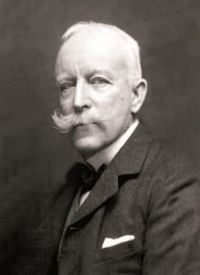 Thomas Hungerford Holdich,
1911 Encyclopædia Britannica
(1910)
“ These are the Naushirwanis, a purely Persian race, who passed into Baluchistan within historic times, although the exact date is uncertain. The Naushirwanis appear to be identical with the Tahuki or Tahukani who are found in Perso-Baluchistan. (A place Taoce is mentioned by Nearchus, by Strabo and by Ptolemy.) They are a fine manly race of people, in many respects superior to their modern compatriots of Iran. ”
Andrew Lang,
The Arabian Nights Entertainments
“ The king's wrath was kindled against Noureddin. He ordered the captain of the guard to take with him forty men, to pillage Noureddin's house, to rase it to the ground, and to bring Noureddin and the slave to him. A doorkeeper, named Sangiar, who had been a slave of Khacan's, hearing this order given, slipped out of the king's apartment, and hastened to warn Noureddin to take flight instantly with the beautiful Persian. ”
Amir Khusraw Dihlavi, Bagh O Bahar, or Tales of the Four Darweshes
“ Khiradmand could no longer restrain himself, but without choice, ran and threw himself at [the king's] feet. His majesty lifted up the Wazir's head with his hands, and said, "There, thou hast at last seen me; art thou satisfied? Now go away, and do not disturb me more—do thou govern the empire." Khiradmand, on hearing this, gnashing his teeth, wept said, "This slave, by your favour and welfare, can always possess a kingdom; but ruin is spread over the empire from your majesty's such sudden seclusion, and the end of it will not be prosperous. What strange fancy has possessed the royal mind! ”
Sir E. Denison Ross, The heart of Asia
“ But further honours were in store for the obsequious Abū-l-Fayz. Nādir deigned to accept his lovely daughter as a wife, bestowing her sister, at the same time, on his nephew. He created Mohammad Rahīm Bi, to whose influence he owed his reception, Khān, and gave him command of 6000 chosen troops levied in Turkestān. Having thus brought Bokhārā to heel, Nādir Shāh turned his attention to Khiva. He sent an envoy to Ilbars Khān, demanding his instant submission. The Khivan was a man of ungovernable temper, and his reply was to put to death those who held out to him the olive branch. ”
The Book of the Thousand Nights and One Night…
“ So I said to Noureddin, "O my son, sell her to me for four thousand dinars." He looked at me and replied, "O pestilent old man, I will sell her to a Jew or a Christian rather than to thee!" "I do not buy her for myself," said I, "but for our lord and benefactor the Sultan." When he heard my words, he flew into a passion and dragging me off my horse, for all I am an old man, beat me till he left me as thou seest; and all this has befallen me but because I thought to buy the girl for thee.' Then the Vizier threw himself on the ground and lay there, weeping and trembling. ”
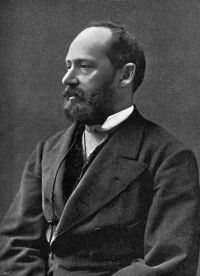 Ármin Vámbéry,
Árminius Vambéry, his life and adventures
“ My third day's march took me over a region of low hills into the plain of Nishapur, so celebrated in Persia, and I may add in all Asia. Djolghe-i Nishabur (Plain of Nishapur) is in the eyes of the Persian the ne plus ultra of beauty and wealth. For him the air there is purer and more fragrant than elsewhere; its water the sweetest in the world, and its products without rivals in creation. It is difficult adequately to describe the proud joy which is pictured in his countenance as he points out the hills lying towards the north-east, abounding in turquoise mines and precious metals. ”
Andrew Lang,
The Arabian Nights Entertainments
“ I will come to his aid, and while pointing out that you only yield his life at my supplications, you can force him to take the beautiful Persian on any conditions you please." Khacan agreed to follow this plan, and everything took place as arranged. On Noureddin's return Khacan pretended to be about to slay him, but yielding to his wife's intercession, said to his son: "You owe your life to your mother. I pardon you on her intercession, and on the conditions that you take the beautiful Persian for your wife, and not your slave, that you never sell her, nor put her away." ”
