Nishapur

Definition and stakes

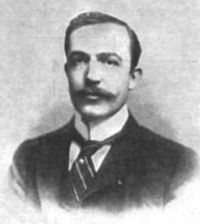
Portrait of Ármin Vámbéry Ármin Vámbéry,  Árminius Vambéry, his life and adventures

“ My third day's march took me over a region of low hills into the plain of Nishapur, so celebrated in Persia, and I may add in all Asia. Djolghe-i Nishabur (Plain of Nishapur) is in the eyes of the Persian the ne plus ultra of beauty and wealth. For him the air there is purer and more fragrant than elsewhere; its water the sweetest in the world, and its products without rivals in creation. It is difficult adequately to describe the proud joy which is pictured in his countenance as he points out the hills lying towards the north-east, abounding in turquoise mines and precious metals. ”
Source: Gutenberg

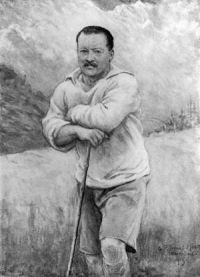
Portrait of Samuel Marinus Zwemer Samuel Marinus Zwemer,  A Moslem seeker after God

“ It was taken and razed to the ground by Mongols in 1221, but a century later Ibn Batuta found the city again flourishing, with four colleges, numerous students, and an export of silk-stuffs to India. Nishapur was famous for its fruits and gardens which gave it the epithet of “little Damascus.”
We have an interesting portrait of Al-Ghazali’s chief teacher while he was at Nishapur,—Abul-Maʾali ʿAbdal-Malik Al-Juwaini Imam al-Haramain. He was born at Bushtaniqan, near Nishapur, on the twelfth of February, 1028, and was one of the most learned and celebrated teachers of Moslem law in his day.
”
Source: Gutenberg

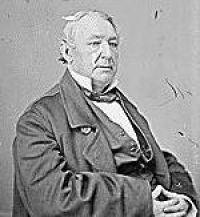
Portrait of George Rawlinson George Rawlinson,  The Seven Great Monarchies Of The Ancient Eastern World…

“ The river of Nishapur is formed by numerous small streams, which descend from the mountains that on three sides inclose that city. Its water is at times wholly consumed in the cultivation of the plain; but the natural course may be traced, running in a southerly and south-westerly direction, until it debouches from the hills in the vicinity of Tersheez. The Miyanabad stream is believed to be a tributary of the Gurghan. It rises from several sources in the transverse range joining the Alatagh to the Jaghetai, the streams from which all flow westward in narrow valleys, uniting about long. ”
Source: Gutenberg

Get perspective with Kwize: daily news enlightened by great literature