Khorsabad

Definition and stakes

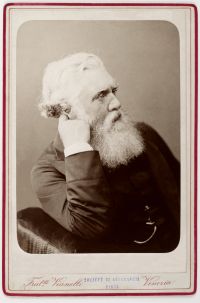
Portrait of Franz Delitzsch Franz Delitzsch,  Biblical Commentary Old Testament… (1884)

“ He was the builder of the palace at Khorsabad, which is so rich in monuments; and, according to the inscriptions, he carried on wars in Susiana, Babylon, the borders of Egypt, Melitene, Southern Armenia, Kurdistan, and Media; and in all his expeditions he resorted to the removal of the people in great numbers, as one means of securing the lasting subjugation of the lands (see Spiegel, l.c. p. 224) . ”
Source: Wikisource

T. L. Haines,  Museum of Antiquity: A Description of Ancient Life

“ The winged human-headed bulls at the entrances resembled those found at Khorsabad and Persepolis in the forms of the head-dress, and feathered cap; and the costumes of the figures in general were also like those found at Khorsabad. The period of the palace was conjectured to be between those of Khorsabad and Nimroud. After Mr. Layard had left Mosul, Mr. Ross continued the excavations, and discovered several additional bas-reliefs—an entrance, which had been formed of four sphinxes, and a very large square slab, which he conjectured to be a dais or altar, like that found at Nimroud. ”
Source: Gutenberg

G. Maspero,  History of Egypt, Chaldæa, Syria…

“ The modern name of the place is Khorsabad, the city of Khosroes, but the name of its founder was still associated with its ruins, in the time of Yakut, who mentions him under the name of Sarghun. It was first explored in 1843 by Botta, then by Place and Oppert. The antiquities collected there by Botta and Place constitute the bulk of the Assyrian Museum in the Louvre; unfortunately, a part of the objects collected by Place went to the bottom of the Tigris with the lighter which was carrying them. ”
Source: Gutenberg

Get perspective with Kwize: daily news enlightened by great literature