Bactria

Definition and stakes

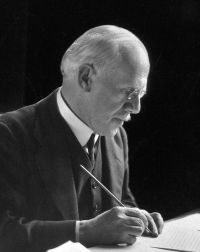
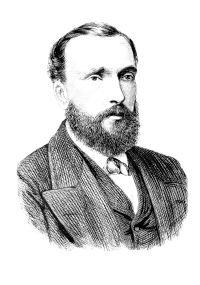
Portrait of Eduard Meyer Eduard Meyer,  1911 Encyclopædia Britannica, Volume 7… (1911)

“ On his coins he wears an elephant’s skin with trunk and teeth on his head; on bronze coins, which have also an Indian legend in Kharoshti letters (see Bactria) , he calls himself the unvanquished king (Βασιλέως ἀνικήτου Δημητρίου) . One of his coins has already the square form used in India instead of the circular. Eventually he was defeated by the usurper Eucratides (q.v.) , who meanwhile had risen to great power in Bactria. About his death we know nothing; his young son Euthydemus II. (known only from coins) can have ruled only a short time. ”
Source: Wikisource

1911 Encyclopædia Britannica, Volume 9… (1911)

“ But he saw that he was not able to subdue Bactria and Sogdiana, and so in 206 concluded a peace with Euthydemus, through the mediation of his son Demetrius, in which he recognized him as king (Polyb. xi. 34) . Soon afterwards Demetrius (q.v.) began the conquest of India. There exist many coins of Euthydemus; those on which he is called god are struck by the later king Agathocles. Other coins with the name Euthydemus, which show a youthful face, are presumably those of Euthydemus II., who cannot have ruled long and was probably a son of Demetrius. ”
Source: Wikisource

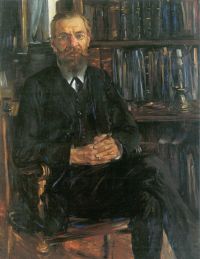
Portrait of Eduard Meyer Eduard Meyer,  1911 Encyclopædia Britannica (1910)

“ For a short time they wielded great power; a great Greek empire seemed to have arisen far in the East. But this empire was torn by internal dissensions and continual usurpations. When Demetrius advanced far into India one of his generals, Eucratides, made himself king of Bactria, and soon in every province there arose new usurpers, who proclaimed themselves kings and fought one against the other. Most of them we know only by their coins, a great many of which are found in Afghanistan and India. ”
Source: Wikisource

Get perspective with Kwize: daily news enlightened by great literature