Summary

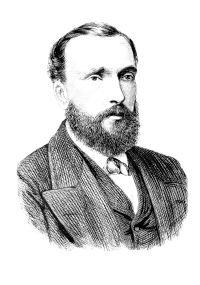
Portrait of H. Charlton Bastian H. Charlton Bastian The modes of origin of lowest organisms

Mobility is, in fact, not an essential characteristic of living Bacteria, whilst the occurrence of the act of reproduction is the most indubitable sign of their life. It should be remembered, therefore, that any Bacteria which are almost motionless, or which exhibit mere Brownian movements, may be living, whilst those which spontaneously divide and reproduce, are certainly alive—whatever may be the kind of movement they present.
Source: Gutenberg

Portrait of H. Charlton Bastian H. Charlton Bastian The modes of origin of lowest organisms

Although some may be inclined to accept the doctrine of Heterogenesis, the same persons, being “vitalists,” may not readily believe in the doctrine of Archebiosis, because this implies the vivification of dead matter—the conversion of not-living elements into a living combination. Those, however, who do believe in Archebiosis will—if the necessary evidence be forthcoming—all the more readily yield their assent to the doctrine of Heterogenesis, because it is a much less novel thing to have to believe in the mere transformation of living matter, than in the possibility of its origin de novo.
Source: Gutenberg

Portrait of H. Charlton Bastian H. Charlton Bastian The modes of origin of lowest organisms

It must be remembered that the main object of M. Pasteur’s investigation was to determine whether fermentation took place under the agency of mere dead nitrogenous matter, as Liebig and others affirm; or whether it is only initiated by living organisms, as he himself supposes. Obviously, therefore, the same filtration which purified the air from any living organisms would filter from it its nitrogenous particles, which are the other possible ferments: so that no conclusion could be drawn from such experiments, more favourable to the one than to the other of these hypotheses.
Source: Gutenberg

Get perspective with Kwize: daily news enlightened by great literature