Shahnameh

Definition and stakes

Mooshie G. Daniel,  Modern Persia

“ The king appoints the members of his cabinet, the people having no voice whatever in government. When the Shah tires of the routine of governmental duties, his secretary reads to him from Shahnameh, a poetical history of Persian kings. It is one of the king's duties to become very familiar with the history of Persia and her former rulers. When the king retires to his private room at night, the entrance to the room is guarded by two most trusted officials with drawn swords. One of the four gates in the walls around the palace is called the king's gate, as he always enters through it. ”
Source: Gutenberg

Narrative and Lyric Poems (first series…

“ The chief hero of the Shahnamah is Rustum, the Hercules of Persian mythology. Rustum was the son of Zal, a renowned Persian warrior. When a mere child, he performed many wonderful deeds requiring great strength and valor. He became the champion of his people, restored the Persian king to his throne, and defeated Afrasiab, the great Turanian, or Tartar, leader, who had invaded Persia. During a hunting expedition in Turan, his renowned horse Ruksh was stolen from him, and in order to recover it, he was forced to call on the King of Samangam, a neighbouring city. ”
Source: Gutenberg

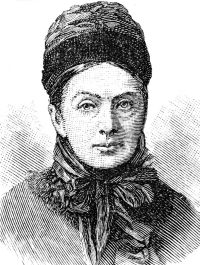
Portrait of Isabella L. Bird Isabella L. Bird,  Journeys in Persia and Kurdistan…

“ No man but the master of the house may enter, and when he retires thither no man may disturb him. To all inquirers it is a sufficient answer to say that he is in the andarun. To the Shah, however, belongs the privilege of looking upon the unveiled face of every woman in Persia. The domestic life of a Moslem is always shrouded in mystery, and even in 210 the case of the Shah "the fierce light that beats upon a throne" fails to reveal to the outer world the number of wives and women in his andarun, which is variously stated at from sixty to one hundred and ninety. ”
Source: Gutenberg

Get perspective with Kwize: daily news enlightened by great literature