Old Testament law

Definition and stakes

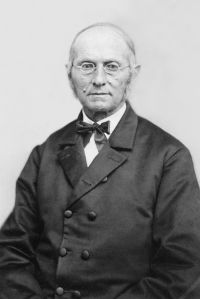
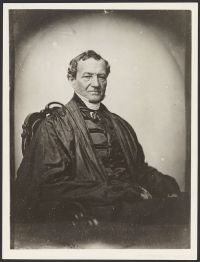
Portrait of Philip Schaff Philip Schaff,  Nicene and Post-Nicene Fathers… (1885)

“ For some one may say, “If God distinguishes the new testament from the old by this circumstance, that in the old He wrote His law on tables, but in the new He wrote them on men’s hearts, by what are the faithful of the new testament discriminated from the Gentiles, which have the work of the law written on their hearts, whereby they do by nature the things of the law, [2] as if, forsooth, they were better than the ancient people, which received the law on tables, and before the new people, which has that conferred on it by the new testament which nature has already bestowed on them?” ”

Source: Wikisource

Harris J. Dark,  God Hath Spoken

“ It says that the New Testament Scriptures clearly present two laws in the Old Testament—the “moral law” and the “ceremonial law.” Now I want to ask you a simple question. How in this world could the New Testament Scriptures clearly present something that is not even mentioned anywhere in the Bible? Friends, think of it! “Moral” law and “ceremonial” law are not mentioned in your Bible. That is not Bible language. In order to prove the sabbath theory by the Bible it will be necessary to find each of these four texts:
1. The text which says that the “ceremonial” law was abolished.
”
Source: Gutenberg

Lionel Lisle,  The Two Tests: The Supernatural Claims of Christianity Tried by Two of Its Own Rules

“ The New Testament record and doctrine are said to be a development and fulfilment of the Old. The deity of the one is the deity of the other, under a different dispensation. "The law was given by Moses, but grace and truth came by Jesus Christ." If, then, the New Testament is shown conclusively to be a development and fulfilment of the Old, this claim will be sustained. ”
Source: Gutenberg

Get perspective with Kwize: daily news enlightened by great literature