Pahlavi script

Definition and stakes

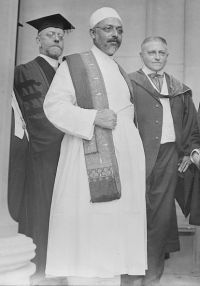
Portrait of Maneckji Nusservanji Dhalla Maneckji Nusservanji Dhalla,  History of Zoroastrianism (1938)

“ Short benedictory prayers are composed in Pazend as supplementary prayers to the original Avestan prayers. The Pazend texts were written in Avestan script. With the introduction of the Arabic script in Persia, the Pahlavi script fell into disuse.
Zoroastrian works came to be written in the modern Persian alphabet. A considerable literature, both in prose and poetry, has sprung up during the last seven centuries in Persian on Zoroastrian subjects. [11] The Pahlavi and Pazend works originated in Persia, whereas both Persia and India contributed in the production of the Persian works.
”
Source: Wikisource

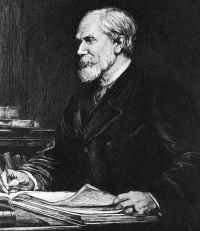
Portrait of Henry Yule Henry Yule,  Hobson-Jobson — P (1903)

“ Whether there was any identity between the name thus used, and that of Pahlava, which is applied to a people mentioned often in Sanskrit books, is a point still unsettled.
The meaning attached to the term Pahlavi by Orientals themselves, writing in Arabic or Persian (exclusive of Parsis) , appears to have been 'Old Persian' in general, without restriction to any particular period or dialect. It is thus found applied to the cuneiform inscriptions at Persepolis. (Derived from West as quoted above, and from Haug's Essays, ed. London, 1878.)
”
Source: Wikisource

Portrait of Maneckji Nusservanji Dhalla Maneckji Nusservanji Dhalla,  History of Zoroastrianism (1938)

“ The Pahlavi period ranks fourth in the arrangement of the present work, and it covers a period of about eight centuries Although It is most productive under the Sasanian rule, it does not close with the collapse of this, the last of the Zoroastrian empires, but survives it by at least three centuries in Moslem Persia. Though Pahlavi had replaced Avestan, the early works written in the ancient language had not yet ceased to influence the Pahlavi writers. ”
Source: Wikisource

Get perspective with Kwize: daily news enlightened by great literature