Partitions of Poland

Definition and stakes

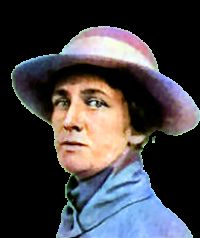
Portrait of E. F. Benson E. F. Benson,  The White Eagle of Poland

“ But, in any case, Russia now, in chaos herself, had abandoned all claim to any suzerainty over Poland, and perhaps the most important result of the proclamation was that at this precise moment the National Demo{210}cratic party, who had previously accepted the Grand Duke Nicholas’s proclamation, which implied the restoration of German and Austrian Poland to a kingdom, independent, but under Russian suzerainty, expanded their aspirations and claimed for the future Kingdom of Poland much of the territory originally belonging to Poland which had passed to Russia in consequence of the partitions. ”
Source: Gutenberg

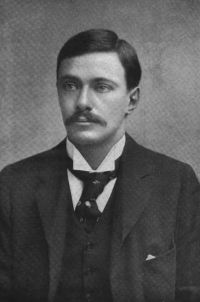
Portrait of Rufin Piotrowski Rufin Piotrowski,  The Story of a Siberian Exile; Followed by a Narrative of Recent Events in Poland (1863)

“ It is, indeed, a curious thing that the people of Poland have been the ‘last to step down into the arena of to-day at that name of “nationality” which serves as a watchword to all other revolting populations.’ Yet Poland was the first and the only country in whose favour such a word was hinted at by the Congress of Vienna, when it was inscribed in treaties, as if to render a marked homage to heroic misfortune, and, while tempering by guarantees the way in which Poland was abandoned, to maintain the mockery of an ideal ‘nationality,’ in spite of territorial division. ”
Source: Gutenberg

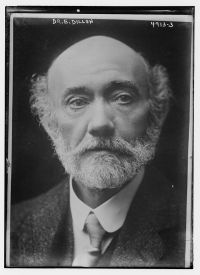
Graf Ottokar Theobald Otto Maria Czernin von und zu Chudenitz,  In the World War

“ Free and uninfluenced, the population of Poland shall choose its own fate. For my part I attach no great weight to the form of the people's vote in this respect; the more surely it expresses the general wish of the people, the better I shall be pleased. For I desire only the voluntary attachment of Poland; only in the express wish of Poland itself toward that end can I see any guarantee for lasting harmony. It is my unalterable conviction that the Polish question must not be allowed to delay the signing of peace by a single day. ”
Source: Gutenberg

Get perspective with Kwize: daily news enlightened by great literature