Ukrainians

Definition and stakes

Stepan Rudnytskyi,  Ukraine, the land and its people (1918)

“ Now it is really the historico-political traditions which are very strongly developed in the Ukrainians. The story of his fatherland, full of the most terrible catastrophes, with the frightful Tatar menace and the oppression enduring for centuries, still lives in the consciousness of even the most uneducated Ukrainian. How few happy moments does the history of the Ukraine present, and yet no people in the world so dearly loves its past and so piously honors its national heroes as the Ukrainian People. ”
Source: Gutenberg

Stepan Rudnytskyi,  Ukraine, the land and its people (1918)

“ It is therefore easy to explain that in the 19th Century, when the national question became one of the most important problems of humanity, the two neighbor nations of the Ukraine, the Poles and the Russians, believed they had solved the “Ukrainian question.”
The views of Poles and Russians coincide absolutely in emphasizing one statement: “There is no such country as the Ukraine; no such people as the Ukrainians; there are only Poland and Russia; a Polish nation and a Russian nation.”
”
Source: Gutenberg

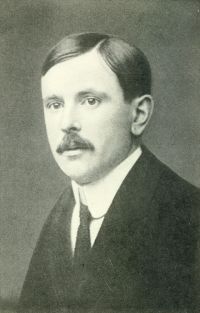
Portrait of Robert William Seton-Watson Robert William Seton-Watson,  The New Europe (1917)

“ But the territory inhabited by Ukrainians stretches far beyond this border country, and its inhabitants were commonly known as Little Russians, or in Austria as Ruthenes, until gradually “Ukrainian” has come to be accepted as the national name. To-day their numbers are estimated at some twenty to twenty-five millions on Russian soil, occupying Podolia, Volhynia, Kiev, and Cholm, and stretching far to the east of the Dniepr to the Sea of Azov and beyond; four millions in Eastern Galicia and Bukovina and half a million in the Carpathian districts of Hungary. ”
Source: Wikisource

Get perspective with Kwize: daily news enlightened by great literature