“ In Russia the sunflower is queen of the flowers, and as the sunflower is among the flowers so is the Great Russian among32 the Russian peoples. He is the true “tsarkiya Rus.” The Tsar is the sun, the heart of the realm, and the Muscovite people are the “podsolnushki.” Each individual is only one among many, a particle, a seed for the propagation and glorification of his own race. Probably, the Great Russian has no equal in the world as regards idyllic simplicity. ”
Rus
Definition and stakes
The theme of “Rus” has been addressed by authors such as Srdan Tucic, Horace G. Hutchinson and J. N. Larned. It is often associated with terms like Russia, Slavs, Russians, Russian and empire.
Quotes about “Rus”
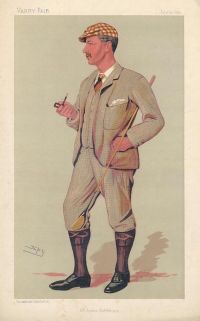 Horace G. Hutchinson,
The greatest story in the world…
Horace G. Hutchinson,
The greatest story in the world…
“ It is the opposition of German and Russian, for most of the great population of Russia is Slavonic—that is, made up of Slavs—and Russia became the name of most of the immense territory occupied by the Slavs. It is said that the name of Russia had its origin in three great leaders of men who came from a province called Rus, in Sweden. ”
J. N. Larned, History for ready reference, Volume 4… (1895)
“ And they went over the sea to the Varangians, to Rus, for so were these Varangians called: they were called Rus as others are called Svie (Swedes) , others Nurmane (Northmen, Norwegians) , others Angliane (English, or Angles of Sleswick?) , others Gote (probably the inhabitants of the island of Gothland) . The Chud, the Slavonians, the Krivichi, and the Ves said to Rus: Our land is large and rich, but there is no order in it; come ye and rule and reign over us. And three brothers were chosen with their whole clan, and they took with them all the Rus, and they came. ”
John Knox Stallybrass, Once a Week (1860)
“ Russia is, in itself, a land of contradictions. The proverb, that extremes meet, might have originated there. The Russian empire is too large and diversified to be characterised by a single epithet. It includes a larger number of distinct races blended together than any other country in the world: it is the home of almost unnumbered tribes, bound together by the tie of a common government, but separated from each other in every other respect. There you may see, in one nation, all the grades of civilisation, from the most primitive barbarism to the highest refinement. ”
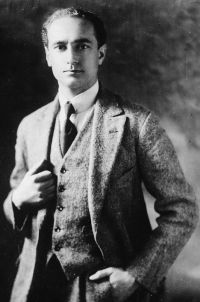 Paul Dukes,
Red Dusk and the Morrow: Adventures and Investigations in Red Russia
Paul Dukes,
Red Dusk and the Morrow: Adventures and Investigations in Red Russia
“ For the Russian loves the soil with all his heart, with all his soul, and with all his mind. His folk-songs are full of affectionate descriptions of it. His plough and his harrow are to him more than mere wood and iron. He loves to think of them as living things, as personal friends. Barbaric instincts have been aroused by the Revolution, and this simple but exalted mentality will remain in abeyance as long as those continue to rule who despise the peasant’s primitive aspirations and whose world-revolutionary aims are incomprehensible to him. ”

“ In the very soul of Russia the mystery is stirring; here the restlessness, the eagerness, the disappointment, the vision of the pursuit is working; and some who are outside her gates she has drawn into that same search. ”
“ And his azure waves High the ocean lifts, On his cold blue breast Now an iceberg drifts.And as leaping flame Burn the Northern lights, On the darkness gleam Through the silent nights.Even so art thou, Russian realm, become,— Thou my native land, Shield of Christendom!Far away hast thou, Throughout lands untold, In thy glory fair, Russia, been enrolled!Art thou not in space E'en o'er well supplied? Where a spirit bold Freely wanders wide! ”
 Algernon Blackwood,
Discovering Russia on Foot
[
Algernon Blackwood,
Discovering Russia on Foot
[
“ John. “I gave my heart to Russia. She is a woman. Behind her eyes are forests of pines and unexplored darkness; in her hand she carries blossoms. She is the mother of nations.” “How do you feel Russia?” ”
vicomte de Eugène-Melchior Vogüé, The Russian novelists (1887)
“ This epic poetry of Russia strikes its roots in the most remote antiquity of Asia, from Hindu and Persian myths, as well as from those of the Occident. It resembles the race itself in its growth and mode of development, oscillating alternately between the east and the west. Thus has the Russian mind oscillated between the two poles of attraction. In this period of its growth, it remembers and imitates more than it creates; but the foreign images it receives and reflects assume larger contours and more melancholy colors; a tinge of plaintiveness, as well as of brotherly love and sympathy. ”
Mary Platt Parmele, A Short History of Russia
“ And Russia is as heterogeneous in condition as it is in elements. It has accepted ready-made the methods of Greek, of Tatar, and of European; but has assimilated none of them; and Russian civilization, with its amazing quality, its bewildering variety of achievement in art, literature, diplomacy, and in every field, is not a natural development, but a monstrosity. The genius intended for a whole people seems to have been crowded into a few narrow channels. Where have men written with such tragic intensity? ”
“ Yes, Russia was a hell upon earth; and Petersburg was the centre and epitome of it, I said in my soul, as I loitered on one of the bridges that afternoon, and looked on the swift flowing river, on the splendid buildings, gleaming white, as the gilded cupolas and spires of the churches gleamed fire red, under the brilliant sunshine. A fair city outwardly, a whited sepulchre raised over a charnel-house. A city of terror, wherein every man is an Ishmael, knowing—or suspecting—that every other man’s hand is against him. ”
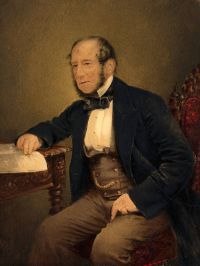 Henry Adams,
The Education of Henry Adams
(1907)
Henry Adams,
The Education of Henry Adams
(1907)
“ Petersburg, all was logical, conservative, Christian and anarchic. Russia had nothing in common with any ancient or modern world that history knew; she had been the oldest source of all civilisation in Europe, and had kept none for herself; neither Europe nor Asia had ever known such a phase, which seemed to fall into no line of evolution whatever, and was as wonderful to the student of Gothic architecture in the twelfth century, as to the student of the dynamo in the twentieth. ”
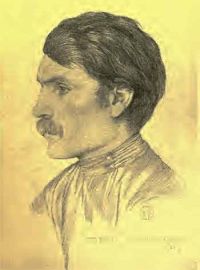 Stephen Graham,
A vagabond in the Caucasus
Stephen Graham,
A vagabond in the Caucasus
“ Visitors to Moscow in Lent are seldom shown this really interesting sight, much more humanly interesting than the Kremlin, the churches and museums. For Russia can boast of very little antiquity in her civilisation or her buildings. Much more interesting than her little past is her present.At the fair all is Russian—even the oranges and lemons come from the groves of South Russia and the Caucasus. One gets another glimpse of the Russian 107harmony, the harmony of which the winter, the forests, the church, the peasants, the beggars are integral parts. ”
“ Yet there is a strange resemblance between the rough type and the handsome type analogous to that which a careful observer cannot fail to notice between the different types of Russian landscape. For though the steppe is grey, and the fields of Caucasia are green, yet both are animated by something that wears the same countenance, breathes the same purely Russian atmosphere, and is suffused with the same wonderful charm. It is the charm of perfectly balanced contrast. The soil of Russia has a soul like the soul of her children, for whom she cares and lives and breathes. ”
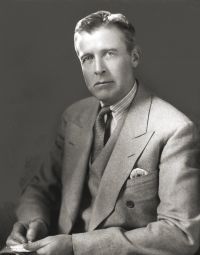 John Cudahy,
Archangel: The American War with Russia
John Cudahy,
Archangel: The American War with Russia
“ Russia, her dread mystery, and that intangible quality of melodrama that throngs the air, and lingers in the air, persistently haunts the spirit, and is as consciously perceptible as the dirty villages, the white church, and the grief-laden skies. ”
Bp. Herbert Bury, Russian Life To-day
“ In the bustle of a custom-house, charged with fretfulness and impatience and meanness, Russia sets forth her belief in a life beyond the grave and her conviction that the ideals presented by the picture are the noblest known to mankind. ”
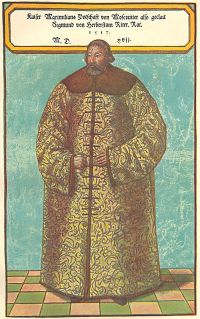 Sigismund von Herberstein,
Notes upon Russia
(1851)
Sigismund von Herberstein,
Notes upon Russia
(1851)
“ Various are the opinions entertained respecting the origin of the name of Russia. Some maintain that it is derived from one Russus, a prince of the Poles, and brother or nephew of Lech, as though he himself had been a prince of the Russians. Others again derive it from a certain very ancient town, named Russum, [1] not far from Great Novogorod. Some also derive it from the dark colour of the people; and some think that, by a change in the word, Russia has received its designation from Roxolania. ”
 William Hepworth Dixon,
Free Russia
William Hepworth Dixon,
Free Russia
“ They like to huddle in a crowd, to club their means, to live under a common roof, and stand or fall by the family tree. The Little Russians are of a quick, adventurous, and hardy type; who like to stand apart, each for himself, with scope and range enough for the play of all his powers. ”
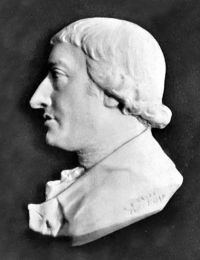 Rudolf Erich Raspe,
The Surprising Adventures of Baron Munchausen…
Rudolf Erich Raspe,
The Surprising Adventures of Baron Munchausen…
“ I shall confine myself rather to the greater and nobler objects of your attention, horses and dogs, my favourites in the brute creation; also to foxes, wolves, and bears, with which, and game in general, Russia abounds more than any other part of the world; and to such sports, manly exercises, and feats of gallantry and activity, as show the gentleman better than musty Greek or Latin, or all the perfume, finery, and capers of French wits or petit-maîres. ”
Samuel Irenæus Prime, The Alhambra and the Kremlin: The South and the North of Europe
“ The beauties of travel in Russia begin to be seen even in the dark. We are in the station, in the midst of a crowd of people, who seem to be talking all the languages of Babel; such a jargon does the Russian, Polish, and German make, when all are spoken at the same time by an impatient multitude. ”
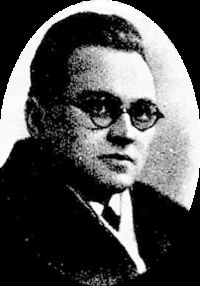 Leo Wiener,
Anthology of Russian literature from the earliest period to the present time…
(1902)
Leo Wiener,
Anthology of Russian literature from the earliest period to the present time…
(1902)
“ The love of singing and story-telling that characterises him to-day has, no doubt, been his characteristic for centuries, and as the memory of the untutored man is much better than that of the lettered, he has been able to transmit orally to our own day the stock of his ancient songs and tales. The folklore of Russia, more than that of any Western nation, bridges over the chasm between the most distant antiquity and the present. ”
Russia, as Seen and Described by Famous Writers
“ All Russia seems but one vast monument of his genius. He gave her six new provinces, a footing upon two seas, a regular army trained on the European system, a large fleet, an admiralty, and a naval academy; besides these, some educational establishments, a gallery of painting and sculpture, and a public library. Nothing escaped his notice, even to such minutiæ as the alteration of Russian letters to make them more adapted to printing, and changing the dress of his subjects so as to be more in conformity with European costume. ”
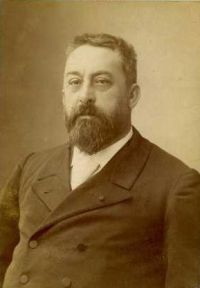 Alfred Nicolas Rambaud,
History of Russia — Chapter 2
(1898)
Alfred Nicolas Rambaud,
History of Russia — Chapter 2
(1898)
“ They belong to one of the great races of pioneers and backwoodsmen. All the history of the Russian people, from the foundation of Moscow, is that of their advance into the forest, into the Black Land, into the prairie. ”
Mary Platt Parmele, A Short History of Russia
“ The youngest among the civilizations, and herself still only partially civilized, Russia is one of the most—if not the most—important factor in the world-problem to-day, and the one with which the future seems most seriously involved. ”
Bp. Herbert Bury, Russian Life To-day
“ Perhaps the reader may feel nothing as he reads, but all who know and love Russia, and are stirred by thoughts of its life and people will feel that it was abundantly worth while to write down such a simple incident. They will understand and feel that stirring within, which Russia never fails to achieve again and again for those who have once lived and moved amongst her peasantry, and come under her strange spell and felt her charm. ”
Sigismund von Herberstein,
Notes upon Russia
(1851)
“ But whatever be the source from which Russia has derived its name, all the races using the Sclavonic language that observe both the faith and the forms of Christianity in accordance with the ritual of the Greeks, and are called in conventional language Russians, and in Latin Rhuteni, have increased to so great a multitude, that they have either driven out all intermediate nations, or have absorbed them into their own habits of living ”
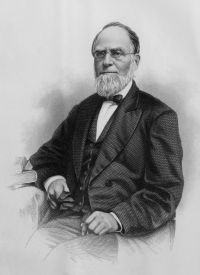 John S. C. Abbott,
The Empire of Russia: From the Remotest Periods to the Present Time
John S. C. Abbott,
The Empire of Russia: From the Remotest Periods to the Present Time
“ The world is now too busy to read voluminous history. The interminable details of battles, and the petty intrigues of courtiers and mistresses, have lost their interest. In this volume it has been our object to trace perspicuously the path which Russia has trod from earliest infancy to the present hour. The career of this empire has been so wild and wonderful that the historian can have no occasion to call in the aid of fancy for the embellishment of his narrative. ”
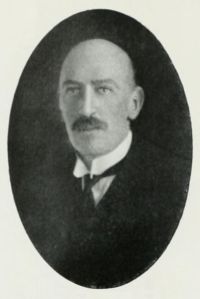 Maurice Baring,
A year in Russia
(1907)
Maurice Baring,
A year in Russia
(1907)
“ All the amusing things one hears said in this country, all that is characteristic and smells of the Russian land, all that is peculiarly Russian, is like everything which is peculiarly anything, peculiarly English, Irish, Italian, or Turkish, untranslatable, and loses all its savour and point in translation. ”
 Arthur Greenwood,
The War and Democracy
Arthur Greenwood,
The War and Democracy
“ Russia is in fact 145 million peasants—ploughing and praying. And here once again one is reminded of the Middle Ages. Cross the Russian frontier and you enter the mediaeval world. Miracles are believed in, holy men are revered as saints, thousands of pilgrims journey on foot every year to Jerusalem, which is to every true believer the centre of the universe and therefore becomes at Easter almost a Russian city. Russia is the most Christian country in the world, and her people are the most Christ-like. ”
John S. C. Abbott,
The Empire of Russia: From the Remotest Periods to the Present Time
“ It makes the soul melancholy to reflect upon these long, long ages of rapine, destruction and woe. But for this, had man been true to himself, the whole of Russia might now have been almost a garden of Eden, with every marsh drained, every stream bridged, every field waving with luxuriance, every deformity changed into an object of beauty, with roads and canals intersecting every mile of its territory, with gorgeous cities embellishing the rivers' banks and the mountain sides, and cottages smiling upon every plain. Man has no foe to his happiness so virulent and deadly as his brother man. ”
 Edwin A. Grosvenor,
National Geographic Magazine
(1905)
Edwin A. Grosvenor,
National Geographic Magazine
(1905)
“ From its very cradle, through the more than thousand years since, the Russian branch of the Slavic race is, in whatever per- tains to government, the direct antith- esis of our own. It is as difficult for the average Russian to appreciate our modern, twentieth -century sentiment as it is for us to appreciate their docile, submissive sentiment, which has been wrought out in the interminable forest and steppe. ”
Harold Whitmore Williams, Russian Realities and Problems… (1917)
“ Look first of all at the Russians, of whom there are nearly one hundred millions in all, of all types, the Great Russian, the Little Russian, and the White Russian, the three great divisions of the Russian people. You have heard in other lectures the history of the elements that made up the Russian people, of the wandering Slav tribes which gradually assimilated a great many of the peoples of the plain. Thus in the north and centre, in Great Russia, there is a very large admixture of Finnish blood, whilst in the south, among the Little Russians, there is a large admixture of Turkish blood. ”
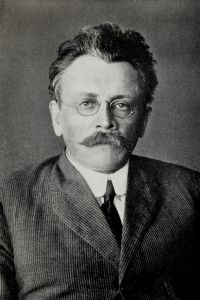 Abraham Cahan,
The White Terror and The Red: A Novel of Revolutionary Russia
Abraham Cahan,
The White Terror and The Red: A Novel of Revolutionary Russia
“ When I think of the moments of joy the movement affords me, of the ties of friendship with so many good people—the cream of the generation, the salt of the earth, the best children Russia ever gave birth to—when I think of the glorious atmosphere that surrounds me, of the divine ecstasy with which I view the future ”
Samuel Irenæus Prime, The Alhambra and the Kremlin: The South and the North of Europe
“ The Russ is the language taught in the schools. If a scholar speaks in his own language the teacher flogs him, according to law; and if the scholar speaks in the Russian language, the other boys flog him when the school is out. ”
Harold Whitmore Williams, Russian Realities and Problems… (1917)
“ This new and energetic and growing Russia, that was for the first time conscious of her great power and her great resources, that threw itself as a people heart and soul into the work of civilisation, had around it a great variety of nationalities, and it is a very remarkable thing that during the nineteenth century in Russia there was not only a very great and very brilliant Russian national movement, but several other national movements were either revived or began their work on the territory of the Russian Empire. ”
Harold Whitmore Williams, Russian Realities and Problems… (1917)
“ Russia is one huge process of evolution, in which all these various nationalities play a very important and very hopeful part. We hardly realise, I think, that Russia is only beginning to be. Russia has been forming. Russia has during the centuries of her long struggle on the great plain been gathering together the materials for a great existence, for some great new experiment in human life in this world of ours. ”
