Pontiac's War

Definition and stakes

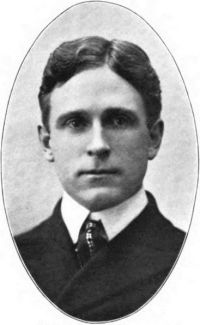
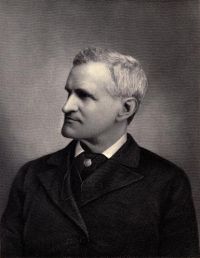
Portrait of Francis Parkman Francis Parkman,  The Conspiracy of Pontiac and the Indian War after the Conquest of Canada

“ In his view, artifice is wisdom; and he honors the skill that can circumvent, no less than the valor that can subdue, an adversary. The object of war, he argues, is to destroy the enemy. To accomplish this end, all means are honorable; and it is folly, not bravery, to incur a needless risk. Had Pontiac ordered his followers to storm the palisades of Detroit, not one of them would have obeyed him. They might, indeed, after their strange superstition, have reverenced him as a madman; but, from that hour, his fame as a war-chief would have sunk forever. ”
Source: Gutenberg

Alexander Vietts Blake,  The boys' book of Indian battles and adventures… (1866)

“ Pontiac had distinguished himself at Detroit and Michillimackinac. When the French gave up Canada (1760) , their Indian allies still preserved their hatred towards the English, and as Pontiac was the most considerable enemy of that nation, the adjacent tribes all came to him as a support against them. Pontiac had advanced farther in civilization than any of the neighbouring chiefs: he appointed a commissary during the war of 1763, called Pontiac’s war; and issued bills of credit, on each of which was pictured the thing desired, and the figure of an otter, the symbol of his tribe. ”
Source: Gutenberg

Portrait of Francis Parkman Francis Parkman,  The Conspiracy of Pontiac and the Indian War after the Conquest of Canada

“ For the most part, they were tall, strong men, and all had a gait and bearing of peculiar stateliness.
As Pontiac entered, it is said that he started, and that a deep ejaculation half escaped from his breast. Well might his stoicism fail, for at a glance he read the ruin of his plot. On either hand, within the gateway, stood ranks of soldiers and hedges of glittering steel. The swarthy engagés of the fur-traders, armed to the teeth, stood in groups at the street corners, and the measured tap of a drum fell ominously on the ear.
”
Source: Gutenberg

Get perspective with Kwize: daily news enlightened by great literature