Protestant theology

Definition and stakes

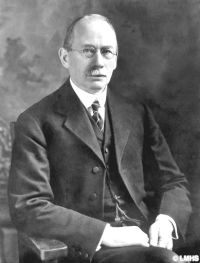
Portrait of B. H. Roberts B. H. Roberts,  Defense of the Faith and the Saints…

“ And this was the chief corner stone of Protestant theology; the point at which the Roman Catholic church and the Protestant church was most widely separated. The Catholic church, recognizing the operation of God's grace upon man, and also the power of will in man, came to the reasonable conclusion that man had it within their power to be obedient to the commandments of God, and that obedience united with the grace of God was the means of obtaining salvation; that man worked out his salvation both by faith and works. ”
Source: Gutenberg

Various,  The Catholic World, Vol. 01, April to September…

“ Under the rubbish of the Protestant Church-idea there still lies buried a remnant of {105} Catholic truth. We ought not to shun the trouble of bringing this to light. It is the Christian truth contained in his confession which binds the believing Protestant to it. Catholic theology has to reclaim this as its own property. It has the mission intrusted to it to show how the religious satisfaction, which the deeper Protestant mind thinks it finds in the doctrinal conception of its confession, is imparted to it in richer abundance and morally purified through the dogma of the Church. ”
Source: Gutenberg

Various,  The Catholic World, Vol. 05, April 1867 to September 1867

“ This dialectic relation of the two terms asserted by Catholic theology is denied by Protestant theology either to the exclusion of nature and reason, or to the exclusion of both the supernatural and the superintelligible, and hence the dualism which rends in twain the whole non-Catholic world, and presents revelation and science, reason and faith, authority and liberty, natural and supernatural, church and state, heaven and earth, time and eternity, God and man, as mutually hostile terms, forever irreconcilable. ”
Source: Gutenberg

Get perspective with Kwize: daily news enlightened by great literature