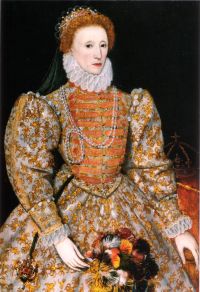
Queen Mary I of England

Definition and stakes

J. M. Stone The History of Mary I, Queen of England

But he was not even sincere in his treachery, for lightly as he imperilled Elizabeth’s life by encouraging the Princess to associate herself with the factious, it was scarcely his aim in the event of a successful insurrection to place her on the throne. Mary Queen of Scots was Mary Tudor’s next legitimate heir, and as the wife of the Dauphin would, if she mounted the throne of England, bring to a glorious end the humiliation under which the French had smarted for centuries, in seeing the English monarchs, their rivals, quartering the arms, and coolly assuming the style of Kings of France.
Source: Gutenberg

J. M. Stone The History of Mary I, Queen of England

During the first half of the sixteenth century, England had played but a subordinate part in the politics of Europe, and during Edward’s reign, the Government had been so weak that Charles V. had been able to demand Mary’s religious rights without compromise. France and the Empire had disputed the honours, the wealth, the prestige of the civilised world, and Mary had some reason to hope that by her marriage, she would raise her country to the rank of a first-rate power.
Source: Gutenberg

J. M. Stone The History of Mary I, Queen of England

The Privy Purse Expenses of the Princess Mary are eloquent of her generosity towards “the Lady Elizabeth’s grace,” and until Elizabeth forfeited her esteem by making common cause with her enemies, there was no diminution of cordiality on the part of the Queen towards her sister. She married Philip of Spain in spite of all opposition, in the first place for the sake of the realm, and in the hope of issue, and gave him a [Pg 479] passionate devotion. In most of these things Mary was a true woman, no heroine, but tender and human to a fault.
Source: Gutenberg

Get perspective with Kwize: daily news enlightened by great literature