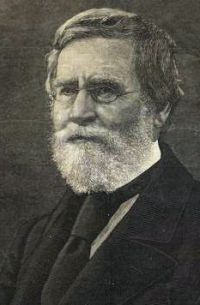
Jacob Abbott

Jacob Abbott

Summary

Portrait of Jacob Abbott Jacob Abbott Mary Queen of Scots

The Castle of Dumbarton, which has already been mentioned as the place from which Mary embarked for France in her early childhood, was below Glasgow, on the northern shore of the river. It stands there still in good repair, and is well garrisoned; it crowns a rock which rises abruptly from the midst of a comparatively level country, smiling with villages and cultivated fields, and frowns sternly upon the peaceful steamers and merchant ships which are continually gliding along under its guns, up and down the Clyde.
Source: Gutenberg

Portrait of Jacob Abbott Jacob Abbott Mary Queen of Scots

Elizabeth, however, was not the only one who opposed this marriage. The Earl of Murray, Mary's brother, who had been thus far the great manager of the government under Mary, took at once a most decided stand against it. He enlisted a great number of Protestant nobles with him, and they held deliberations, in which they formed plans for resisting it by force. But Mary, who, with all her gentleness and loveliness of spirit, had, like other women, some decision and energy when an object in which the heart is concerned is at stake, had made up her mind.
Source: Gutenberg

Portrait of Jacob Abbott Jacob Abbott Mary Queen of Scots

Ambition was the great, paramount, ruling principle of Mary's life. Love was, with her, an occasional, though perfectly uncontrollable impulse, which came suddenly to interrupt her plans and divert her from her course, leaving her to get back to it again, after devious wanderings, with great difficulty and through many tears. The love, with the consequences which followed from it, destroyed her; while the ambition, recovering itself after every contest with its rival, and holding out perseveringly to the last, saved her son
Source: Gutenberg

Get perspective with Kwize: daily news enlightened by great literature