Richard Pynson

Definition and stakes

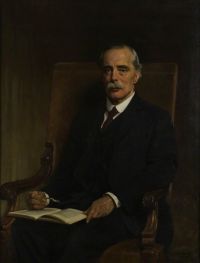
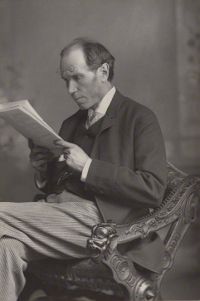
Portrait of Leslie Stephen Leslie Stephen,  Dictionary of National Biography… (1895)

“ Emprentyd by me, Richard Pynson, at the Temple barre of London, Deo gracias.’ Copies of this edition are in the British Museum, Lambeth, Spencer, Chatsworth, and Huth libraries. Besides the dialogue on the ten commandments, in which Pauper convinces Dives of his duty with respect to each of them, the book contains a chapter ‘Of Holy Pouerte;’ it is in double columns, without pagination. Another edition, published by Wynkyn de Worde, Westmonstre, 1496, folio, is identical with the first, except in orthography ”
Source: Wikisource

Henry R. Plomer,  A Short History of English Printing…

“ The initials 'J. N.' are seen at the top. This he sometimes used as a frontispiece, substituting for the centre piece a block of a different character.
Richard Pynson also changed his address shortly after Wynkyn de Worde, moving from outside Temple Bar to the George in Fleet Street, next to St. Dunstan's Church. He also appears to have entirely given up the use of Gothic type in favour of English black letter about this time. It is not easy to form a conjecture as to the motive which led to the abandonment of this type, and it is impossible to regard the step without regret.
”
Source: Gutenberg

Henry R. Plomer,  A Short History of English Printing…

“ In this capacity he printed numbers of Proclamations, numerous Year-books, and all the Statutes, and received large sums of money. In 1513 he printed The Sege and Dystrucyon of Troye, of which several copies (some of them on vellum) are still in existence. Other books of which he printed copies on vellum are the Sarum Missal of 1520, and Assertio Septem Sacramentorum of 1521. [Pg 41]
Besides these and his official work, Pynson printed numbers of useful books in all classes of literature. The works of Chaucer and Skelton and Lydgate, the history of Froissart and the Chronicle of St. Albans
”
Source: Gutenberg

Get perspective with Kwize: daily news enlightened by great literature