Thomas Lydgate

Definition and stakes

Henry Bradley, John Manly, Oliver Elton and Thomas Seccombe,  1911 Encyclopædia Britannica (1911)

“ Lydgate’s productivity was enormous,—how great no man can say, for, as was the case with Chaucer also, his fame caused many masterless poems to be ascribed to him, but, after making all necessary deductions, the amount of verse that has come down to us from him is astonishing. Here it may suffice to say that his translations are predominantly epic (140,000 lines) , and his original compositions predominantly allegorical love poems or didactic poems. If there is anything duller than a dull epic it is a dull allegory, and Lydgate has achieved both. ”
Source: Wikisource

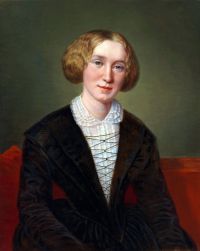
Portrait of George Eliot George Eliot,  Middlemarch (1871)

“ Our vanities differ as our noses do: all conceit is not the same conceit, but varies in correspondence with the minutiae of mental make in which one of us differs from another. Lydgate's conceit was of the arrogant sort, never simpering, never impertinent, but massive in its claims and benevolently contemptuous. He would do a great deal for noodles, being sorry for them, and feeling quite sure that they could have no power over him: he had thought of joining the Saint Simonians when he was in Paris, in order to turn them against some of their own doctrines. ”
Source: Wikisource

Portrait of George Eliot George Eliot,  Middlemarch (1872)

“ But his endurance was mingled with a self-discontent which, if we know how to be candid, we shall confess to make more than half our bitterness under grievances, wife or husband included. It always remains true that if we had been greater, circumstance would have been less strong against us. Lydgate was aware that his concessions to Rosamond were often little more than the lapse of slackening resolution, the creeping paralysis apt to seize an enthusiasm which is out of adjustment to a constant portion of our lives. ”
Source: Wikisource

Get perspective with Kwize: daily news enlightened by great literature