“ Casaubon now, it was as if he suddenly found himself on the dark river-brink and heard the plash of the oncoming oar, not discerning the forms, but expecting the summons. In such an hour the mind does not change its lifelong bias, but carries it onward in imagination to the other side of death, gazing backward—perhaps with the divine calm of beneficence, perhaps with the petty anxieties of self-assertion. What was Mr. Casaubon’s bias his acts will give us a clew to. ”
Casaubon
Definition and stakes
The theme of “Casaubon” has been addressed by authors such as George Eliot, John Henry Overton, Mark Pattison, David Carnegie Andrew Agnew and Leslie Stephen. It is often associated with terms like Brooke, Dorothea, Mr., Geneva and Gerald.
Quotes about “Casaubon”
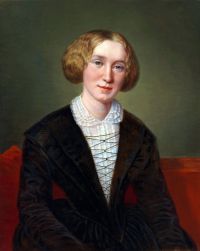 George Eliot,
Middlemarch
(1872)
George Eliot,
Middlemarch
(1872)
“ The thoughts which had gathered vividness in the solitude of her boudoir occupied her incessantly through the day on which Mr. Casaubon had sent his letter to Will. Everything seemed hindrance to her till she could find an opportunity of opening her heart to her husband. To his preoccupied mind all subjects were to be approached gently, and she had never since his illness lost from her consciousness the dread of agitating him. But when young ardor is set brooding over the conception of a prompt deed, the deed itself seems to start forth with independent life, mastering ideal obstacles. ”
George Eliot,
Middlemarch
(1874)
“ He was much obliged to Casaubon in the past, but really the act of marrying this wife was a set-off against the obligation. It was a question whether gratitude which refers to what is done for one’s self ought not to give way to indignation at what is done against another. And Casaubon had done a wrong to Dorothea in marrying her. A man was bound to know himself better than that, and if he chose to grow grey crunching bones in a cavern, he had no business to be luring a girl into his companionship. ”
“ Casaubon drove off to his Rectory at Lowick, only five miles from Tipton; and Dorothea, who had on her bonnet and shawl, hurried along the shrubbery and across the park that she might wander through the bordering wood with no other visible companionship than that of Monk, the Great St. Bernard dog, who always took care of the young ladies in their walks. There had risen before her the girl’s vision of a possible future for herself to which she looked forward with trembling hope, and she wanted to wander on in that visionary future without interruption. ”
“ Casaubon; but prejudices, like odorous bodies, have a double existence both solid and subtle—solid as the pyramids, subtle as the twentieth echo of an echo, or as the memory of hyacinths which once scented the darkness. And Will was of a temperament to feel keenly the presence of subtleties: a man of clumsier perceptions would not have felt, as he did, that for the first time some sense of unfitness in perfect freedom with him had sprung up in Dorothea’s mind, and that their silence, as he conducted her to the carriage, had had a chill in it. ”
“ Casaubon, too, was the centre of his own world; if he was liable to think that others were providentially made for him, and especially to consider them in the light of their fitness for the author of a “Key to all Mythologies,” this trait is not quite alien to us, and, like the other mendicant hopes of mortals, claims some of our pity. ”
“ His experience was of that pitiable kind which shrinks from pity, and fears most of all that it should be known: it was that proud narrow sensitiveness which has not mass enough to spare for transformation into sympathy, and quivers thread-like in small currents of self-preoccupation or at best of an egoistic scrupulosity. And Mr. Casaubon had many scruples: he was capable of a severe self-restraint; he was resolute in being a man of honor according to the code; he would be unimpeachable by any recognized opinion. ”
George Eliot,
Middlemarch
(1871)
“ Poor Mr Casaubon had imagined that his long studious bachelorhood had stored up for him a compound interest of enjoyment, and that large drafts on his affections would not fail to be honoured; for we all of us, grave or light, get our thoughts entangled in metaphors, and act fatally on the strength of them. ”
Mark Pattison, 1911 Encyclopædia Britannica (1911)
“ At Geneva he remained as professor of Greek till 1596. Here he married twice, his second wife being Florence, daughter of the scholar-printer, Henri Estienne. Here, without the stimulus of example or encouragement, with few books and no assistance, in a city peopled with religious refugees, and struggling for life against the troops of the Catholic dukes of Savoy, Casaubon made himself a consummate Greek scholar and master of ancient learning. His great wants at Geneva were books and the sympathy of learned associates. ”
David Carnegie Andrew Agnew, Protestant Exiles from France… (1886)
“ Farewell, learned Melville, and henceforward reckon me in the number of your friends.” In 1603 Casaubon visited Geneva and was overjoyed to find Beza still alive to welcome him — “Theodore Beza! what a man! what piety! what learning! O truly great man!” ”
“ But a man mopes, you know. I have always been a bachelor too, but I have that sort of disposition that I never moped; it was my way to go about everywhere and take in everything. I never moped: but I can see that Casaubon does, you know. He wants a companion—a companion, you know.” “It would be a great honor to any one to be his companion,” said Dorothea, energetically. “You like him, eh?” said Mr. Brooke, without showing any surprise, or other emotion. “Well, now, I’ve known Casaubon ten years, ever since he came to Lowick. ”
George Eliot,
Middlemarch
(1872)
“ But his dread of any change in Dorothea was stronger than his discontent, and he began to speak again in a tone of mere explanation. “Mr. Casaubon’s reason is, his displeasure at my taking a position here which he considers unsuited to my rank as his cousin. I have told him that I cannot give way on this point. It is a little too hard on me to expect that my course in life is to be hampered by prejudices which I think ridiculous. Obligation may be stretched till it is no better than a brand of slavery stamped on us when we were too young to know its meaning. ”
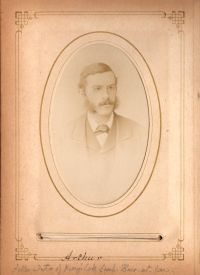 Arthur Augustus Tilley,
1911 Encyclopædia Britannica, Volume 9…
(1911)
Arthur Augustus Tilley,
1911 Encyclopædia Britannica, Volume 9…
(1911)
“ A few editions of classical authors were brought out, but each successive one showed a falling off. Such value as the later ones had was chiefly due to the notes furnished by Casaubon, who in 1586 had married his daughter Florence. His last years were marked by ever-increasing infirmity of mind and temper. In 1597 he left Geneva for the last time. After visiting Montpellier, where Casaubon was now professor, he started for Paris, but was seized with sudden illness at Lyons, and died there at the end of January 1598. Few men have ever served the cause of learning more devotedly. ”
“ Sir James Chettam was going to dine at the Grange to-day with another gentleman whom the girls had never seen, and about whom Dorothea felt some venerating expectation. This was the Reverend Edward Casaubon, noted in the county as a man of profound learning, understood for many years to be engaged on a great work concerning religious history; also as a man of wealth enough to give lustre to his piety, and having views of his own which were to be more clearly ascertained on the publication of his book. ”
 Andrew Lang,
Old Friends: Essays in Epistolary Parody
Andrew Lang,
Old Friends: Essays in Epistolary Parody
“ Their wives were not wholly absorbed in their learned pursuits, and if Mr. Ladislaw was dangling after Mrs. Casaubon, we know that Mr. Rivers used to haunt with Mrs. Forth the walks of Magdalen. The regret and disapproval which Mrs. Casaubon expresses, and her desire to do good to Mrs. Forth, are, it is believed, not alien to her devoted and exemplary character.Bradmore-road, Oxford, May 29.Dear Mr. Casaubon,—In the course of an investigation which my researches into the character of the Etruscan “Involuti” have necessitated, I frequently encounter the root Kâd, k2âd, or Qâd. ”
“ Casaubon said— “You seem a little sad, Dorothea. I trust you are pleased with what you have seen.” “I am feeling something which is perhaps foolish and wrong,” answered Dorothea, with her usual openness—“almost wishing that the people wanted more to be done for them here. I have known so few ways of making my life good for anything. Of course, my notions of usefulness must be narrow. I must learn new ways of helping people.” “Doubtless,” said Mr. Casaubon. “Each position has its corresponding duties. Yours, I trust, as the mistress of Lowick, will not leave any yearning unfulfilled.” ”
“ Casaubon has chosen is as changing as chemistry: new discoveries are constantly making new points of view. Who wants a system on the basis of the four elements, or a book to refute Paracelsus? Do you not see that it is no use now to be crawling a little way after men of the last century—men like Bryant—and correcting their mistakes?—living in a lumber-room and furbishing up broken-legged theories about Chus and Mizraim?” “How can you bear to speak so lightly?” said Dorothea, with a look between sorrow and anger. ”
George Eliot,
Middlemarch
(1874)
“ And Mr Casaubon shrank nervously from communicating on the subject with Sir James Chettam, between whom and himself there had never been any cordiality, and who would immediately think of Dorothea without any mention of her. Poor Mr Casaubon was distrustful of everybody’s feeling towards him, especially as a husband. To let any one suppose that he was jealous would be to admit their (suspected) view of his disadvantages: to let them know that he did not find marriage particularly blissful would imply his conversion to their (probably) earlier disapproval. ”
“ Casaubon had never done more than pay a debt towards him. Will was much too good a fellow to be easy under the sense of being ungrateful. And when gratitude has become a matter of reasoning there are many ways of escaping from its bonds. “No,” answered Dorothea; “Mr. Casaubon has always avoided dwelling on his own honorable actions.” She did not feel that her husband’s conduct was depreciated; but this notion of what justice had required in his relations with Will Ladislaw took strong hold on her mind. ”
“ Casaubon was announced he started up as from an electric shock, and felt a tingling at his finger-ends. Any one observing him would have seen a change in his complexion, in the adjustment of his facial muscles, in the vividness of his glance, which might have made them imagine that every molecule in his body had passed the message of a magic touch. And so it had. For effective magic is transcendent nature ”
George Eliot,
Middlemarch
(1872)
“ That was the way with Mr Casaubon's hard intellectual labours. Their most characteristic result was not the 'Key to all Mythologies,' but a morbid consciousness that others did not give him the place which he had not demonstrably merited—a perpetual suspicious conjecture that the views entertained of him were not to his advantage—a melancholy absence of passion in his efforts at achievement, and a passionate resistance to the confession that he had achieved nothing. Thus his intellectual ambition which seemed to others to have absorbed and dried him, was really no security against wounds—least of all against those which came from Dorothea. ”
“ The fact is, she has a dislike to Casaubon’s property. You will hear what she says, you know.” “No—excuse me—I shall not,” said Sir James, with more coolness. “I cannot bear to see her again; it is too painful. It hurts me too much that a woman like Dorothea should have done what is wrong.” “Be just, Chettam,” said the easy, large-lipped Rector, who objected to all this unnecessary discomfort. “Mrs. Casaubon may be acting imprudently: she is giving up a fortune for the sake of a man, and we men have so poor an opinion of each other that we can hardly call a woman wise who does that. ”
George Eliot,
Middlemarch
(1874)
“ But what we strive to gratify, though we may call it a distant hope, is an immediate desire: the future estate for which men drudge up city alleys exists already in their imagination and love. And Mr Casaubon’s immediate desire was not for divine communion and light divested of earthly conditions; his passionate longings, poor man, clung low and mist-like in very shady places. Dorothea had been aware when Lydgate had ridden away, and she had stepped into the garden, with the impulse to go at once to her husband. ”
George Eliot,
Middlemarch
(1871)
“ "My dear Dorothea—'who with repentance is not satisfied, is not of heaven nor earth:'—you do not think me worthy to be banished by that severe sentence," said Mr Casaubon, exerting himself to make a strong statement, and also to smile faintly. ”
“ But now, since they had been in Rome, with all the depths of her emotion roused to tumultuous activity, and with life made a new problem by new elements, she had been becoming more and more aware, with a certain terror, that her mind was continually sliding into inward fits of anger and repulsion, or else into forlorn weariness. How far the judicious Hooker or any other hero of erudition would have been the same at Mr. Casaubon’s time of life, she had no means of knowing, so that he could not have the advantage of comparison ”
George Eliot,
Middlemarch
(1874)
“ The human soul moves in many channels, and Mr Casaubon, we know, had a sense of rectitude and an honourable pride in satisfying the requirements of honour, which compelled him to find other reasons for his conduct than those of jealousy and vindictiveness. The way in which Mr Casaubon put the case was this:— “In marrying Dorothea Brooke I had to care for her wellbeing in case of my death. But wellbeing is not to be secured by ample, independent possession of property; on the contrary, occasions might arise in which such possession might expose her to the more danger. ”
George Eliot,
Middlemarch
(1874)
“ Perhaps Casaubon, in his hatred and jealousy, had been insisting to Dorothea that Will had slid below her socially. Confound Casaubon! Will re-entered the drawing-room, took up his hat, and looking irritated as he advanced towards Mrs Lydgate, who had seated herself at her work-table, said— “It is always fatal to have music or poetry interrupted. May I come another day and just finish about the rendering of ‘Lungi dal caro bene’?” “I shall be happy to be taught,” said Rosamond. ”
David Carnegie Andrew Agnew, Protestant Exiles from France… (1886)
“ But as the maiden name of Pierre’s wife was Sibelle Aikin, there can be little doubt that he himself was an immigrant from England. Frederic Casaubon was betrothed to Anne Le Blanc, native of Paris, daughter of Guillaume Le Blanc and Susanne Brondre, at London, on May 21, 1673. ”
George Eliot,
Middlemarch
(1872)
“ Well, it's very pleasant to have you back again, and you understand all about art now, eh? But Casaubon is a little pale, I tell him—a little pale, you know. Studying hard in his holidays is carrying it rather too far. I overdid it at one time"—Mr Brooke still held Dorothea's hand, but had turned his face to Mr Casaubon—"about topography, ruins, temples—I thought I had a clue, but I saw it would carry me too far, and nothing might come of it. ”
John Henry Overton, Dictionary of National Biography… (1887)
“ All this left an ample margin for an ordinary student, but not for a student like Casaubon. But avaricious as he was of his time, there was one claim upon it which he never grudged. Casaubon was an intensely religious man, and the hours spent in private and public devotion were always sacred. He is now known simply, or chiefly, as a great classical scholar, but in reality he took at least as deep an interest in theological studies. At this early period he seems to have been quite content with the popular Calvinism of the Geneva school. Beza, the reformer, was his spiritual director. ”
“ Casaubon had sent to say that he would have his dinner in the library. He wished to be quite alone this evening, being much occupied. “I shall not dine, then, Tantripp.” “Oh, madam, let me bring you a little something?” “No; I am not well. Get everything ready in my dressing room, but pray do not disturb me again.” Dorothea sat almost motionless in her meditative struggle, while the evening slowly deepened into night. But the struggle changed continually, as that of a man who begins with a movement towards striking and ends with conquering his desire to strike. ”


