Roman governor

Definition and stakes

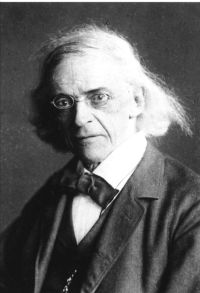
Portrait of T. G. Tucker T. G. Tucker,  Life in the Roman World of Nero and St…

“ We may now look at the manner in which a typical Roman might spend an ordinary day in the metropolis, and endeavour to form some clear idea of the outward aspects of such a life. In the first instance our Roman shall be a man of the senatorial aristocracy, blessed with both high position and ample means, but one who, for the time being, holds no public office, whether as a governor, a military commander, a Minister of Roads or Water Supply, an officer of the Exchequer, or of Justice. ”
Source: Gutenberg

Arthur E. R. Boak,  A History of Rome to 565 A. D

“ The government of the late Roman empire was an autocracy, in which the emperor was the active head of the administration and at the same time the source of all legislative, judicial and military authority. For the exercise of this authority the support of the army and the bureaucracy was essential. All the sovereign rights of the Roman people were regarded as having been transferred to the imperial power. The emperor was no longer the First of the Roman citizens—the primus inter pares—but all within the empire were in equal degree his subjects. ”
Source: Gutenberg

John Lord,  The Old Roman World : the Grandeur and Failure of Its Civilization

“ Rome is governed by an oligarchy of military chieftains, and has become more aristocratic and more democratic at the same time. The people gain rights, only to yield to the supremacy of demagogues. The Senate is humbled, but remains the ascendant power, for generals compose it, and those who have held great offices. Meanwhile the great generals struggle for supremacy. Civil wars follow in the train of foreign conquests. Marius, Sulla, Pompey, Julius, Antony, Augustus, sacrifice the state to their ambition. Good men lament, and protest, and hide themselves. Cato, Cicero, Brutus, speak in vain. ”
Source: Gutenberg

Get perspective with Kwize: daily news enlightened by great literature