Romola

Definition and stakes

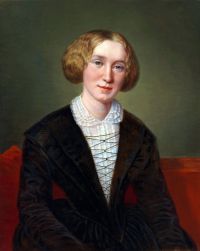
Portrait of George Eliot George Eliot,  Romola (1863)

“ On the eighth day from that memorable night Romola was standing on the brink of the Mediterranean, watching the gentle summer pulse of the sea just above what was then the little fishing village of Viareggio.
Again she had fled from Florence, and this time no arresting voice had called her back. Again she wore the grey religious dress; and this time, in her heart-sickness, she did not care that it was a disguise. A new rebellion had risen within her, a new despair. Why should she care about wearing one badge more than another, or about being called by her own name?
”
Source: Wikisource

Portrait of George Eliot George Eliot,  Romola (1863)

“ How poor Romola had yearned through the watches of the night to see that bright face! The new image of death; the strange bewildering doubt infused into her by the story of a life removed from her understanding and sympathy; the haunting vision, which she seemed not only to hear uttered by the low gasping voice, but to live through, as if it had been her own dream, had made her more conscious than ever that it was Tito who had first brought the warm stream of hope and gladness into her life, and who had first turned away the keen edge of pain in the remembrance of her brother. ”
Source: Wikisource

Portrait of George Eliot George Eliot,  Romola (1863)

“ An agitated flush came over Romola's face in the first moment of certainty, but she had bent her cheek against Lillo's head. The feeling that leaped out in that flush was something like exultation at the thought that the wife's burden might be about to slip from her overladen shoulders; that this little ignorant creature might prove to be Tito's lawful wife. A strange exultation for a proud and high-born woman to have been brought to! But it seemed to Romola as if that were the only issue that would make duty anything else for her than an insoluble problem. ”
Source: Wikisource

Get perspective with Kwize: daily news enlightened by great literature