“ Fool! not one drop of love came with all your striving: life has not given you one drop. But there are deep draughts in this world for hatred and revenge. I have memory left for that, and there is strength in my arm—there is strength in my will—and if I can do nothing but kill him—” But Baldassarre’s mind rejected the thought of that brief punishment. His whole soul had been thrilled into immediate unreasoning belief in that eternity of vengeance where he, an undying hate, might clutch for ever an undying traitor, and hear that fair smiling hardness cry and moan with anguish. ”
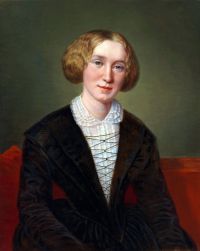
George Eliot
Summary

"Romola," a historical novel by George Eliot (the pen name of Mary Ann Evans), was published in serial form in Cornhill Magazine between 1862 and 1863 before being released in book form in 1863. Set in Florence during the 1490s, the novel examines the intellectual, religious, and social conflicts of Renaissance Italy through the lives of its main characters: Romola de’ Bardi, a scholar’s daughter confronting moral and existential dilemmas, and Tito Melema, a charismatic yet ethically complex Greek scholar.
The story weaves personal conflicts with historical events, including the emergence of Girolamo Savonarola and the political turbulence of the French-Italian Wars, highlighting Eliot’s interest in duty, ambition, and the tension between personal ethics and societal change. The novel’s ending emphasizes the persistent struggle between idealism and human weakness, set against the dynamic backdrop of Florence’s Renaissance.
Quotes from Romola (George Eliot)
“ Nevertheless, she returned Tito’s bow, made to her on entering, with the same pale proud face as ever; but, as he approached, the snow melted, and when he ventured to look towards her again, while Nello was speaking, a pink flush overspread her face, to vanish again almost immediately, as if her imperious will had recalled it. Tito’s glance, on the contrary, had that gentle, beseeching admiration in it which is the most propitiating of appeals to a proud, shy woman, and is perhaps the only atonement a man can make for being too handsome. ”
George Eliot,
Romola
(1863)
“ You already carry a red cross: let that be your only adornment. Yield up your necklace and belt, and you shall obtain grace." This was too much. Tessa, overcome with awe, dared not say "no," but she was equally unable to render up her beloved necklace and clasp. Her pouting lips were quivering, the tears rushed to her eyes, and a great drop fell. For a moment she ceased to see anything; she felt nothing but confused terror and misery. Suddenly a gentle hand was laid on her arm, and a soft, wonderful voice, as if the Holy Madonna were speaking, said, "Do not be afraid; no one shall harm you." ”
